The official website of Hartsfield-Jackson Atlanta International Airport

Category: ATL Stories

  • ATL Becomes Second Home and Inspiration to Self-Taught Artist

    ATL Becomes Second Home and Inspiration to Self-Taught Artist


    By Jennifer Ogunsola

    Communications Manager

    For many people, Hartsfield-Jackson Atlanta International Airport (ATL) is more than an airport — it’s home. With more than 60,000 employees, ATL is a place where careers begin, friendships are forged and dreams are supported, recognized and fulfilled.

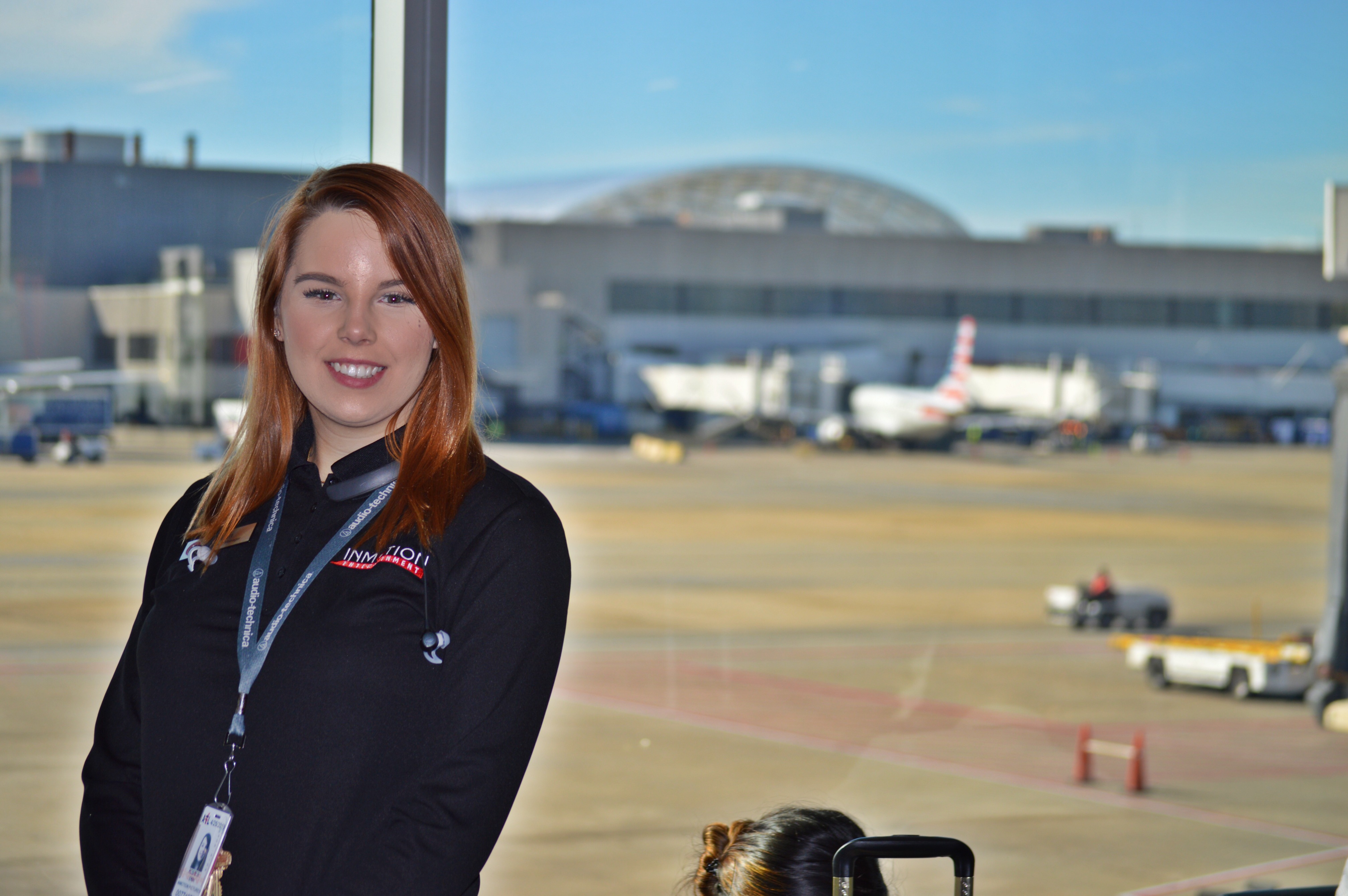
    Born and raised in Atlanta, Erin Foster’s first time in the Airport was eight years ago during a job interview with Hojeij Branded Foods for a hostess position at SweetWater Brewhouse. At 18 years old, Erin graduated from high school and was looking to make enough money that would allow her to take care of herself while pursuing an art degree at Savannah College of Art and Design (SCAD).

    Foster was hired, and little did she know that ATL would become a second home to her and support her passion for art.

    It was in the first grade that Foster began coloring and drawing, and she loved it, but so did the other kids in her class. It wasn’t until the fourth grade that she began to draw people and they were recognizable.

    “That’s when I remember my grandmother saying, ‘Okay, she can really draw,’ so she always made sure that I was in art programs in school,” Foster shared.

    As she got older, she became an extremely talented artist, which led her to SCAD. As Foster was looking to start work before school began, she was introduced to the restaurant business at the Airport.

    “I saw how much money servers could make and I thought that it would be perfect for taking care of myself and helping me while I was a student at SCAD,” she explained.

    Within the first year of working at SweetWater on Concourse A, which was her very first job, Foster discovered the Airport’s annual Employee Art Exhibit, a program led by the National Arts Program. The program encourages ATL employees and members of their immediate families to participate in a professional visual arts exhibition and offers cash prizes for top works.
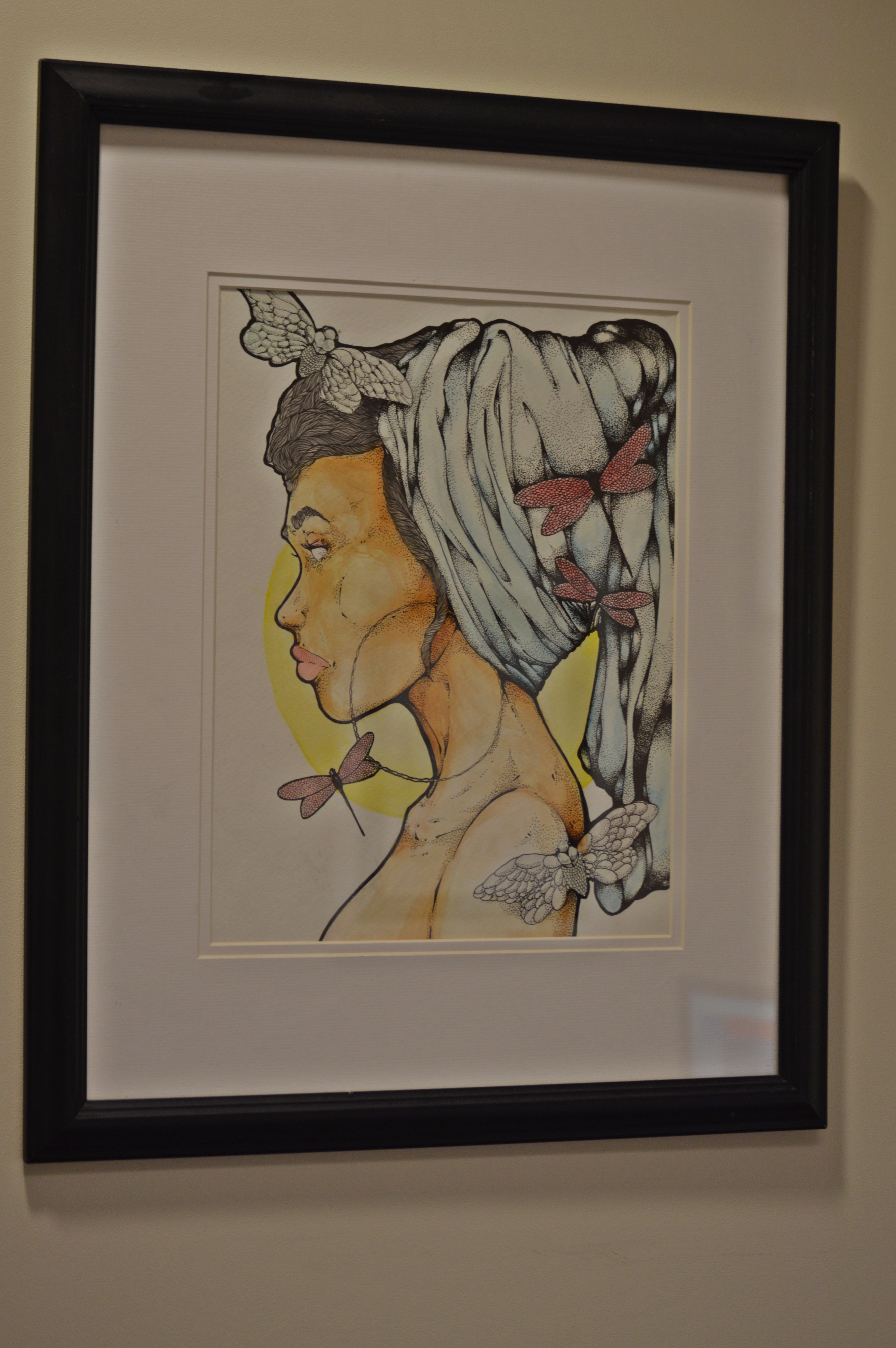
    During her first year as an employee, she entered the Employee Art Exhibit and won second place. Foster has entered every year since then, and while she hasn’t reached first place just yet, she has sold every art piece entered except for one.

    The 26-year-old self-taught artist, whose focus is primarily pointillism portraits, seems to be doing pretty well, as most of her artwork is commissioned by individuals. To date, her most expensive piece has sold for $500. In this year’s annual Employee Art Exhibit, her framed pointillism portrait of an African American woman titled, “Louisiana Nights,” sold quickly.

    “I never thought that I would be here eight years later,” Foster said.

    “I came to the Airport to make a living as I worked to put myself through art school, but to my surprise the world’s busiest airport had an employee art program that has allowed me to also pursue my passion of art with fellow Airport employees who are extremely talented and love art as much as I do,” she added.

    After her first semester, she left SCAD because the tuition proved to be a little more than she could handle, and focused more on work. In that year, she began to make a name for herself in the Airport, proving to be reliable, hard-working and a quick learner.
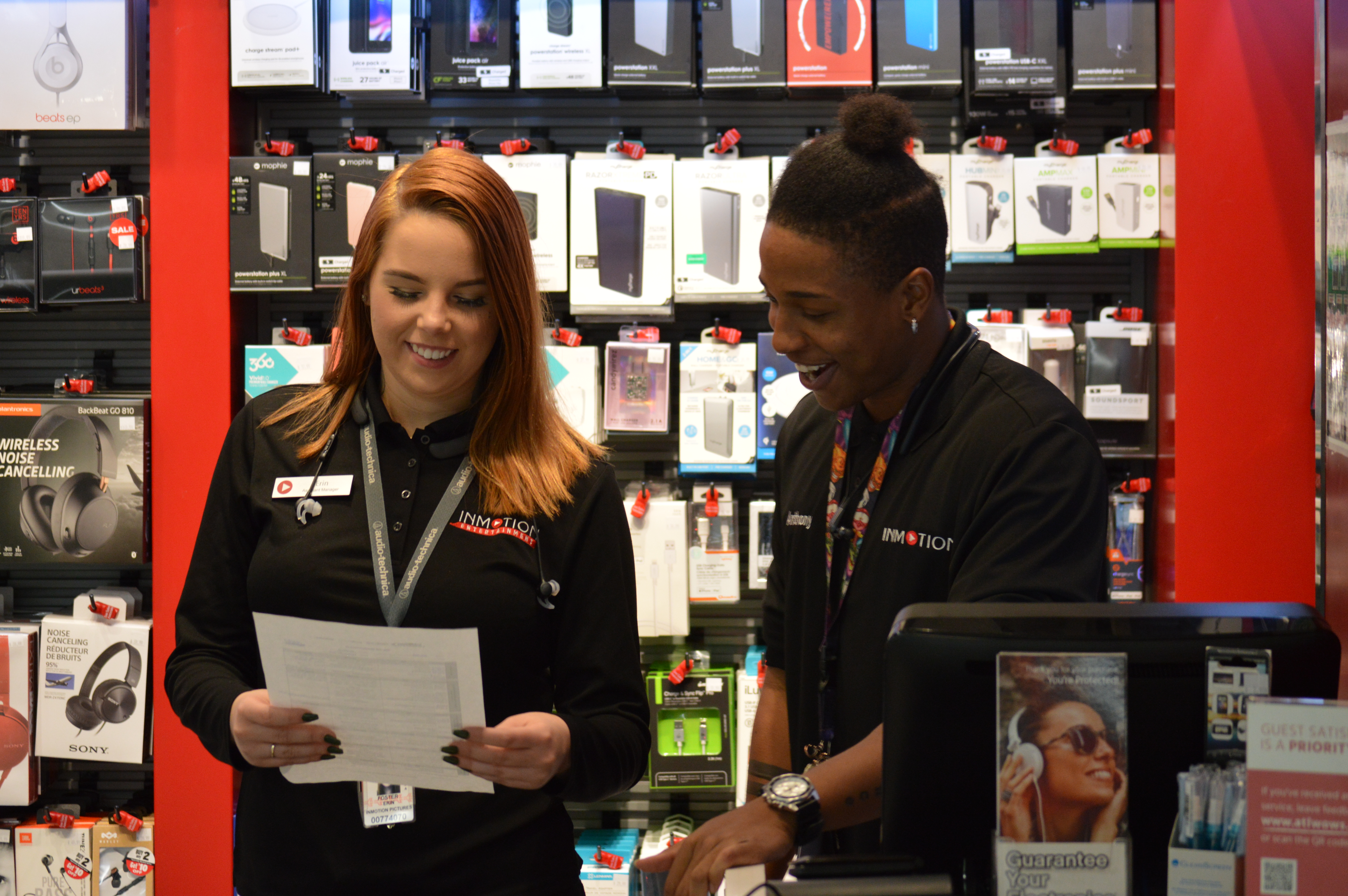
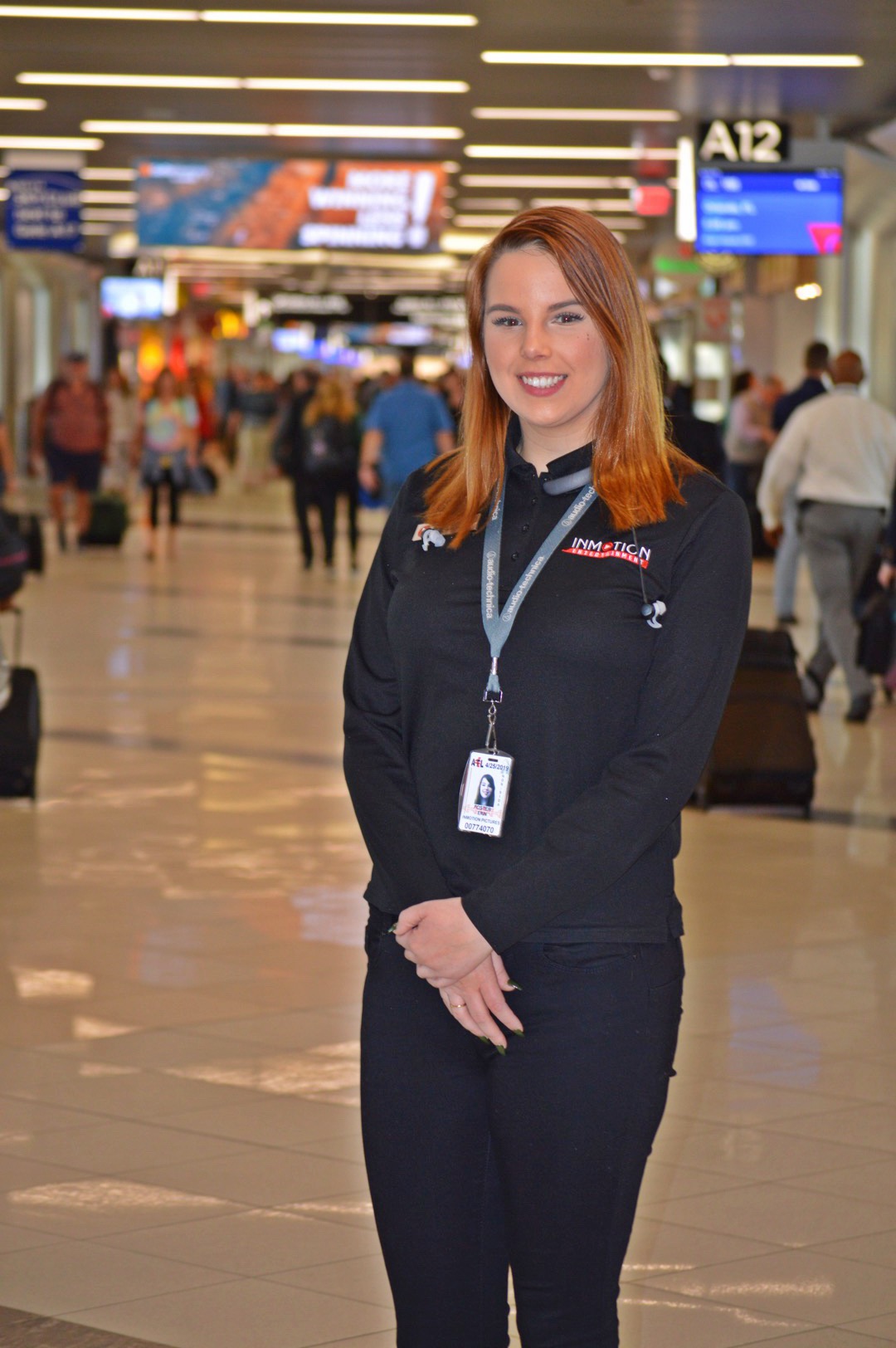
    Today, Foster works as the assistant manager of InMotion Entertainment on Concourse A as well as a part-time server at Papi’s Cuban & Caribbean Grill on Concourse T.

    “I am so proud to work at Atlanta’s airport,” Foster shared.

    “I love that I get to meet new people who walk through this Airport every single day, and each one has a unique story or a situation that they are facing, and I get to, if only for a moment, add joy to their day… you can meet and talk to someone for 15 minutes, and that interaction can completely change your mindset and feelings towards something or theirs, and I think that experience is priceless.”

    While Foster is back in school and thinking of working towards her master’s degree so that she can become college art professor, she appreciates that she can work for a company that appreciates art and contributes to her growth as a professional as well as an artist.

    “The employee art program at the Airport has definitely opened my eyes to different types of art and throughout the years I’ve seen this program evolve into a beautiful mixture of talent,” Foster shared.

    “People would be surprised that there is everyone – from award-winning sculptors to art students to retired Delta employees – who do art on the side and work here at the Airport. This airport doesn’t have to focus on art, but they do, and they have built an art community that is about coming together and supporting, sharing and celebrating everyone’s talents, and I am proud to be a part of this community.”
     

  • The Plane Train: Getting You There Since 1980

    The Plane Train: Getting You There Since 1980


    By Jennifer Ogunsola

    Communications Manager

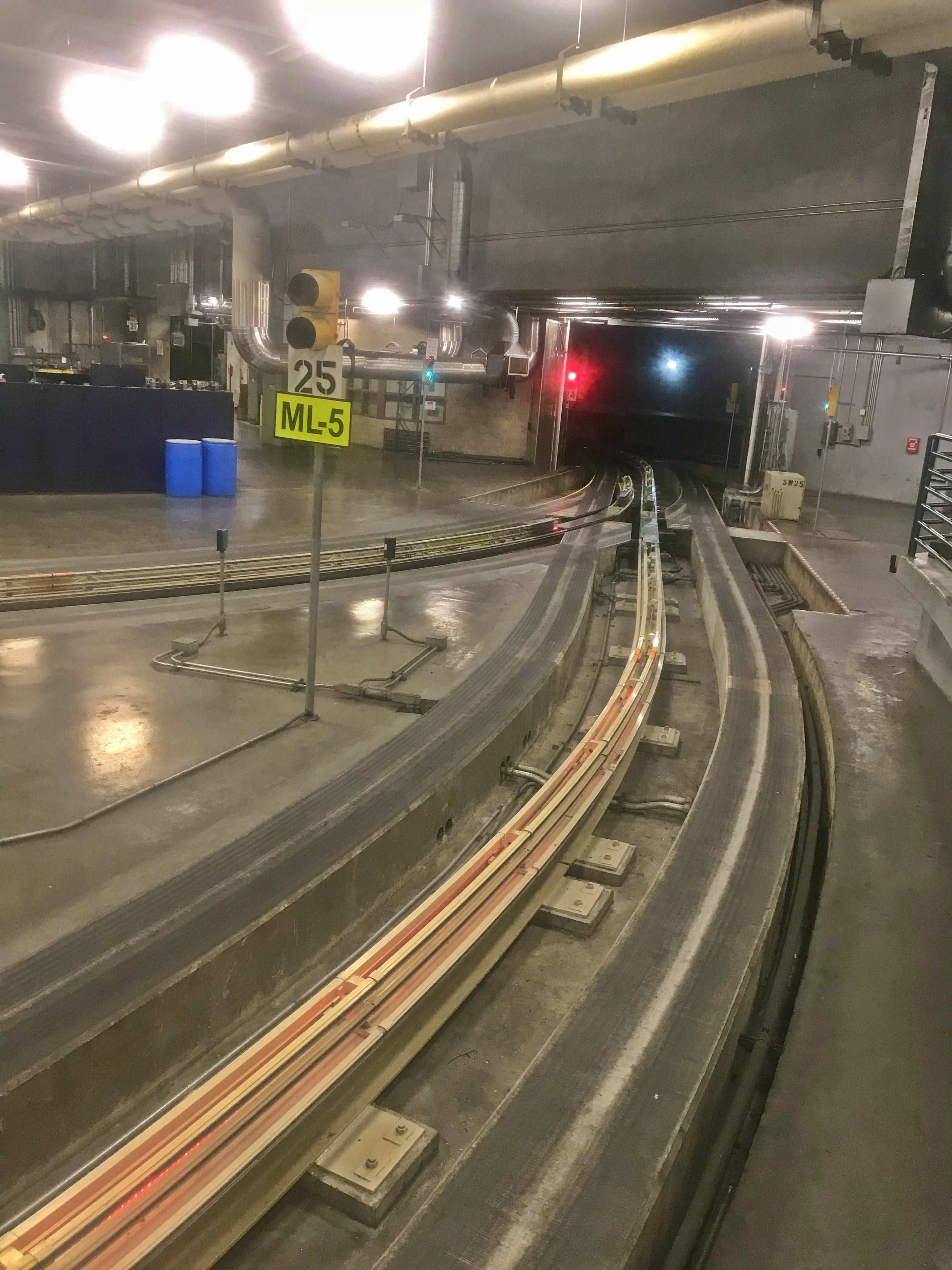
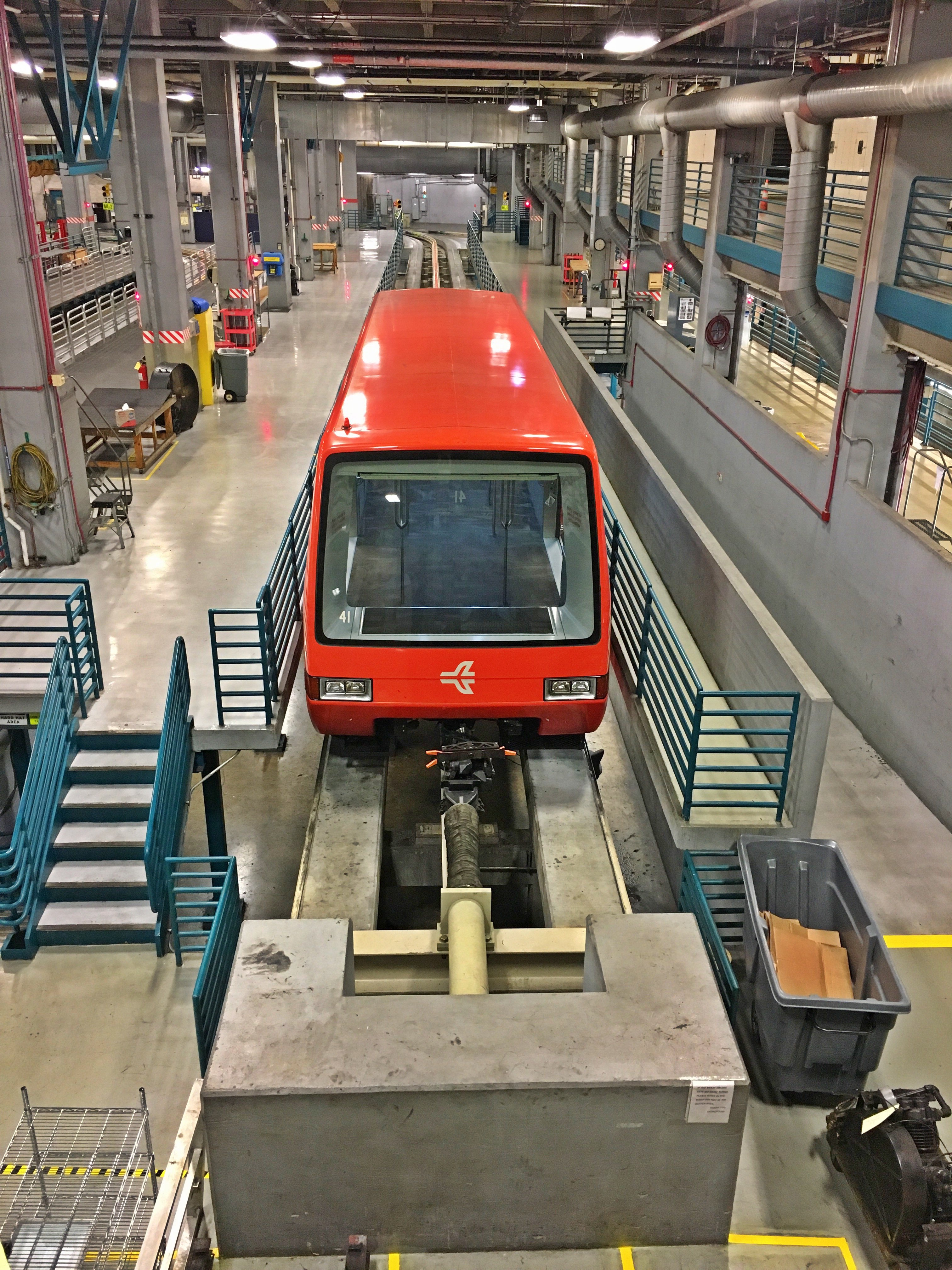
    How many airports do you know with luxury shopping, award-winning restaurants, five fire stations, and – oh, and I forgot to add – a fully automated train system that carries more than 250,000 passengers each day to one of seven concourses?  Come to Hartsfield-Jackson Atlanta International Airport (ATL), and that is what you will find.

    ATL is like no other airport, and its 63,000 employees work to ensure that it remains the world’s busiest and most efficient airport with world-class everything, including the underground automated people mover (APM) also known at ATL as the “Plane Train.”

    “Welcome aboard the Plane Train. Please hold on; this train is departing.”

    If you’ve traveled through ATL at any point, most likely you’ve heard this message as you boarded the train to get to your flight or to baggage claim to retrieve your luggage.

    The Plane Train began running in 1980 but didn’t earn its official name until August 2010.

    “The Plane Train is a 24-hour operation designed to help the airport be efficient in getting customers to and from our concourses safely and quickly,” said Hartsfield-Jackson Airport Transportation System Director Kenneth Williams.

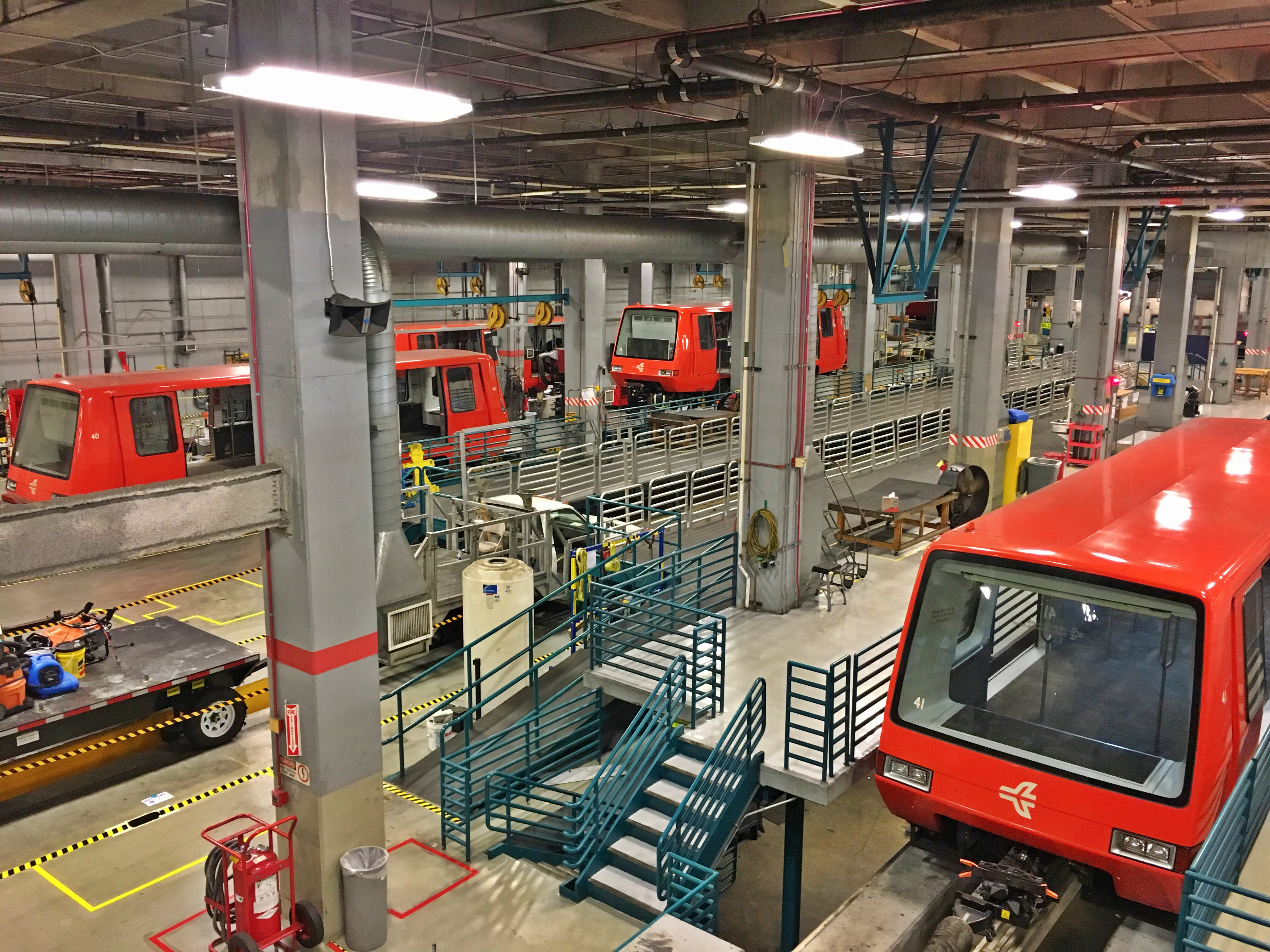
    During ATL’s peak period— 5 a.m. to 1 a.m., 365 days a year—there are 44 cars on the rail system, which totals 11 trains.

    And don’t worry, if you happen to arrive at a train as the doors are closing, the wait time is only 108 seconds— less than two minutes— and Airport officials are diligently working to reduce the wait time by increasing the number of trains.

    “When the west extension is complete in a few years, the customer experience will be improved, and the wait time will go from 108 seconds to 90 seconds,” Williams said.

    The APM team works with Bombardier Transportation, the manufacturer who has operated and maintained the system since 1980, to ensure that it is safe, clean and reliable.

    Moving more than 250,000 people a day is not an easy feat, but ATL does a great job according to one passenger, who compares it to her daily commute in the nation’s capital.

    “Being a daily commuter in D.C. for the past 10 years, along with having a job that requires constant travel across the United States, I still have yet to see another train system that is as efficient, clean and well-designed as the Plane Train,” said Kelli Johnson.

    Customer feedback, whether positive or negative, is not only important to Airport officials, it is encouraged.

    “Customer feedback is how we began operating 24 hours a day,” Williams said.  “The train used to be inoperable every night between 1 and 5 a.m. for maintenance. However, due to the concerns of passengers, ATL adjusted its maintenance schedule, and in January 2018, we officially began operating 24 hours a day in a two-train shuttle mode,” he said.

    The only time the train system is shut down is on Wednesday mornings at 1 a.m. during the off-peak time for maintenance of the track.

    “I’ve been here for 37 years, and started when I was 21,” said Dajuan Johnson, a contractor with Bombardier. “I make sure that the work that is performed is done in a quality manner and that there are checks and balances to ensure that we provide a good product for the traveling public.”

    To keep the system running nonstop, it takes 123 employees working three shifts.

    “I’ve been here for a long time, and it’s still extremely cool that this system is automated and runs without someone driving it,” Johnson said.

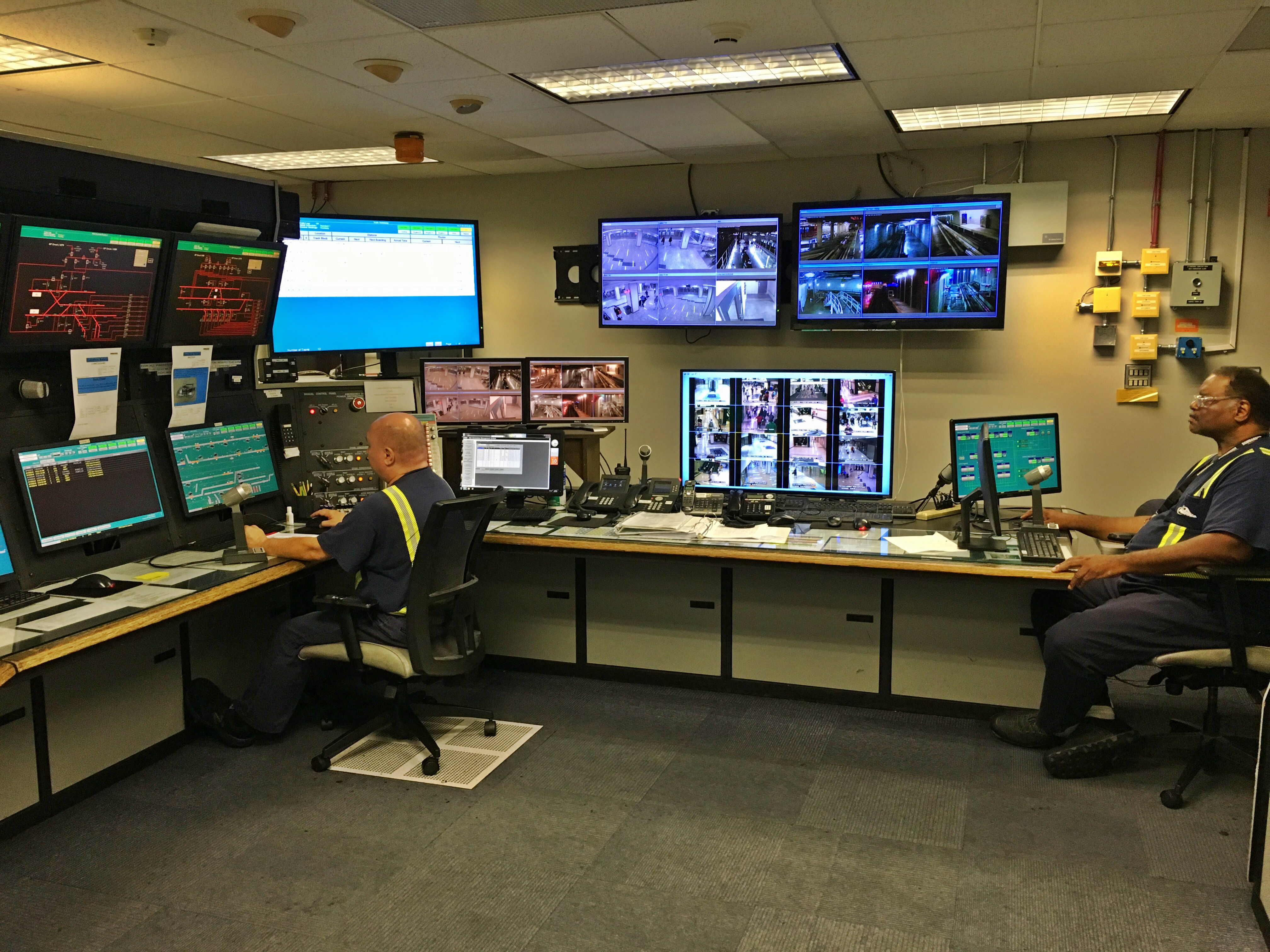
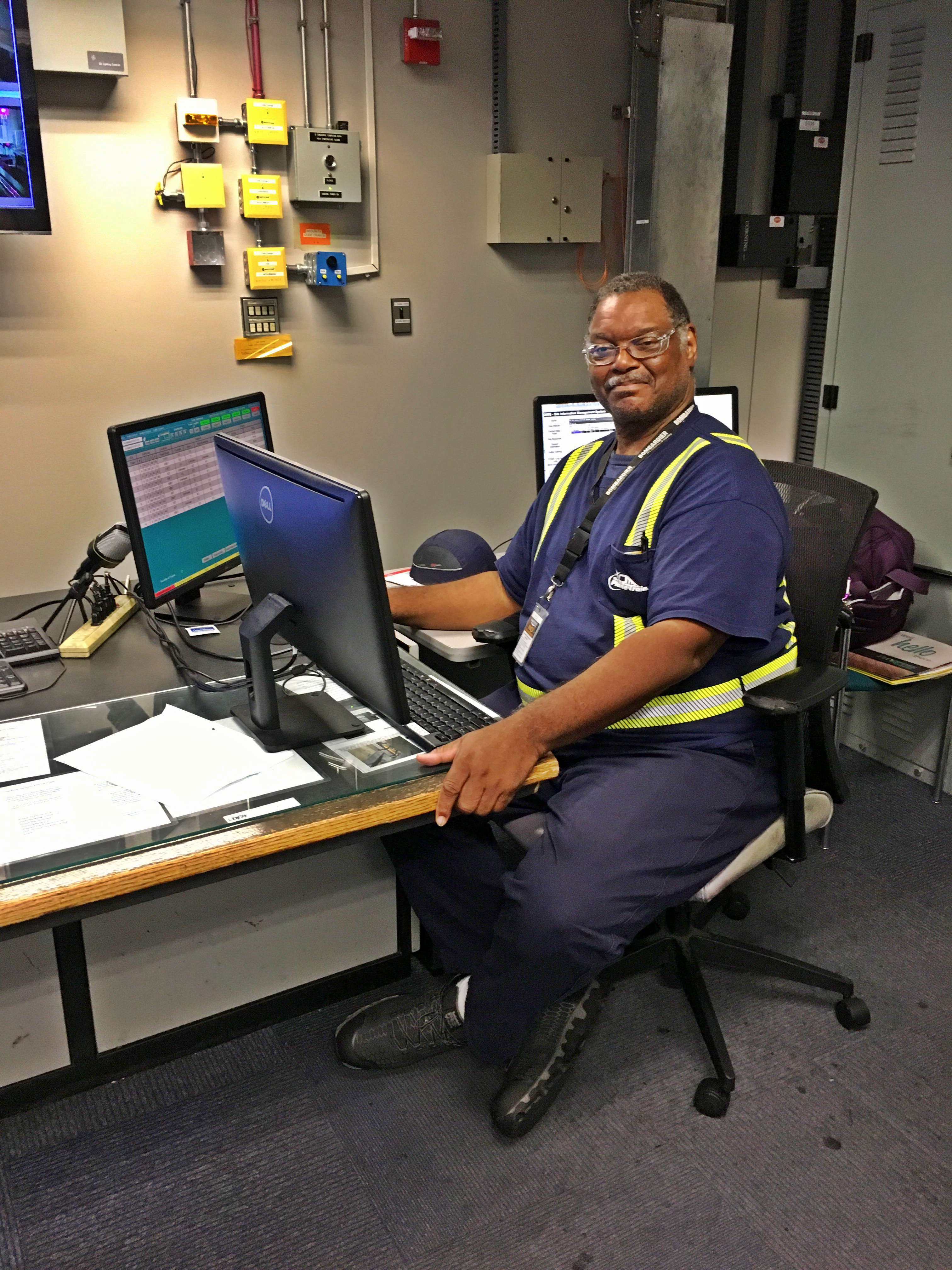
    While there is no one behind the wheel driving the train, there are two control operators in the control room at all times.

    “From the control room, we can send commands to the train such as opening and closing doors and changing the speed profile,” said Arnold Williams, a transit tech.

    When things are not right, Williams and his team receive alarms and are the first to contact one of three recovery techs who are on-site at all times.

    Williams said he still finds joy in his more than two decades working with the Plane Train.

    “I’ve been working here for 26 years and the most rewarding days for me are when I’m able to keep the system running without any problems.”


  • ATL staffer walks for a purpose, supports big cause

    ATL staffer walks for a purpose, supports big cause

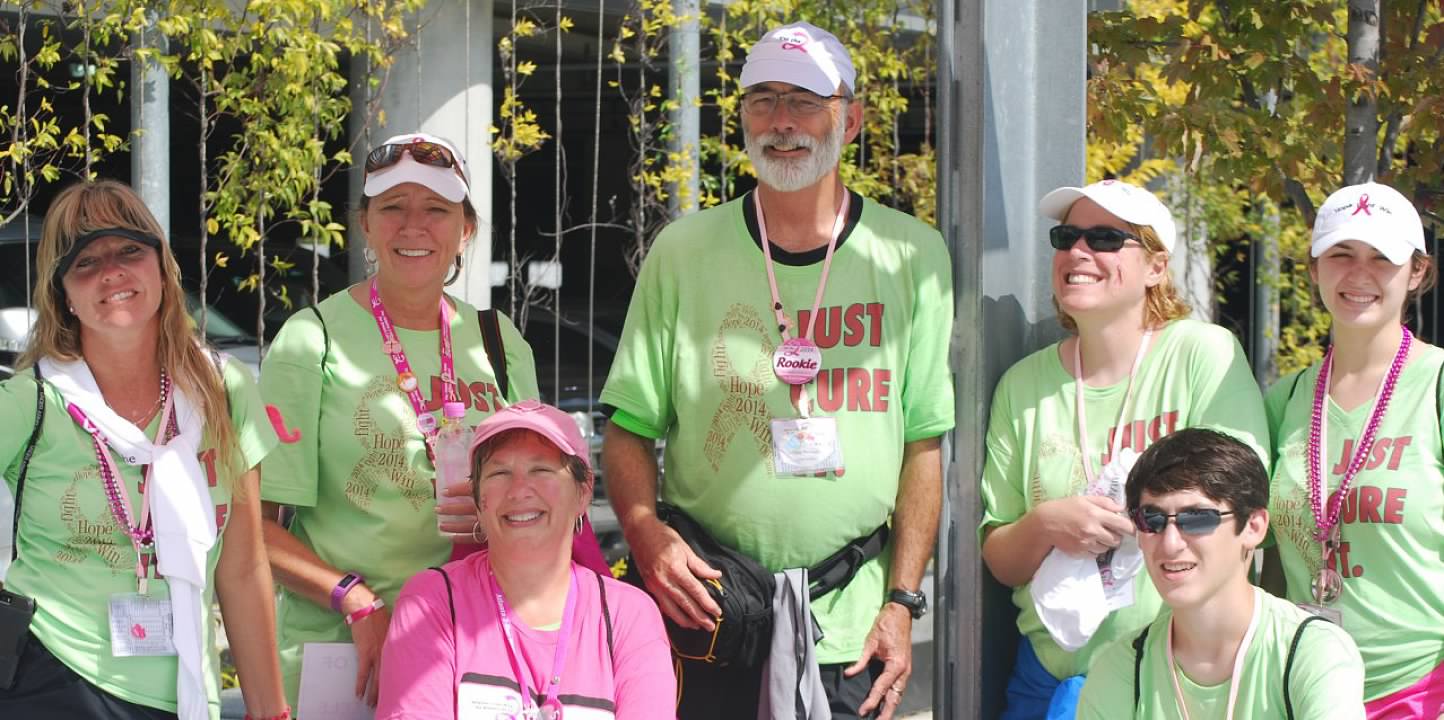
    Airport engineer Mike Mahady plans to complete the 30-mile Georgia 2-Day Walk Sept. 29-30. His supervisor, Eric Hall, said Mahady’s spirit of caring is an inspiration to all.


    By Anika Robertson
    Senior Editor/Assistant Public Relations Manager


    Five years ago, Mike Mahady just wanted to lose weight, but in the process gained fervent passion for a cause that affects more than 266,000 women in the U.S. each year.

    The 71-year-old is determined to participate in his fifth Georgia 2-Day Walk for Breast Cancer, despite rebounding from a recent hip replacement.

    As lead engineer, Mahady works with Airport facility and project managers to troubleshoot plumbing and fire protection systems operational issues and support the ATLNext design and construction process.

    “It’s such a horrible disease,” the five-year Department of Aviation veteran said.

    “It’s a shame that all these women, mostly women, are plagued with [it].”

    In its 15th year, the Sept. 29 and 30 walk, which raises nearly a million dollars annually to support local breast cancer organizations, assembles more than 1,000 breast cancer survivors, supporters and patients.

    His quest to lose weight began after seeing a picture of himself holding his infant granddaughter. The image prompted Mahady to get serious about increasing his physical activity.

    “I could barely walk, let alone run marathons!” Mahady recalled.

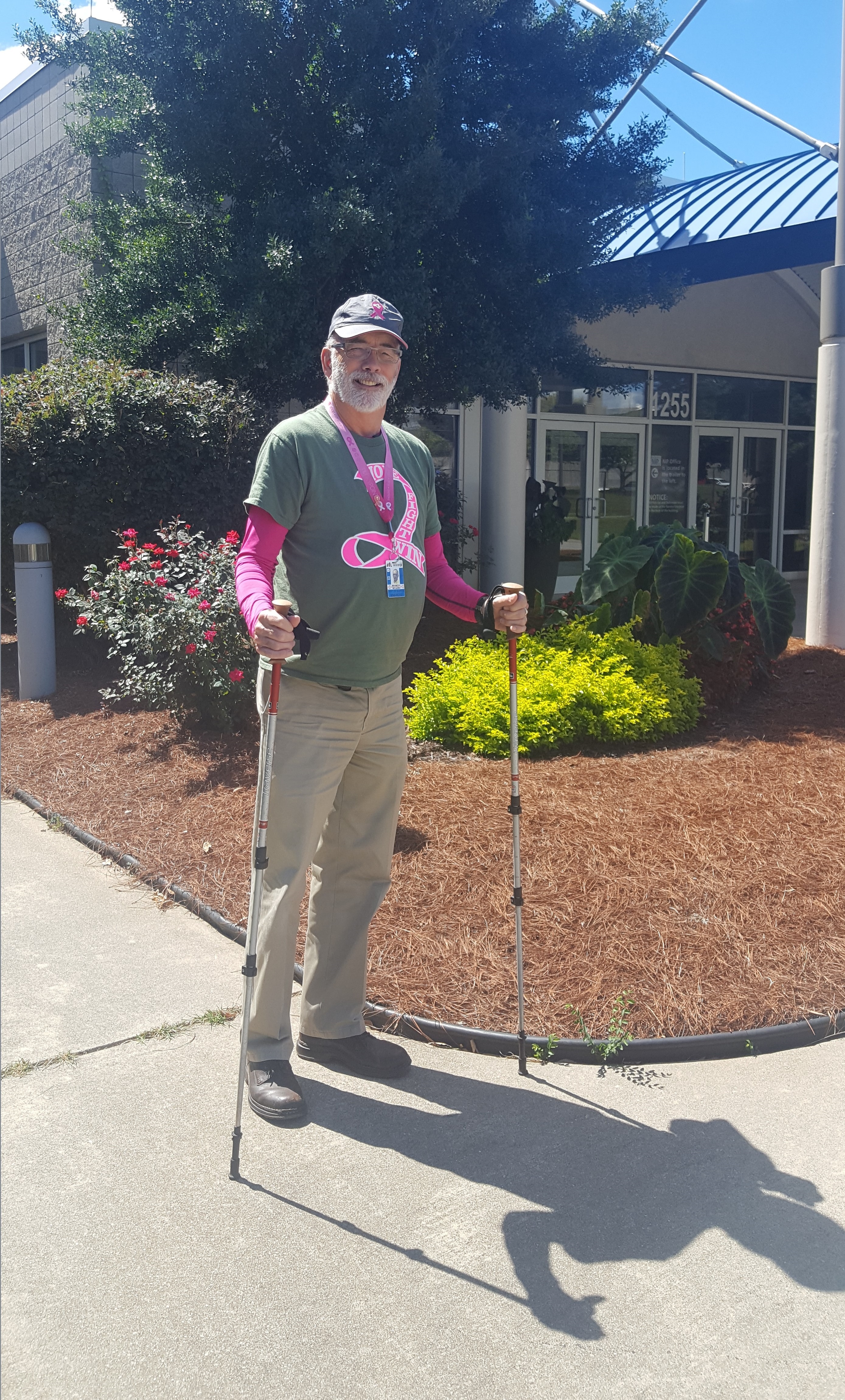
    The Kennesaw resident began walking three to four miles each morning before work, using a pair of trekking poles for stability.

    One day, Mahady’s wife was tutoring a young man whose mom saw Mahady with the poles. The woman, Kim Shoemaker, encouraged him to walk 30 miles with her team for the 2-Day Walk.

    That’s a challenge, Mahady thought.

    “I didn’t think anything about the fundraising, or breast cancer, but took up the challenge,” Mahady said.  “I was excited.”

    But it wasn’t what Mahady expected.

    “I didn’t expect to be that emotionally involved,” he recalled.

    “When you get around all these women, it just grabs you and you can’t let it go,” Mahady said.

    Hearing the stories of survival firsthand from those currently in treatment and others who’ve been cancer-free for decades had a profound effect.

    Mahady finished the first walk in the top 20, feeling great. He began incorporating running into his routine and joined additional area races.

    “I started getting energetic,” Mahady said.  “Walking just wasn’t enough for me.”

    One of Mahady’s daughters encouraged him to run alongside her in two half-marathons. To date, he has also completed 10 5Ks, one 15K and one 9.9-mile trail run.

    Minor aches didn’t stop Mahady from joining the 2-Day Walk, nor did knee pain from a twist two years ago. He just bought a knee brace and kept moving.

    But in 2017, after a hiking trip through the Grand Canyon with his daughter, Mahady’s hip began hurting. He endured the pain on his fourth 2-Day Walk, clocking 16 miles. He later learned that his right hip and femur were literally grinding together. The damaged joint required a full hip replacement, which took place in May.

    As Mahady rebounds from the recent surgery, he walks with a cane and attends weekly physical therapy sessions. Even if he doesn’t finish the upcoming walk, he wants to take as many steps as possible to support the group.

    “It’s a sea of pink,” Mahady said. “It’s a fantastic experience.”

    Each year, he raises between $1,000 and $1,500 for the cause.  Ninety percent of money raised goes directly to breast cancer programs and survivors in Georgia.

    “He’s been our most enthusiastic, most passionate walker,” said team captain Shoemaker. She shares her own experience as a nine-year breast cancer survivor in hopes of encouraging others still in the fight.

    “If I can help one person, it’s worth it,” she said. “Cancer shouldn’t be your life.”

    Visit Mike Mahady’s donation page on itsthejourney.org to learn more.

  • From the Football Field to the Airfield

    From the Football Field to the Airfield

    By Jennifer Ogunsola

    Communications Manager

    Within minutes, his dream of playing professional football came to an end when he experienced a career-ending injury.

    Nearly 30 years ago, Thomas Wilson was a senior at Florida State University and star defensive back from Tallahassee, Florida. Immediately after the injury, Wilson had to make a decision that would impact the rest of his life.

    “The injury actually did more for me than anything else because it really painted a clear picture that, as an athlete, you’re one injury away from that being taken away,” Wilson shared.

    “It forced me to concentrate more on my academics, and I knew that as long as I was of sound mind, I could always support myself. Luckily, as a young college student, I realized that my legs would give out before my mind would.”

    His decision to pursue an engineering career in 1989 led him to the world’s busiest airport in 2007. And today he’s the program safety director for ATLNext, a 20-year, multibillion-dollar capital improvement program.

    The father of 22-year-old twin boys knows the importance of being intentional, working hard and giving back, traits that he credits to his selfless mom, whom he affectionately calls his hero. In this interview, Wilson gives us a little insight into who he is, his most valuable life lessons and how he landed at the world’s busiest airport to lead a globally recognized safety program.

    Tell me a little about your upbringing.

    I grew up in Tallahassee and was raised by a single mom, who is my absolute hero. Growing up, it was just me and my brother — and I’ll be honest — it was extremely tough for us.  My mom cleaned houses for a living, making about $3,000 a year. As a child, I used to hunt and fish, except it wasn’t a sport for me. It was truly survival.

    Learning how to survive is an important skill.

    Absolutely. I’m not a wasteful person and I manage resources well. I hate to see people squander things because I understand what it’s like to need and not have, to want but can only look, and to wonder and dream. And, I wouldn’t change a thing about how I grew up.

    My mom and grandmother made many sacrifices for me, so I always felt like I owed it to them to give my absolute best no matter what.

    Have they been able to see how successful you’ve become?

    They are all deceased, but they saw me as I started to emerge. In their passing, after mourning, it allowed me to grow stronger, become more determined and focused, and make sure that I share or allow someone else to benefit from my lessons and blessings.

    Was college always in the plans?

    When I graduated from high school, I had an opportunity to be the first person in my family to attend college when I received a football scholarship. I attended Florida State University where I majored in civil engineering. I played football throughout college, and I wanted to go to the NFL, but I had a major injury.

    Did that break you?

    Not at all. There are so many life lessons that I learned from sports. I learned that when it comes to success, there are no shortcuts other than hard work, and you must put in the time. You might have talent, but you have to develop it and I think those are the things where you had to reach down and kind of find out who you are.

    How did you find your path after college?

    Upon finishing school, I had an opportunity to move out west to Southern California and get involved in renewable energy. I happened to work for someone who took me under their wing, which allowed me to expand my knowledge on everything from construction to environmental transportation.

    I had the opportunity to enroll in risk and safety, and then had opportunities to travel and broaden my career by working on many projects throughout the country. After doing that for roughly 15 years, I found my way here to Atlanta.

    How did you land at Atlanta’s Airport?

    In 2007, I was introduced to the Airport’s former assistant general manager of the Planning and Development division and was given the opportunity to step in and take a look at the program to get a firm understanding of what was going on. I then put forth safeguards and policies, making sure that we had the right people to do proper vetting of contractors.

    What is your current role at Hartsfield-Jackson Atlanta International Airport?

    As the program safety director, I make sure that we’re in compliance with all of the federal, state and local safety guidelines. I work to ensure that ATL is covered from a safety perspective on all projects, and that includes making sure that with any of the project contractors that the City brings on board, we understand where some of our risk exposures lay, and make sure that we can do two things: put forth proper safeguards to ensure that everyone goes home safely and complete the project in a timely manner without incident.

    Since working for ATL, what have been the most rewarding projects for you?

    The two most rewarding projects that I’ve worked on at ATL is the Maynard H. Jackson Jr. International Terminal and the Rental Car Center.

    The International Terminal was just a massive undertaking as far as the sheer size, the number of contracts, the number of trades, and the vast diversity of people. Being totally immersed taught me so much, and I would say the same thing for the Rental Car Center. For both, working with the men and women associated with the project in order to come to that one common goal of completion was rewarding.

    You have a very interesting life story. What are you most proud of to date?

    The most rewarding job I’ve ever had was being a father to my 22-year-old twin boys. I work extremely hard to give them the very best that I have, and to watch them grow up and develop into amazing young men has been a true gift for me. I’m proud of who they are and what they’ve accomplished.

    I try to use my lessons to help, teach and empower others. You may be very fortunate where you are, but know that somewhere a door opened for you even if you don’t know who opened that door. I teach my sons and others to find a way to open doors for others.

    *ATL-AT-LARGE is a monthly series highlighting Hartsfield-Jackson Atlanta International Airport professionals who contribute to the success of the world’s busiest airport.


  • ATL staffer’s determination inspires family, nation

    ATL staffer’s determination inspires family, nation

    Dawn Daniels Muhammad was surprised at the media attention surrounding her sacrifice to her father, Lucious Daniels.


    By Anika Robertson
    Senior Editor/Assistant Public Relations Manager

    A will to heal her ailing father led ATL’s Dawn Daniels Muhammad on a health journey to lose more than 55 pounds. Meanwhile, her altruistic efforts have garnered worldwide attention.

    Muhammad’s primary goal was to donate her kidney to her father, Lucious Daniels, who suffers from stage 4 kidney disease.

    “My dad is the heart and soul of our family,” said Muhammad, a 19-year veteran of the Department of Aviation. “The past 16 months have helped prepare me for this moment.”

    The South Carolina native knew poor diet and health habits persisted in her tight-knit family. Over the years, Muhammad watched as relatives developed Type 2 diabetes and hypertension.

    “My sister and I said a long time ago, ‘We’ve got to break the cycle,’ the married mother of two said. But because of her weight struggles, she feared she could ultimately succumb to those conditions.

    According to Muhammad, her father developed Type 2 diabetes in 1980. In 2001, with a change in his diet and weight, Daniels was able to come off insulin. After years of good health, a back injury in 2015 prompted a steroid shot, “which shot his sugar level through the roof.”

    Once he became insulin-dependent again at age 71, doctors told Daniels that he’d developed the life-threatening condition.

    “It was a shock,” Muhammad recalled.

    While Muhammad learned her blood type was a match, she was prevented from being a donor due to her weight. At 220 pounds, she was told her BMI was just too high.

    In July 2016, Daniels began biweekly dialysis sessions critical to his survival. Later that year, Muhammad witnessed a serious decline in her dad’s energy level and wanted to do whatever was necessary to help.

    The senior programmer analyst began solo workouts.  Three weeks later, she reached out to a friend who had lost more than 150 pounds with diet and exercise and was now a personal trainer.

    On New Year’s Eve, Muhammad began working out with Tahara (@watchteework), followed a low-carb diet and avoided ginger ale, her choice beverage.

    Rigorous cardio, core workouts and monthly measurements kept Muhammad on track, but her true inspiration remained a secret.

    “I knew what my focus was … I’ve got to see if I can help my father,” Muhammad explained of her choice to become a living donor. After nearly a year, she’d lost 40 pounds.

    “I didn’t share it, I didn’t really want anyone to know. I wanted that journey to be between me and God.”

    In April 2018, during a conversation with her father, Muhammad recalled hearing a voice say, “It’s time.”

    That’s when she finally revealed her intention to donate her kidney. Initially shocked, her father would quickly embrace the decision.

    She learned on July 2 that she was a perfect match. A week later, Muhammad gathered her entire family to deliver the news in a heartfelt poem to her father. In response, they hugged, cried and celebrated.

    Muhammad’s sister posted a message on Facebook earlier this month that reached Deidre Dukes of Fox 5 Atlanta, who then interviewed the would-be-donor for a segment that aired Aug. 20. The story exploded online. On Aug. 30, the pair interviewed live on “Good Morning America,” and numerous media outlets shared the original Fox 5 feature, including People.com, NewYorkPost.com, ABC and London-based DailyMail.

    With tens of thousands of views from the initial feature, Muhammad said, “I never thought that it would get the attention that it’s received.”

    She looks forward to seeing her dad returning to his favorite pastime: playing golf. GMA host Michael Strahan even invited Daniels for a round once he’s recovered.

    “Continuing this lifestyle is so important,” Muhammad explained, “Because I know that moving forward, it’s going to be very important to eat healthy and exercise so I won’t have issues later on in life.”

    With transplant surgeries for father and daughter set for Aug. 31, Muhammad’s message behind her selfless act remains clear.

    “We can help our family and friends if we are in a better health situation.”

  • Humans Are Not for Sale

    Humans Are Not for Sale

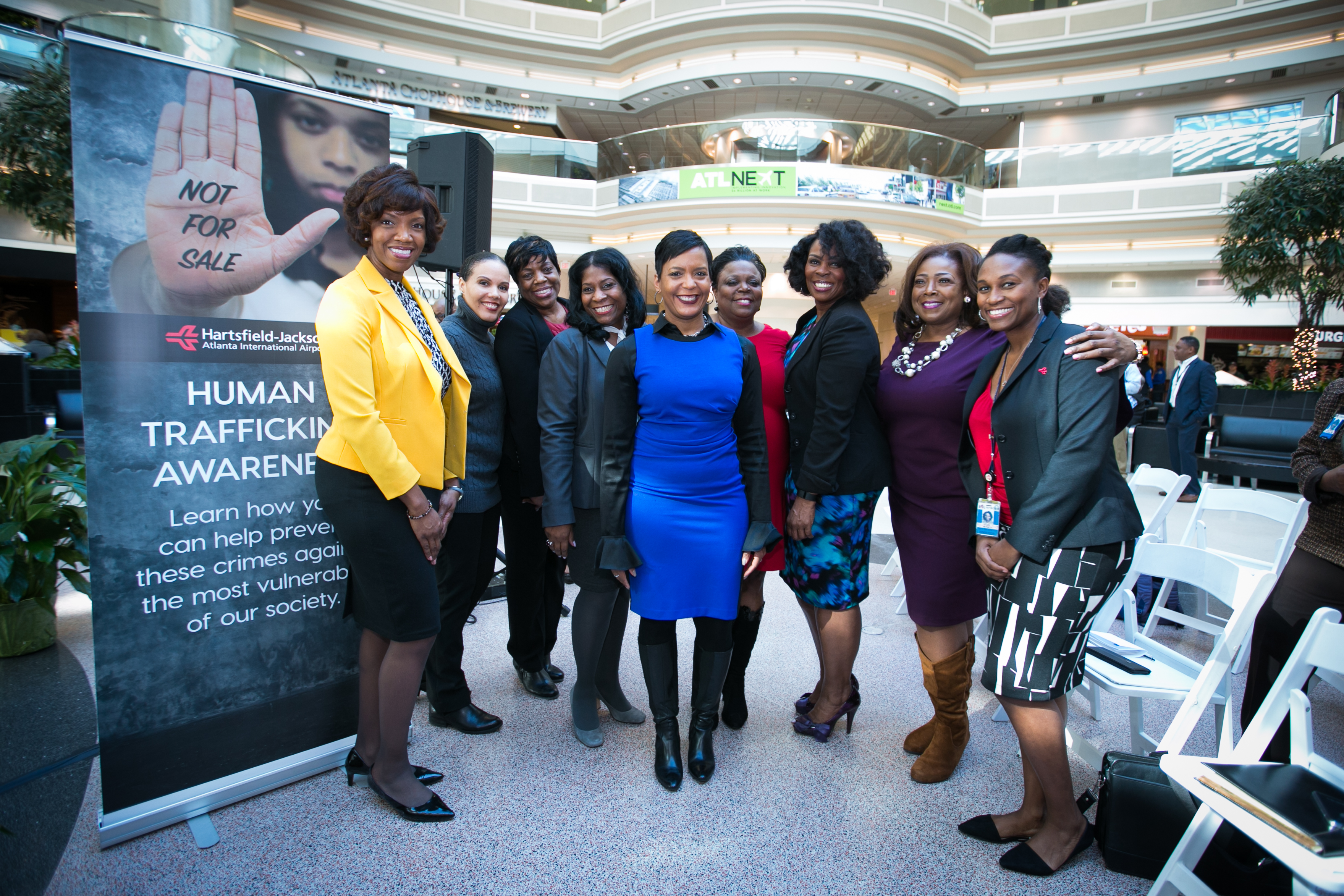
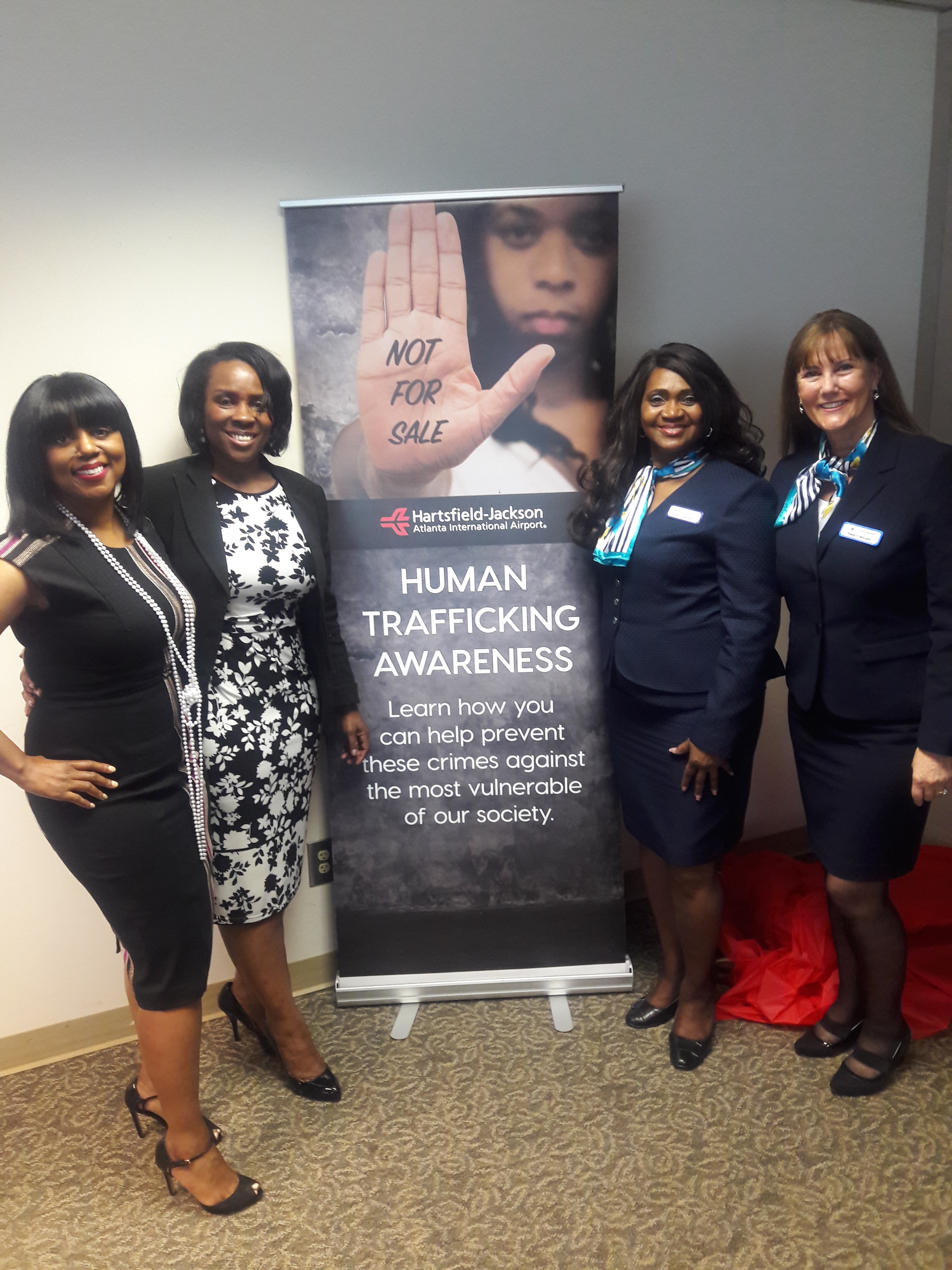
    Atlanta Mayor Keisha Lance Bottoms shares a moment with Airport employees during a January 2018 human trafficking press conference.

    By Jennifer Ogunsola

    Communications Manager

    Walking through the airport, the last thing that likely crosses one’s mind is whether the person next to them might be a survivor or victim of human trafficking. According to the International Labour Organization, there are approximately 40 million victims of human trafficking, globally. So if you travel, at some point, you may have been a witness to some form of human trafficking.

    A SURVIVOR’S STORY

    Donna Hubbard knows that all too well.  She is a flight attendant and a human trafficking survivor. For her, the slogan “See Something, Say Something” has real meaning.

    “There are passengers and airport employees who may be witnessing human trafficking, but are so focused on getting to their destinations and working that they aren’t really seeing what they’re looking at,” she said.

    Hubbard was born in Atlanta and grew up surrounded by love. But, as a result of her religious tenets, she was married in an arranged union at the age of 16 to a man twice her age. By her early 20s, she had been married and divorced twice with three children.

    In 1978, she joined Alleghany Airlines as a flight attendant. During a flight early in her career, she met a professional athlete in an encounter, and that changed the course of her life.

    “I was young, gullible, naïve, searching for love and thought I found it,” Hubbard shared. “I fell in love with him, and he experimented with a lot of drugs and many other things. I ended up in the hands of a pimp. He traded me for drugs and money, and when I tried to get away, he realized he couldn’t control me, so he traded me to a gang.”

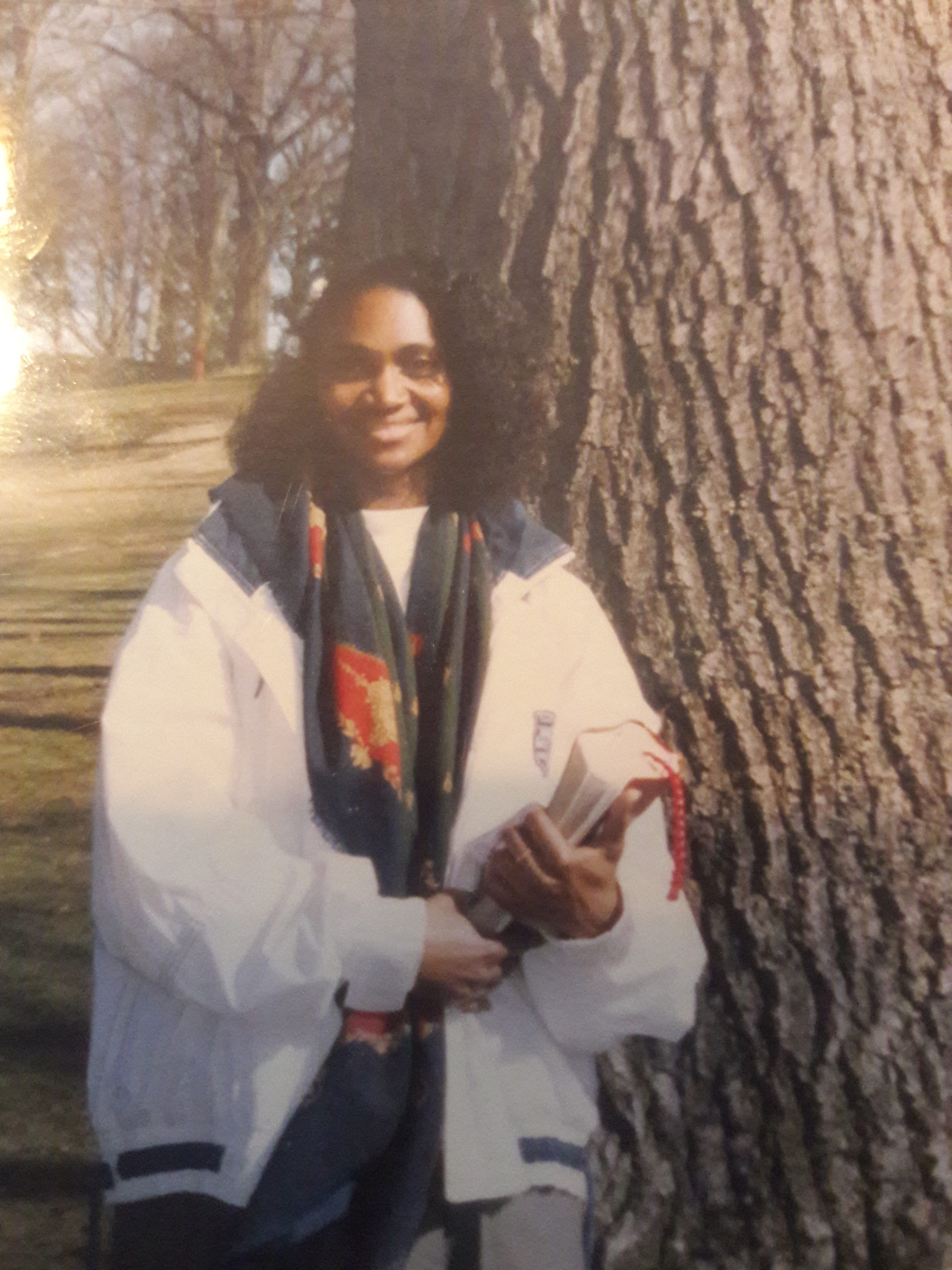
    Donna Hubbard as a young woman

    That’s when the threats began. Hubbard’s traffickers told her that if she refused to do as she was told, one of her children would be forced to instead. So, she said that she did what she had to, to stay alive.

    “I was afraid, ashamed, and didn’t know what to do or where to turn,” she said. “So, I did what I thought was best to protect my children and myself.”

    Experts say human trafficking deprives millions of people — men, women, and children — their freedom and dignity. It is an enterprise that generates roughly $150 billion annually.

    “Not all of the people entangled in human trafficking are kidnapped. For me, it was coercion,” Hubbard explains. “My way out was to end up going to prison,” Hubbard, now a 62-year-old mother of eight explained.

    “It was my only way out because they were never going to leave me alone. It was in prison that I finally got free because it gave me a chance to find myself, regain my self-respect, and time to think about my life and how I ended up in there.”

    ATLANTA TAKES A STAND

    Four months after being sworn in as the 60th mayor for the City of Atlanta, Keisha Lance Bottoms turned her attention to combating the problem. She appointed Oulèye Ndoye Warnock as the senior human trafficking fellow for the City. One of her top priorities includes a strong focus on vulnerable populations.

    “Trafficking is a global problem, and vulnerable populations are often overlooked because trafficking occurs in the dark, so bringing this issue to light and supporting survivors by ensuring that the City has the resources they need to exit and end a cycle of re-entry is extremely important,” Warnock explained.

    The City of Atlanta is not in this fight alone. Hubbard is also making a difference. She founded Women at the Well Transition Center, which focuses, in part, on victims of sex crimes. To date, the organization has helped over 6,000 incarcerated and formerly incarcerated girls and women regain their lives, their families and their dignity.

    In 2015, she returned to flying again. This time, as a flight attendant with American Airlines. And this time, perfectly positioned to help human trafficking victims and stop their traffickers.


    “I was beaten and left for dead not once, not twice, but three times, and I’m still alive,” Hubbard said. “Today I get to live, and I get to make a difference in other people’s lives in every part of the world because I didn’t give up.”

    Working in the aviation industry has allowed her to fulfill her life’s mission of combating the global threat while educating and inspiring people from Kenya to Iceland, and even here at ATL. This past spring, Hubbard worked as a consultant with the Office of the United Nations (UN) High Commissioner for Human Rights and the International Civil Aviation Organization to establish Circular 352, which is a comprehensive guideline that airlines use to set up their protocols and training programs for cabin crew members to be able to identify and report human trafficking.

    With nearly 104 million passengers annually, security officials say there has not been a single case of human trafficking at ATL to date.

    “We partner with TSA, the airlines and other stakeholders to bring awareness to the masses,” said Hartsfield-Jackson Director of Security Jan Lennon. “Combating human trafficking is critically important to ATL. From training our employees to educating everyone who walks through our doors, our mission is to make it very clear that humans are not for sale.”

    From left:Fulton County Community Court Liaison, Airport Director of Security Jan Lennon, human trafficking survivor Donna Hubbard, and Airline Ambassadors International president and founder Nancy Rivard.


  • ATL expo elevates safety, celebrates culture

    ATL expo elevates safety, celebrates culture

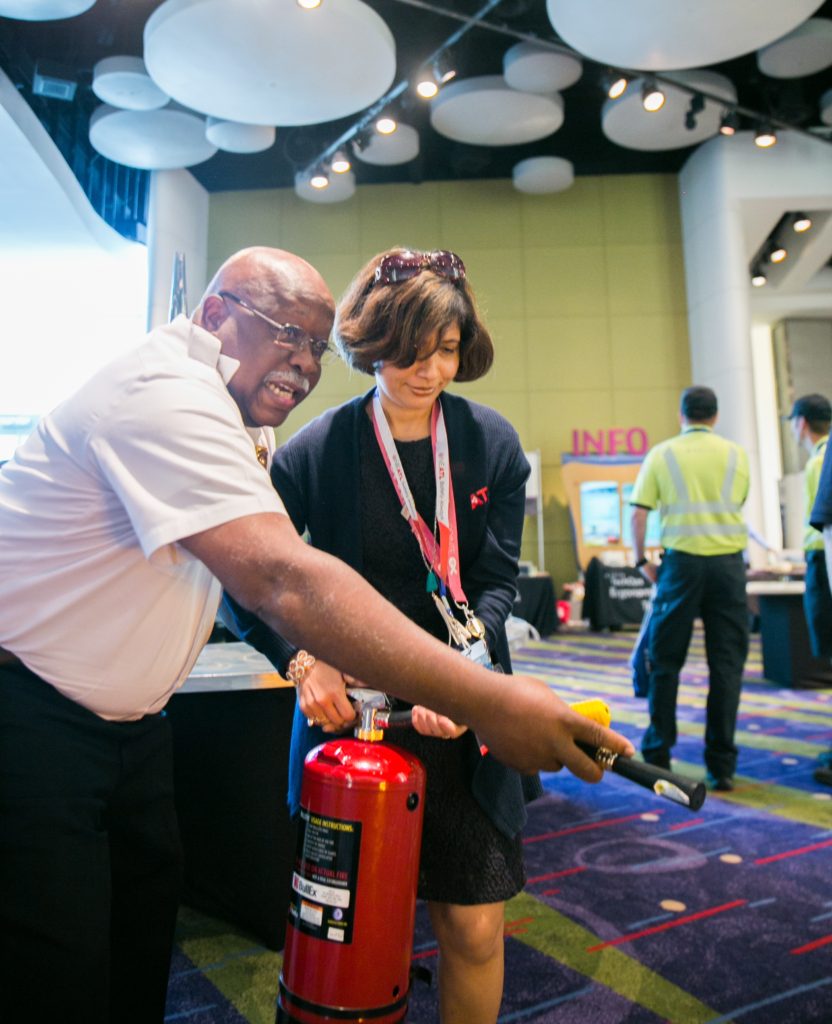
    Fire inspector Edward Williams shows Meenaxi Rajput how to extinguish a fire at the third annual OneATL Safety and Risk Management Expo Aug. 15. © 2018 Decisive Moment Events


    By Anika Robertson
    Senior Editor/Assistant Public Relations Manager


    Hartsfield-Jackson advanced its safety culture for the third consecutive year at the OneATL Safety and Risk Management Expo.

    Assistant General Manager for Public Safety and Security Richard Duncan said the Aug. 15 expo highlights the significant role safety plays in every facet of Airport operations.

    “We would not be the world’s busiest, or the most efficient airport, if not for a laser focus on safety,” Duncan said to hundreds of participants gathered at the Georgia World Congress Center.

    “In fact, attention to the safety of customers and employees alike makes us one of the world’s safest airports as well.”

    While sessions highlighted best practices and new technology, interactive demonstrations offered workers greater perspective into the “safety first” culture. Topics covered included ergonomics, concessions safety, risk management, drones and workplace safety.

    To kick off the annual expo earlier that morning, Airport officials closed 8L-26R runway and the North Cargo ramp for the 17th annual FOD Walk. Found on runways, foreign object debris (FOD) can cause serious damage to aircraft. More than 100 Airport volunteers walked the 9,000-foot runway to experience and complement inspections conducted by ATL Airside Operations.

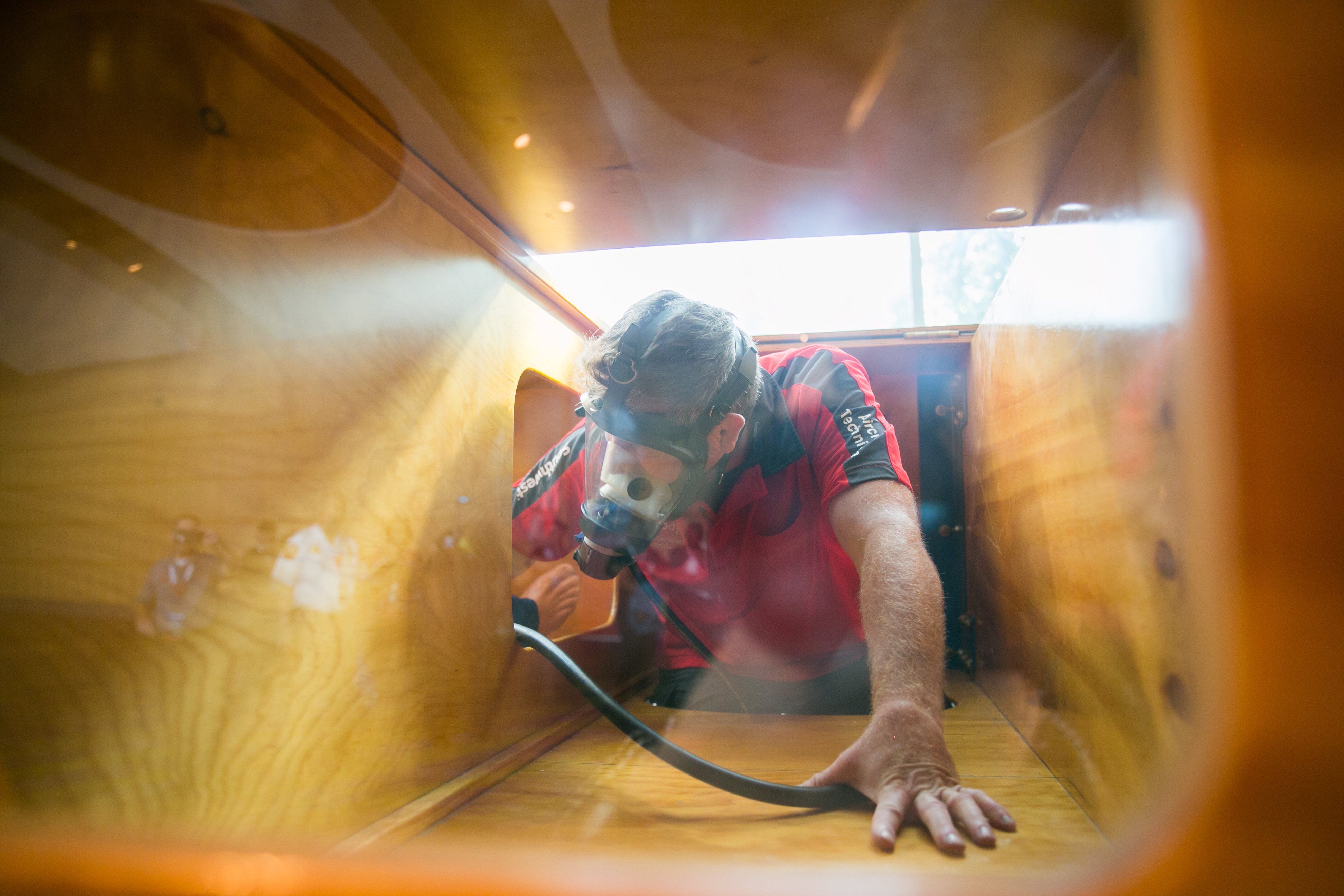
    In addition to live demonstrations on suspicious package response and enclosed space rescues, the expo featured the Airport’s Mobile Command Vehicle and other emergency vehicles for staff to explore.

    To underscore safety, the program celebrated Airport employees whose front-line actions potentially save lives and reduce hazards. Top safety achievements included Customs and Border Protection officers who saved a choking victim. Delta Air Lines employee Rob Santee was hailed for year-over-year gains as “the face of Delta safety.”
    Duncan lauded award winners, adding that the daylong event offers an important reminder for all of us to stay on our toes.

    “We know the risk of hazards exists throughout an airport, particularly at the world’s busiest airport,” Duncan said.

    “It takes the efforts of the entire Airport community to maintain public safety.”
    The full list of Excellence in Safety Award winners are as follows:

    Category Winner
    Risk Management Award Department of Aviation
    General Contractor Safety Award Kiewit Infrastructure South Co.
    Subcontractor Safety Award Brooks Berry Haynie & Associates
    Minority Business Enterprise (MBE) Safety Award Technique Concrete Construction
    Female Business Enterprise (FBE) Safety Award Synergy Development Partners, LLC
    Fire and Life Safety Award Officers M.G. White, Aton Williams and Moses Watkins – Customs and Border Protection
    Foreign Object Debris Award Melissa Pettiford – TBI
    General Safety Airside Award Heinz Hansen – DOA Airside Operations
    General Safety Landside Award Jeffrey Alston – DOA Landside Operations
    Safety Leadership Award Rob Santee – Delta Air Lines


  • Cool Canopies at Hotlanta’s Airport

    Cool Canopies at Hotlanta’s Airport


    By Jennifer Ogunsola

    Communications Manager

    Atlanta’s skyline is about to change, but you’ll have to travel a little south of downtown to see it.

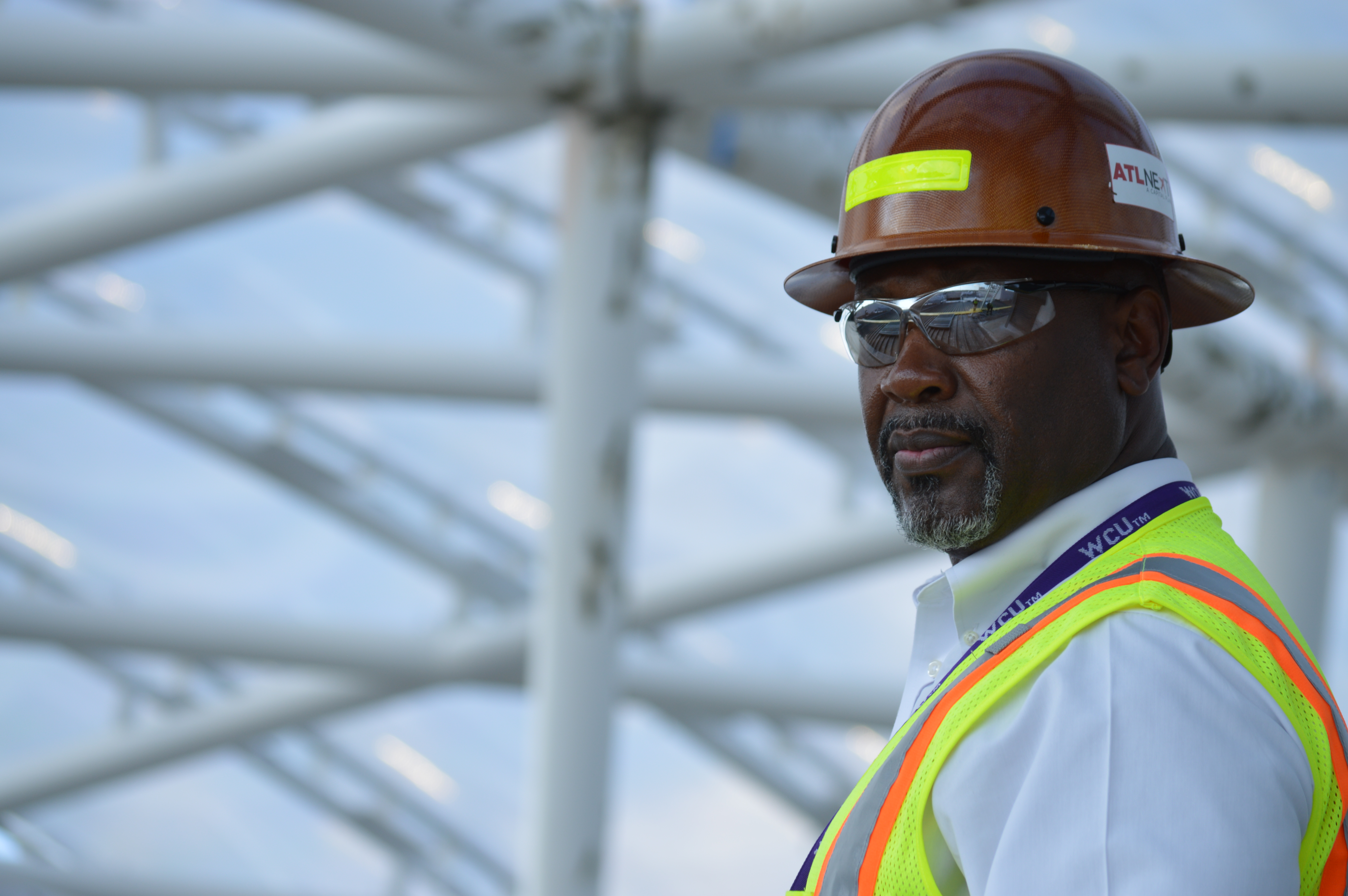
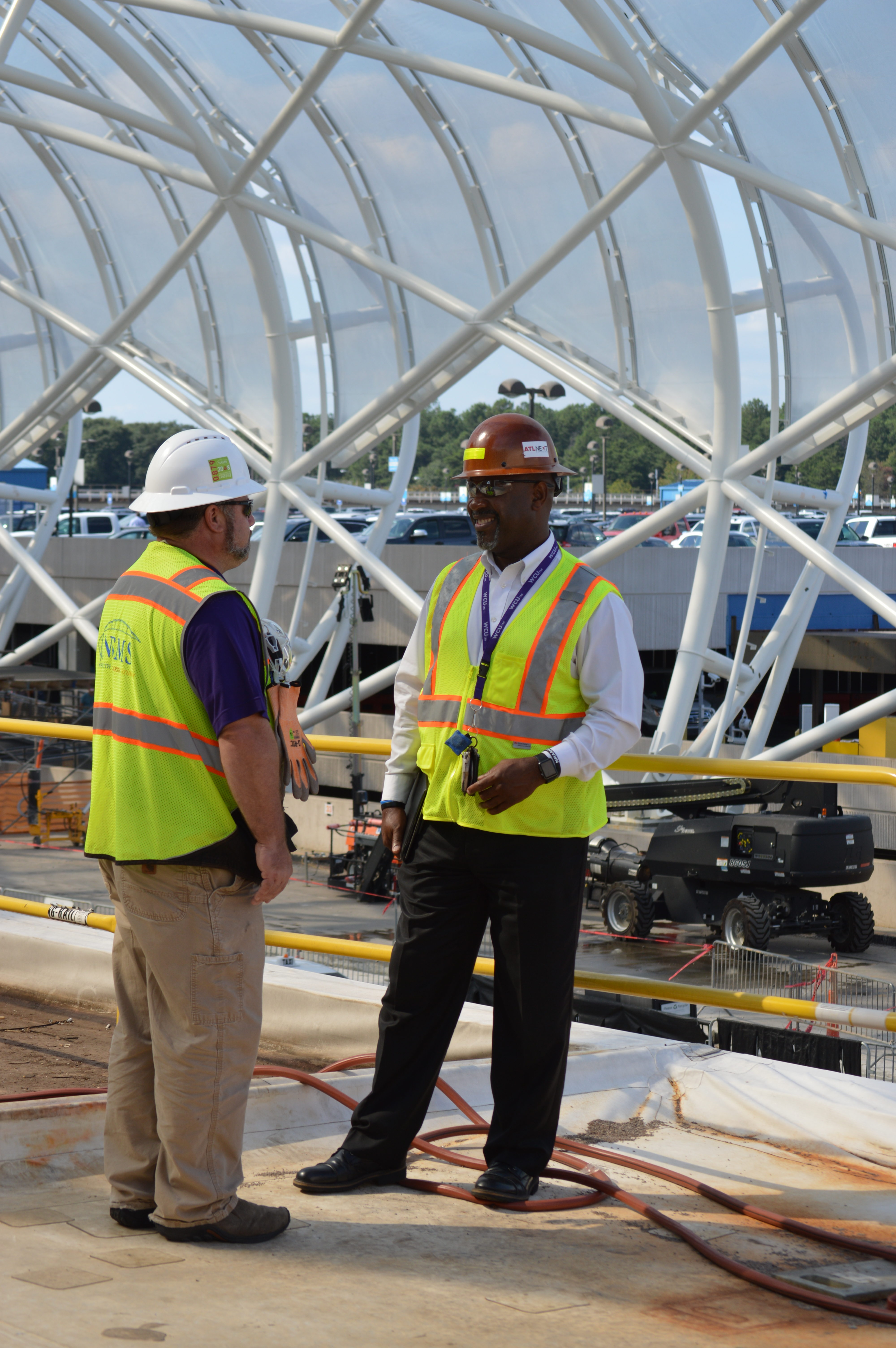
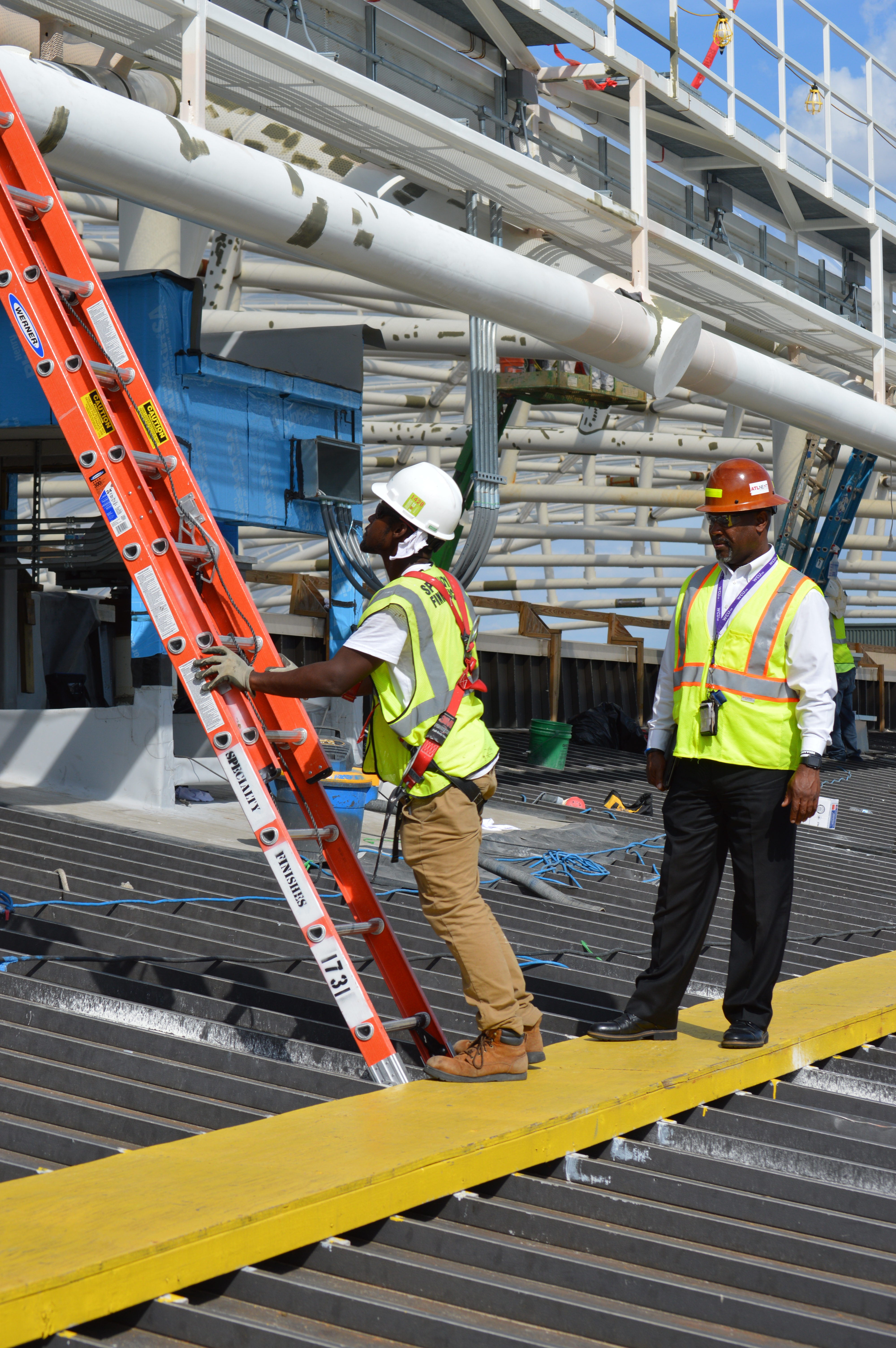
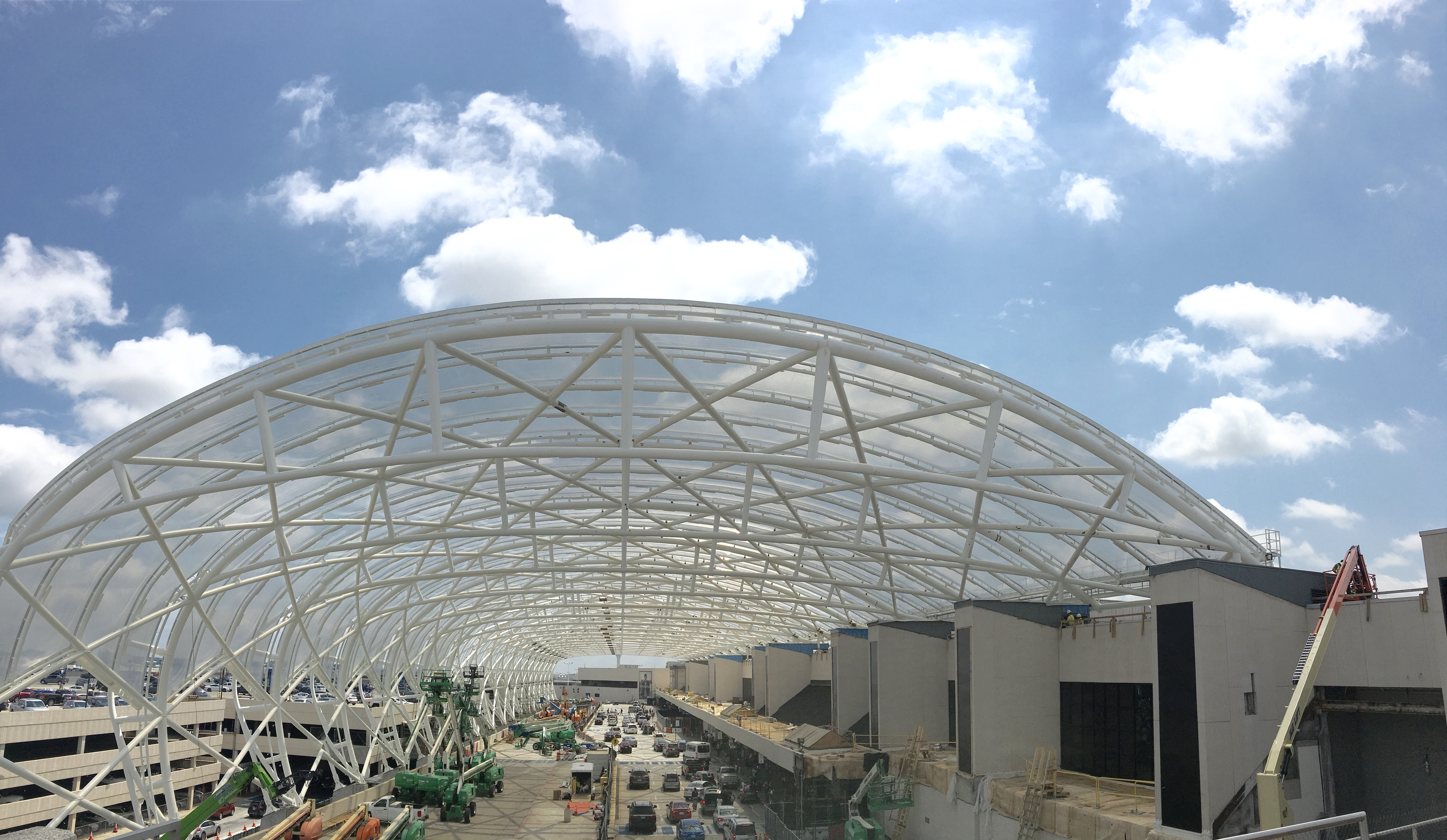
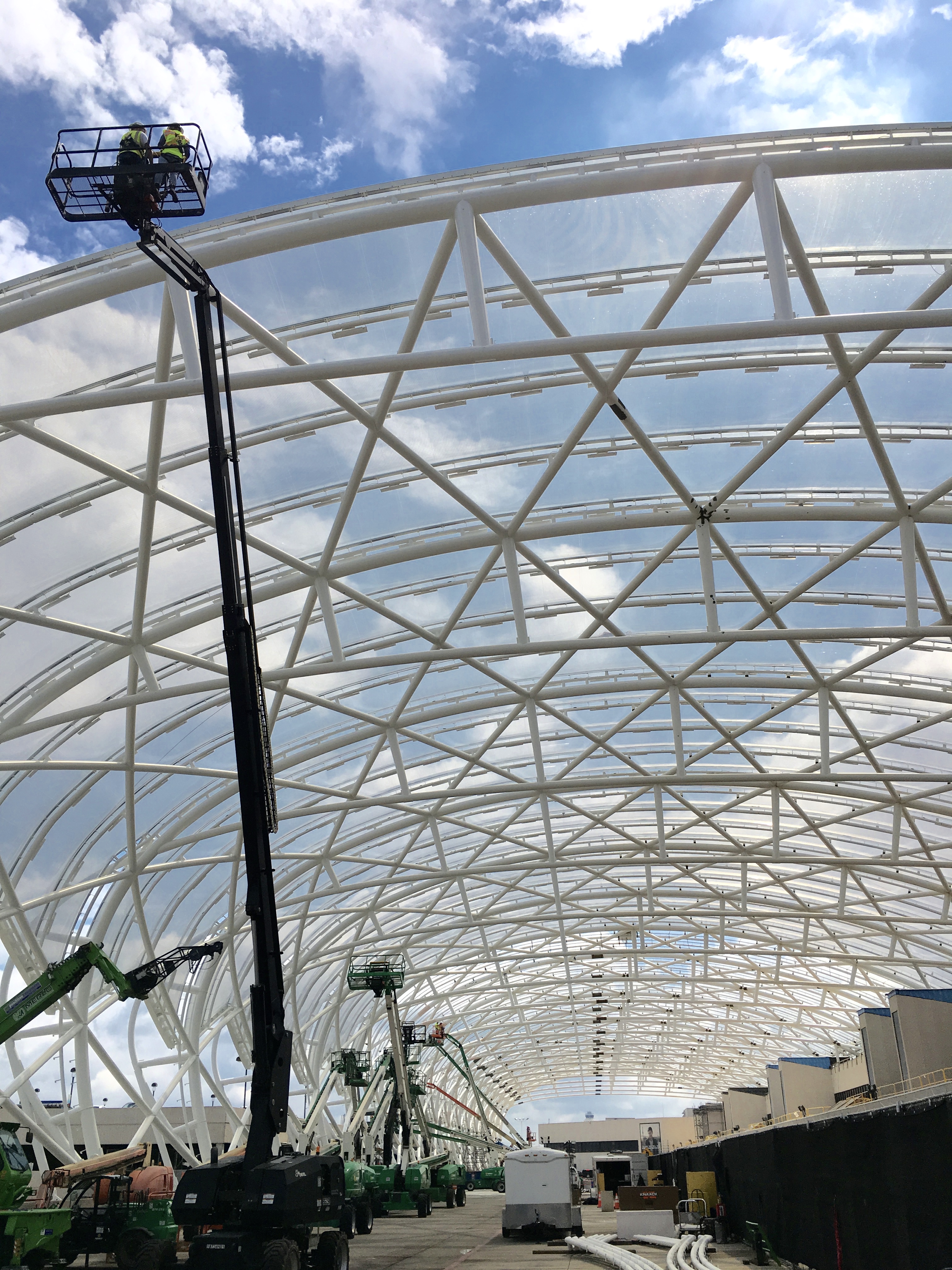
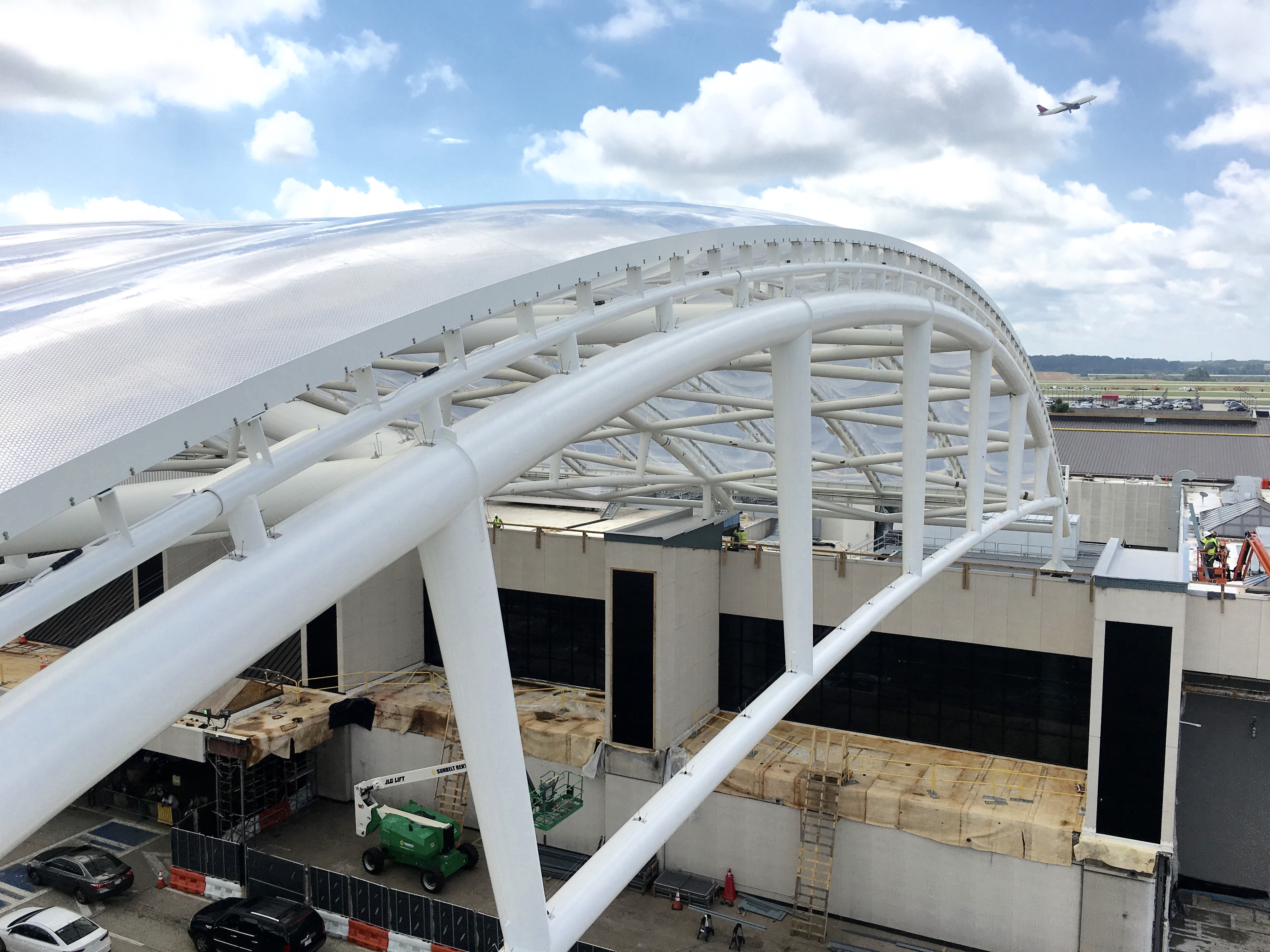
    Hartsfield-Jackson Atlanta International Airport (ATL) is constructing two massive canopies that will soon become an architectural icon for the city of Atlanta. Those additions are just part of the 20-year, multibillion-dollar capital improvement program called ATLNext.

    If you’ve been to Atlanta’s airport within the last year, most likely you’ve seen construction crews erecting large, uniquely-shaped steel structures over the North side of the Domestic Terminal, and if you travel through ATL often, you probably have some questions.

    What are they building? When will they finish? And many city-dwellers are asking, “are my tax dollars funding this project?”

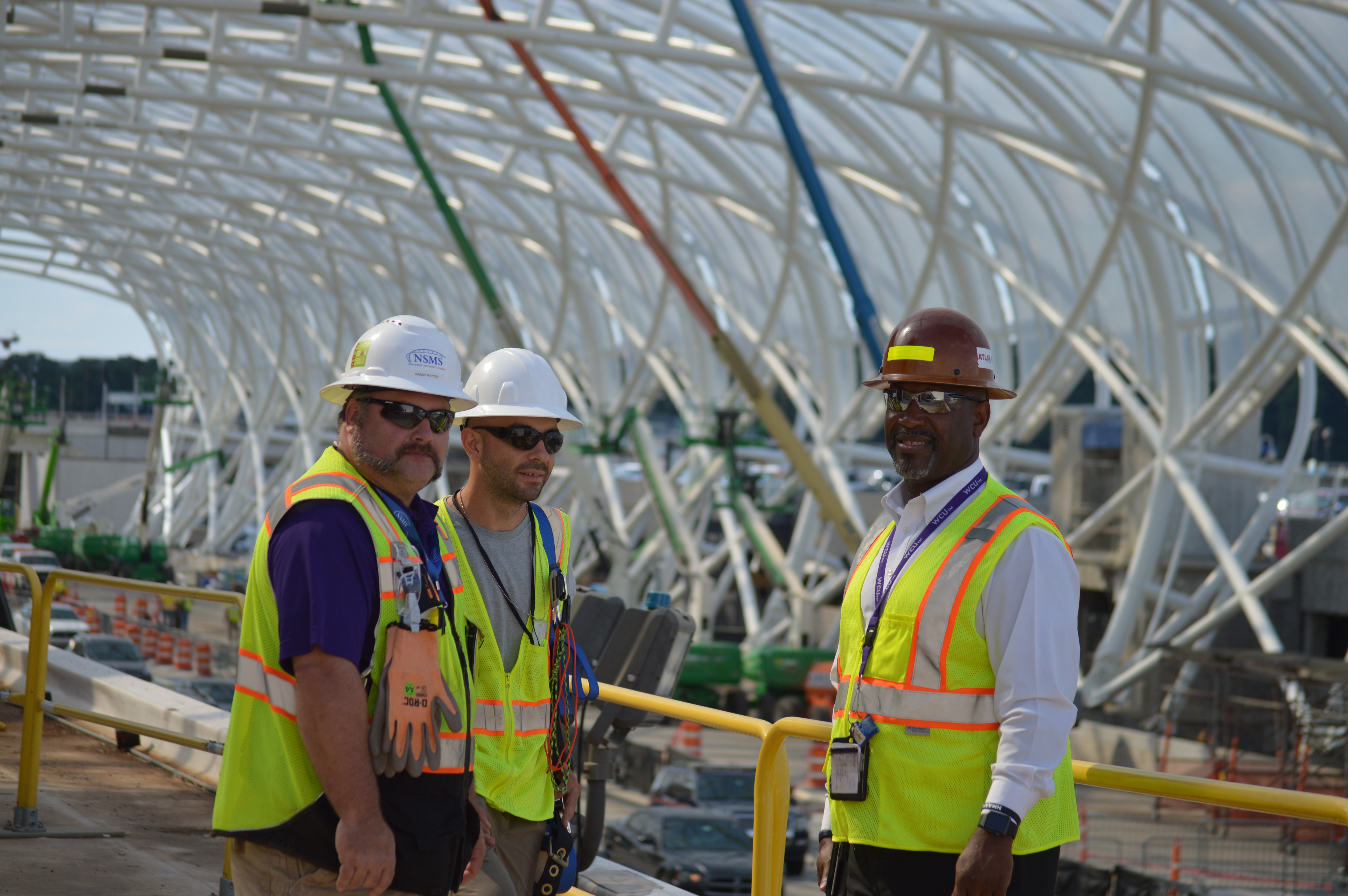
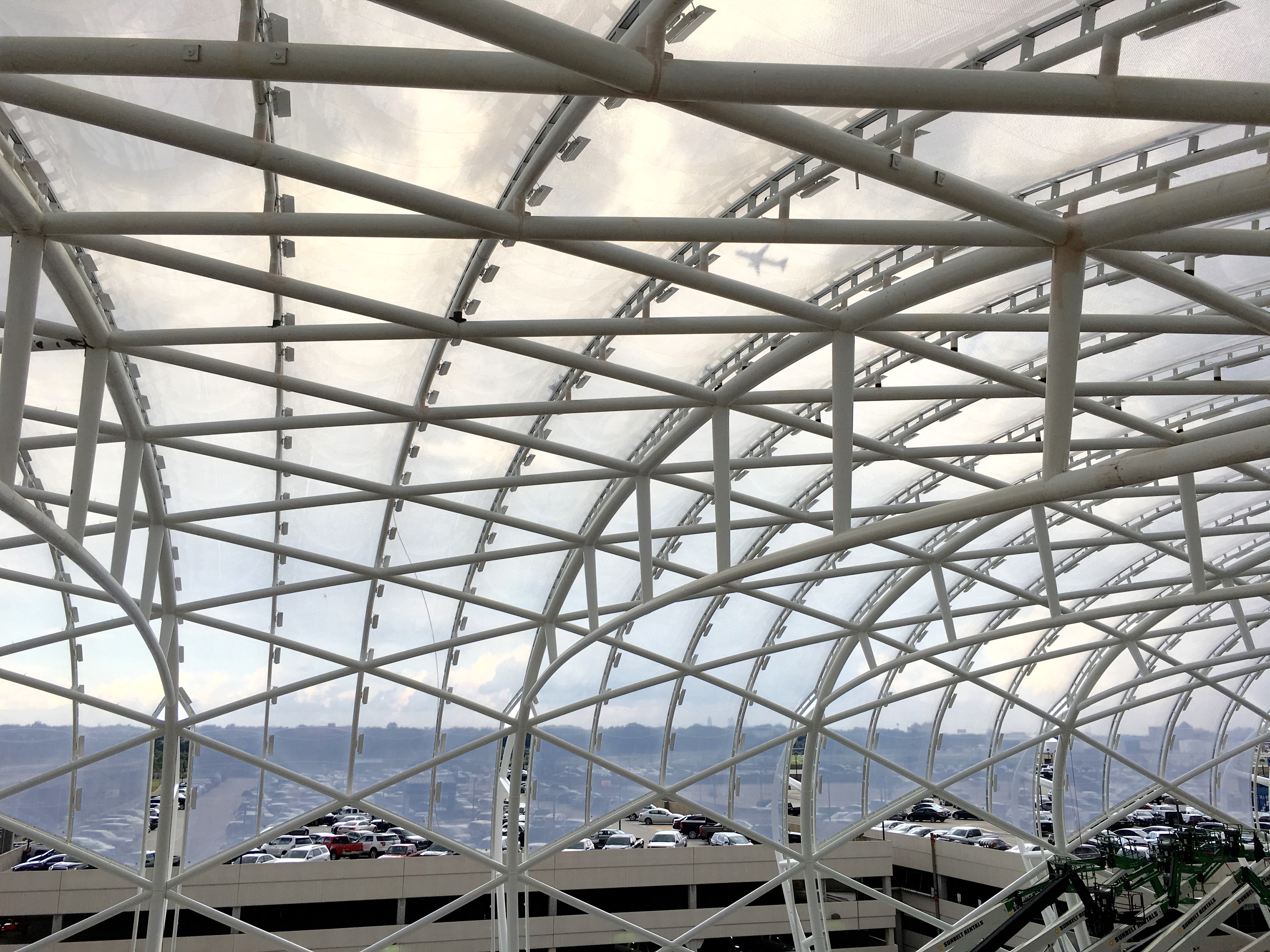
    The canopies are nearly 900-foot-long structures — that’s the length of nearly three football fields. But when finished, they are “going to make the passenger experience much more pleasurable, and give the Domestic Terminal a completely new look,” said Tom Nissalke, ATL’s interim assistant general manager of Planning and Development.

    With all the debris, dump trucks and passenger detours, we thought we’d ask travelers what they think about the canopies going up.

    Dee Hawkins is from Chicago but travels through ATL sometimes. She said, “I wasn’t sure what exactly was happening, but I knew that whatever it was, it seems as if this airport is only getting better because it looks phenomenal already. And it’s looking like there will be more open space, which I love.”
    More open space is indeed part of the plan, but there is so much more ATL passengers will appreciate about the 3,050-tons of steel slated to extend across the roadways and curbsides of both sides of the Domestic Terminal.

    In addition to the massive arches and waterproof, translucent coverings, at night, there is the option of bringing them to life with light. A total of 1,938 lights on each canopy – with seven to eight color variations – give the canopies a stylistic addition that will create a dramatic transformation of ATL.

    While completion of the North canopy is scheduled for October 2018, by 2020 the world will witness the canopies ascend over both North and South sides of ATL’s Domestic Terminal.

    “The canopy’s primary use is to shield passengers from the weather, so whether you’re getting picked up on the curbside or you’re going between the Domestic Terminal and the parking structures, you’ll stay protected from rain and other inclement weather,” said Nissalke.

    In addition to being an architectural icon, the canopy structures will increase overall efficiency, which is a concern for everyone, especially passengers.

    “As a passenger, I want to make sure that there is some kind of pedestrian walkway between the parking garages and the Terminal because that’s what slows down the traffic flow and causes so much congestion,” said traveler Melvin Donato.

    Airport officials and engineers agree. Pedestrian bridges are part of the final architectural plan, which will enhance passenger safety and improve traffic flow.

    Nearly 104 million passengers walk through ATL annually, and since the doors of the Domestic Terminal opened in September 1980, there haven’t been any substantial exterior modifications. Hence, the purpose of ATLNext. 

    The project is more than just the canopies. It’s the enhanced vestibules and the enhanced facades,” said Nissalke. “The face of the Domestic Terminal on both curb fronts will also just get a totally new look as well.”

    As for those city-dwellers wondering about their tax dollars?

    “Taxpayer dollars are not being used,” said Nissalke. “Airport revenue is paying for the canopies. The Department of Aviation is an enterprise fund, so we’re not part of the City’s general fund.”

    ATLNext is a 20-year project currently underway at Hartsfield-Jackson that consists of a series of improvements designed to boost capacity, renew and replace existing facilities, and enhance aesthetic appeal. It includes modernizing the Domestic Terminal, replacing parking facilities, expanding cargo operations, and paving the way for a hotel and mixed-use development.

    “People in our industry are used to building construction projects, and when we got to ATL, we realized that we were building a logistics project that included construction,” said Justis Brogan, a senior project manager for NSMS, the joint venture of New South Construction, McCarthy Building Co. and Synergy Development Partners.

    Brogan, who has spent the past 14 years in construction management, and is currently leading the canopy build-out for ATL, says that this is the largest and most complex project that he’s worked on to date.

    “We thought that it was crazy and very difficult to build a structure of that size and complexity in between an active terminal and an active parking deck and over an eight-lane highway,” Brogan said.

    “But now that we have done that for the North [side], we are excited about the prospects it brings to the passenger experience and staying dry on a rainy day in Hotlanta.”


    Nineteen steel super trusses on the north canopy were constructed from October 2017 to May 2018. Check it out!

  • Airport art leads to unlikely connection

    Airport art leads to unlikely connection


    By Jennifer Ogunsola

    Communications Manager

    It’s not unusual to walk through a large airport and spot friends, family members and others you may know. Many people travel domestically and internationally on airplanes, so spotting a familiar face is pretty typical. But, imagine walking through the busiest airport in the world and seeing yourself, or one of your close family members, on display.

    While that isn’t a normal occurrence, the passenger experience at Hartsfield-Jackson Atlanta International Airport (ATL) is anything but normal.

    Just ask the Perry family.

    Andre Perry, a fellow at the Brookings Institution, his wife Joia, and their seven-year-old son, Robeson, discovered just how unique Hartsfield-Jackson is after traveling to Atlanta for New Year’s Eve this past year.

    “I travel to Hartsfield-Jackson at least 20 times a year, probably more,” the Washington D.C. resident explained. “My wife also travels extensively. She has made dozens of stops in Atlanta, and my son has been there several times.”

    When walking through Atlanta’s airport, you may be in awe of many things, including its size, the world-class restaurants, upscale stores, and award-winning art exhibits throughout the Domestic atrium and seven concourses.

    “Each time that we’re in Hartsfield-Jackson, we notice the art … and in particular, we love looking at some of the historical photos of civil rights leaders,” Perry said. “Atlanta has such a rich tradition, particularly for African-Americans, and so the art in Atlanta’s airport often reflects history, but [there are] also a lot of stand-alone pieces that any connoisseur would appreciate.”

    David Vogt, ATL’s Art Program manager and artist, developed the Airport’s art concept in 1996 right before the Olympics. “Our installations are incredibly unique, and it’s fantastic to see how successful the different exhibits are in terms of delighting passengers,” Vogt said.

    “It’s great to see people with their cellphones taking videos and selfies of our art installations.”

    For the Perrys, “selfies” gained a new meaning during their New Year’s Eve trip through ATL.

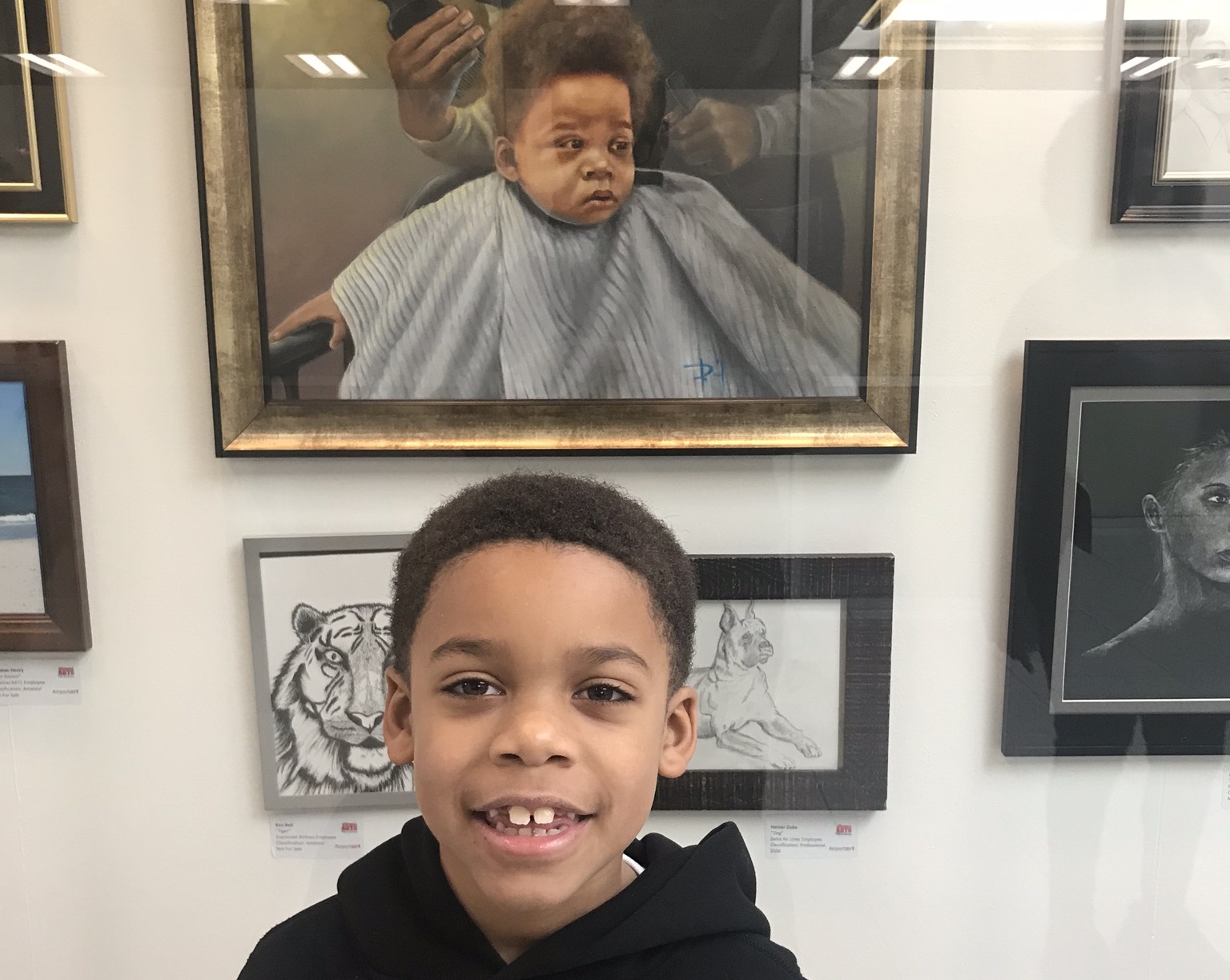
    As the trio headed to their departing gate, the father noticed – in the corner of his eye – his son’s image in a display case on Concourse T.

    “It startled me because seeing an image of your child in an airport is crazy. I honestly didn’t know how it got there,” Perry said.

    Perry’s reaction got the attention of his wife and son, and they all looked at the picture in amazement.

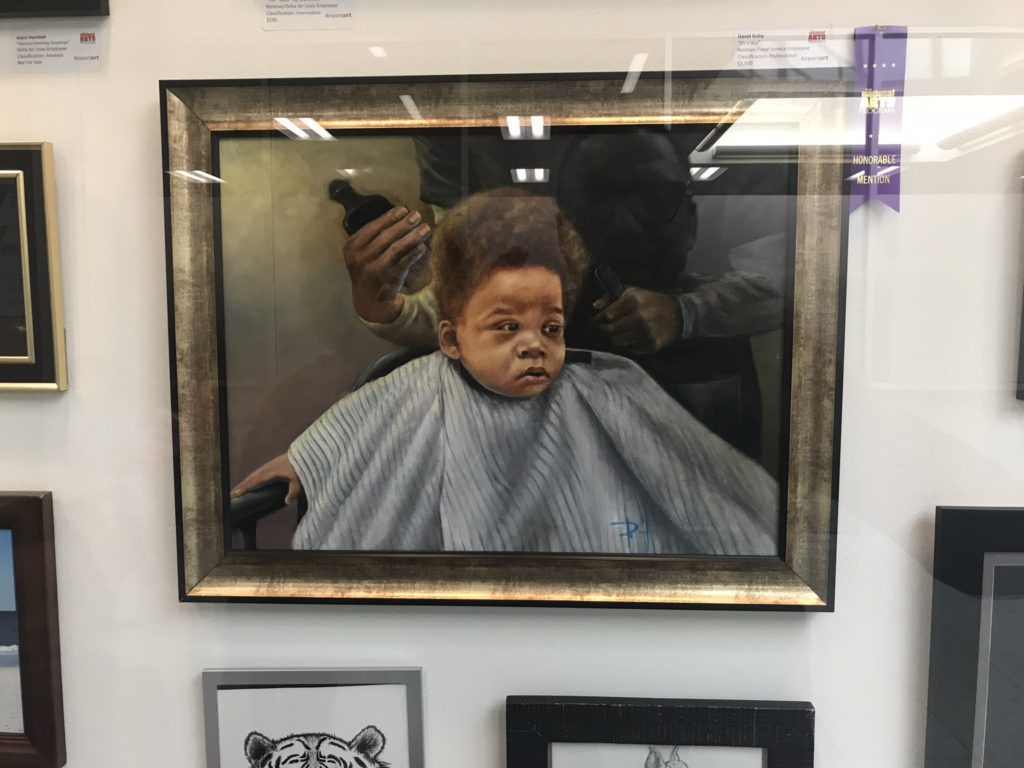
    The portrait was of Perry’s son getting a haircut on his first birthday. Perry said the image made him nostalgic as he remembered that rite-of-passage moment, which he captured in a photo.

    “That was a classic father-son moment,” Perry said. “Whenever you see rituals and traditions that African-American boys and men participate in, you have to appreciate them. To have it on display at the airport in Atlanta, where hundreds of thousands of people travel every day warms my heart,” he added.

    Vogt recalled instances where other passengers made connections to specific art exhibits, but admits that this connection is rather peculiar.

    The artist, David Roby, shares an astonishing similarity as the young boy in the portrait: their name.

    Robeson Perry’s nickname is Roby.

    “The whole thing is just unexplainable,” Vogt said.

    “For it to be on display when the family just happened to be moving through the Airport was completely shocking.”

    The display was part of the Airport’s fourth annual Employee Art Exhibit, led by the National Arts Program. The program welcomes ATL employee and members of their immediate families to participate in a professional visual arts exhibition and offers cash prizes for top works.

    David Roby, who unknowingly named his work, “First Kut,” is an immediate family member of one of ATL’s concessions employees. He participated in the competition for two years, and for this piece, Roby was recognized as an honorable mention but placed first the year prior.

    “I was looking for a project to do,” explained the artist, who Googled photos for inspiration. I like [painting] children, and it caught my eye.”

    The former barber recognized a little fear in the photographed boy’s face, so titled his oil-on-canvas piece after a first-time barber visit.

    The Atlanta artist learned to draw in the ‘70s, exploring different mediums and techniques.

    “It was something to give me peace,” Roby said. “It was a pleasure.”

    As for what the family did after they snapped a picture of their son in front of his portrait?

    “I went through my phone to find the actual image,” Perry explained.

    “After I found it, I asked my social media community if anyone knew the artist.”

    “We should always have art on display in public places where there’s a lot of congestion, traffic and movement because we need to take the time to appreciate the beautiful things in life,” Perry added. “Yes, we might be in a rush to get to our plane, but stop for a moment, pause, reflect, look at the art, look at what people are going through, and feel the energy of the artist,” he said.

    When reflecting on the importance of ATL’s art program, Vogt said, “Airports are about making connections, connecting people to different destinations, bringing families together. The art program does that in so many different ways. It connects people to memories of nature, feelings, and it also roots their travel experience with something memorable here at the Airport.”

    As for Perry and his family, their fondness for ATL and its art will never diminish. He received “First Kut” as a gift from his wife on Father’s Day. His son Robeson also loves the discovered portrait.

    “My son could see that it was him,” Perry shared of their first viewing. “Afterward, he said, ‘I’m famous.’”

    David Roby’s art, including “First [Hair] Kut,” can be found on fineartamerica.com.

  • ATL celebrates air expansion to Shanghai

    ATL celebrates air expansion to Shanghai

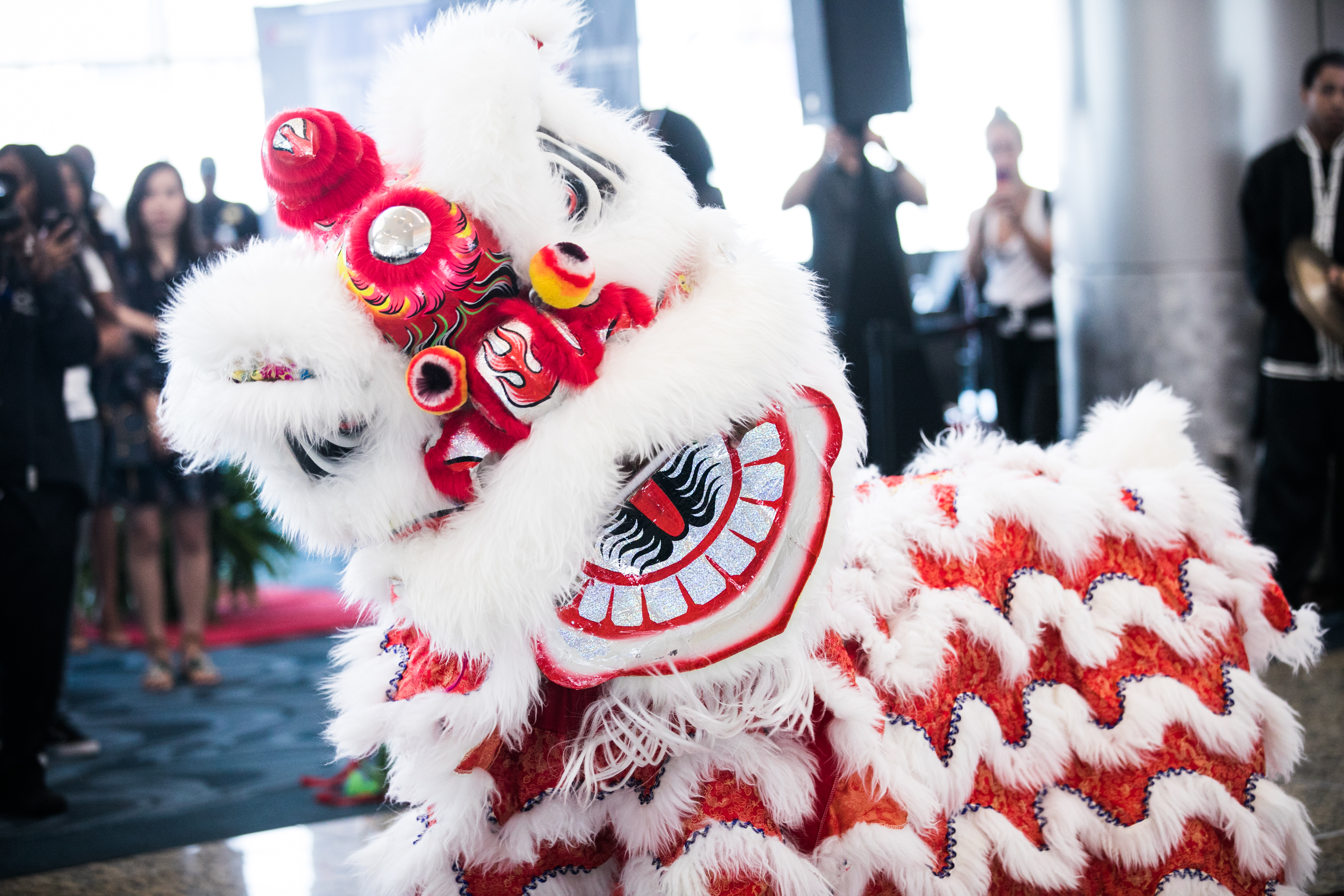
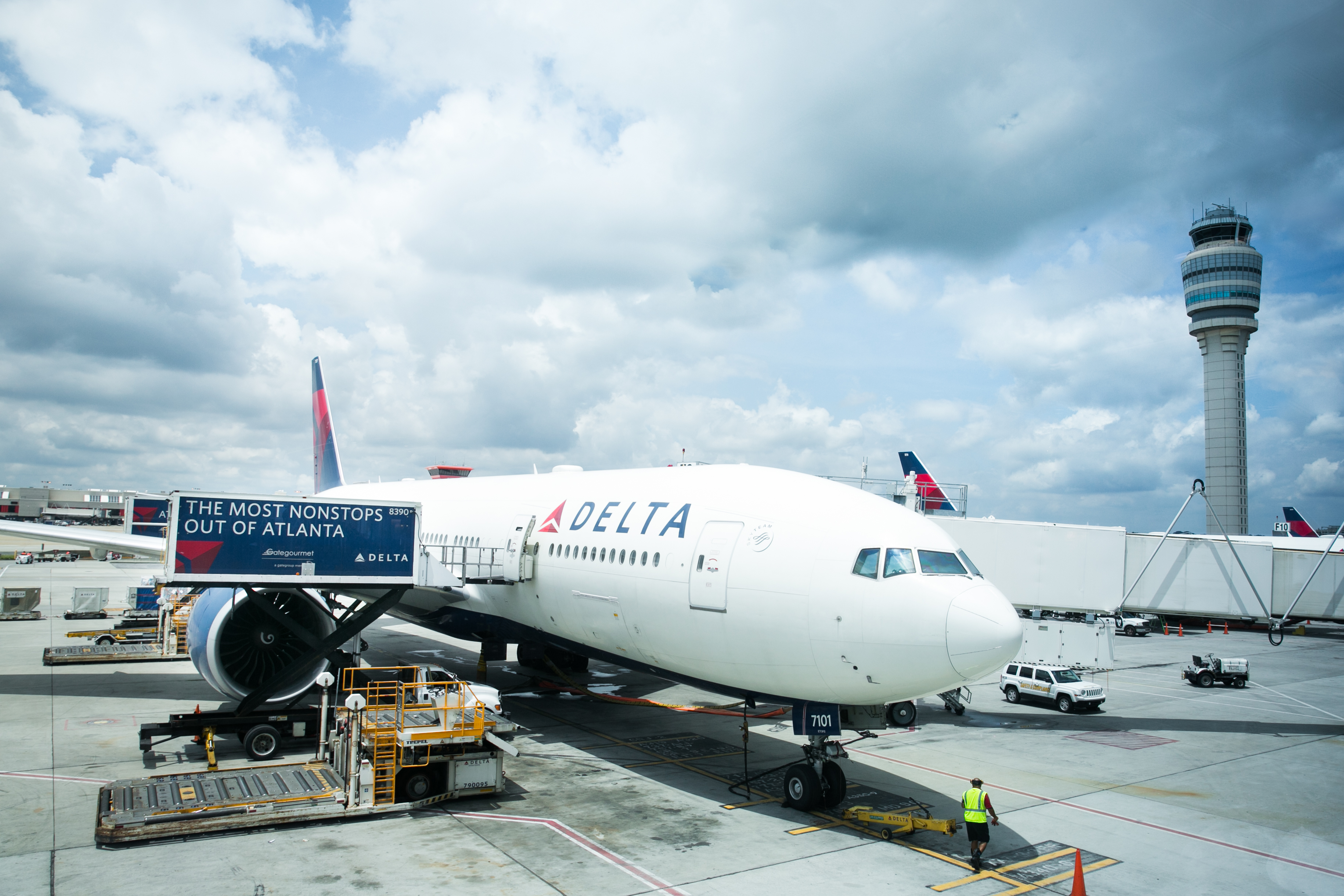
    The July 20 inaugural flight to Shanghai Pudong International Airport carried 291 Delta Air Lines passengers on a Boeing 777. ©2018 Decisive Moment Events


    By Jennifer Ogunsola
    Communications Manager

    City leaders hailed the launch of Delta Air Lines’ most requested flight route by its passengers. Flight 185 connects Hartsfield-Jackson to one of the largest commercial centers in China.

    The new nonstop service to Shanghai Pudong International Airport (PVG) complements Delta’s existing flights between ATL and the two largest Asian markets, Tokyo and Seoul. As the only flight to Shanghai from the Southeast region, it will connect travelers to more than 70 destinations in China and increase trade.

    City of Atlanta officials said the twice-daily service between ATL and PVG is a bold statement about ATL’s intent to remain at the forefront of national and international travel.

    “It is our hope that by growing our international connections, we will continue to build and contribute to a productive global conversation that enhances peace, stability and equality around the globe,” said Marva Lewis, City of Atlanta chief of staff.

    This week, ATL officials will sign a Memorandum of Understanding (MOU) with the Shanghai Airport Authority, which represents Shanghai Pudong International Airport and Shanghai Hongqiao International Airport (SHA). This is the sixth sister airport agreement that ATL officials have signed with international airports. ATL also launched the WeChat microsite in the Asia-Pacific market, allowing Hartsfield-Jackson to reach nearly 1 billion monthly users. Considered a hybrid of Facebook, Twitter and Instagram, the all-in-one messenger will open social conversation around travel, international accommodations and passenger services, as well as available food, beverage and retail options in the Asia-Pacific market.