The official website of Hartsfield-Jackson Atlanta International Airport

Author: Jennifer Walters

  • Armored with a Legacy of Service and Love

    Armored with a Legacy of Service and Love

    Drawing the connection between fighting fascism abroad and racism at home, 97-year-old WWII hero honored—for the first time ever—76 years after his homecoming
    By Jennifer Ogunsola

    Communications Manager

    The year was 1943. Franklin D. Roosevelt was in the White House, facing massive race riots that shook cities like Detroit, Harlem, and Los Angeles to their core. America was at the height of the second World War where thousands of young black men were drafted to fight fascism abroad, while simultaneously fighting racism at home.

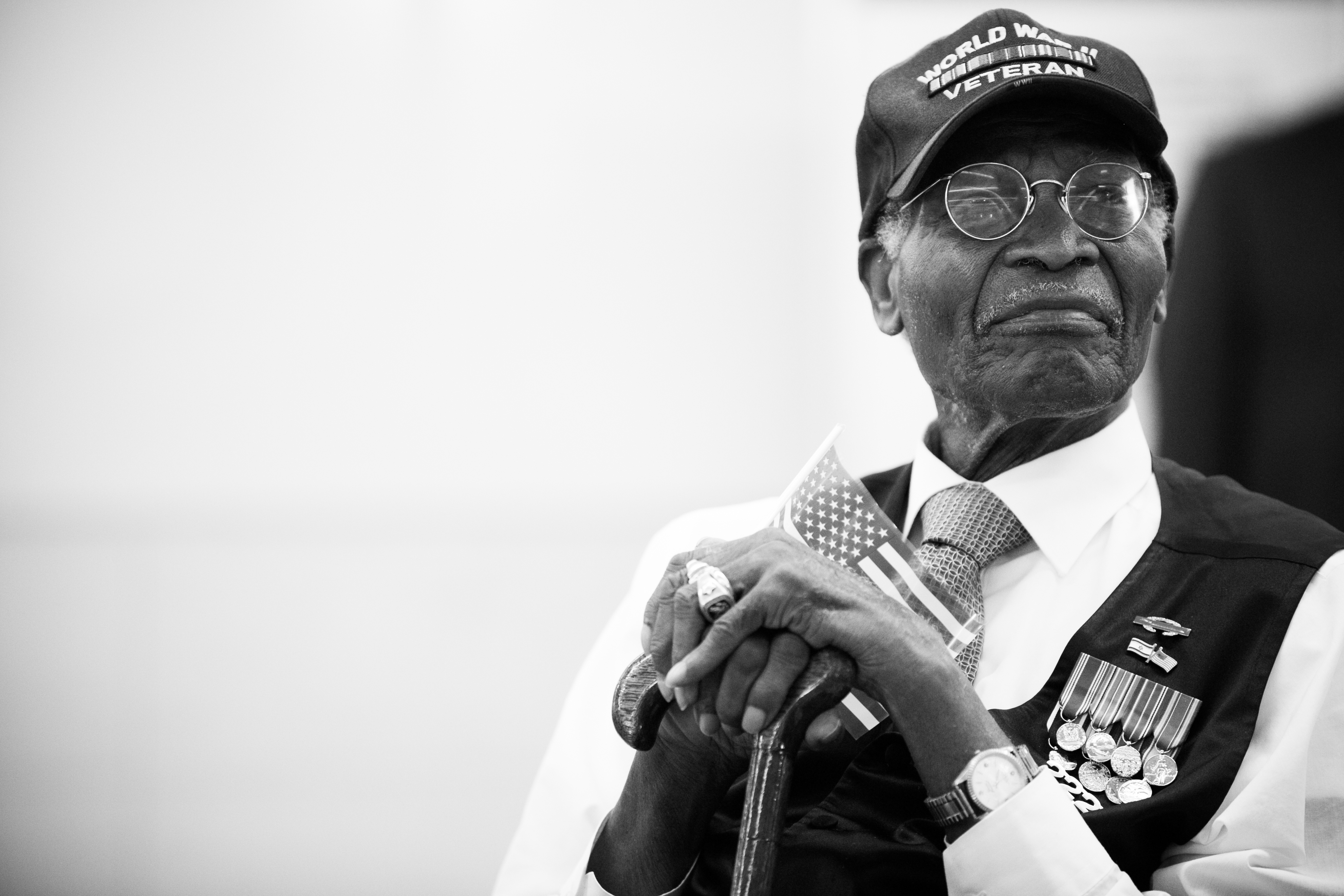
    Pastor Matthew Southall Brown, Sr. was a 20-year-old high school senior in Savannah, Georgia then. He remembers feeling alone as everyone around him left for war, a concept familiar to him because his father served in WWI.
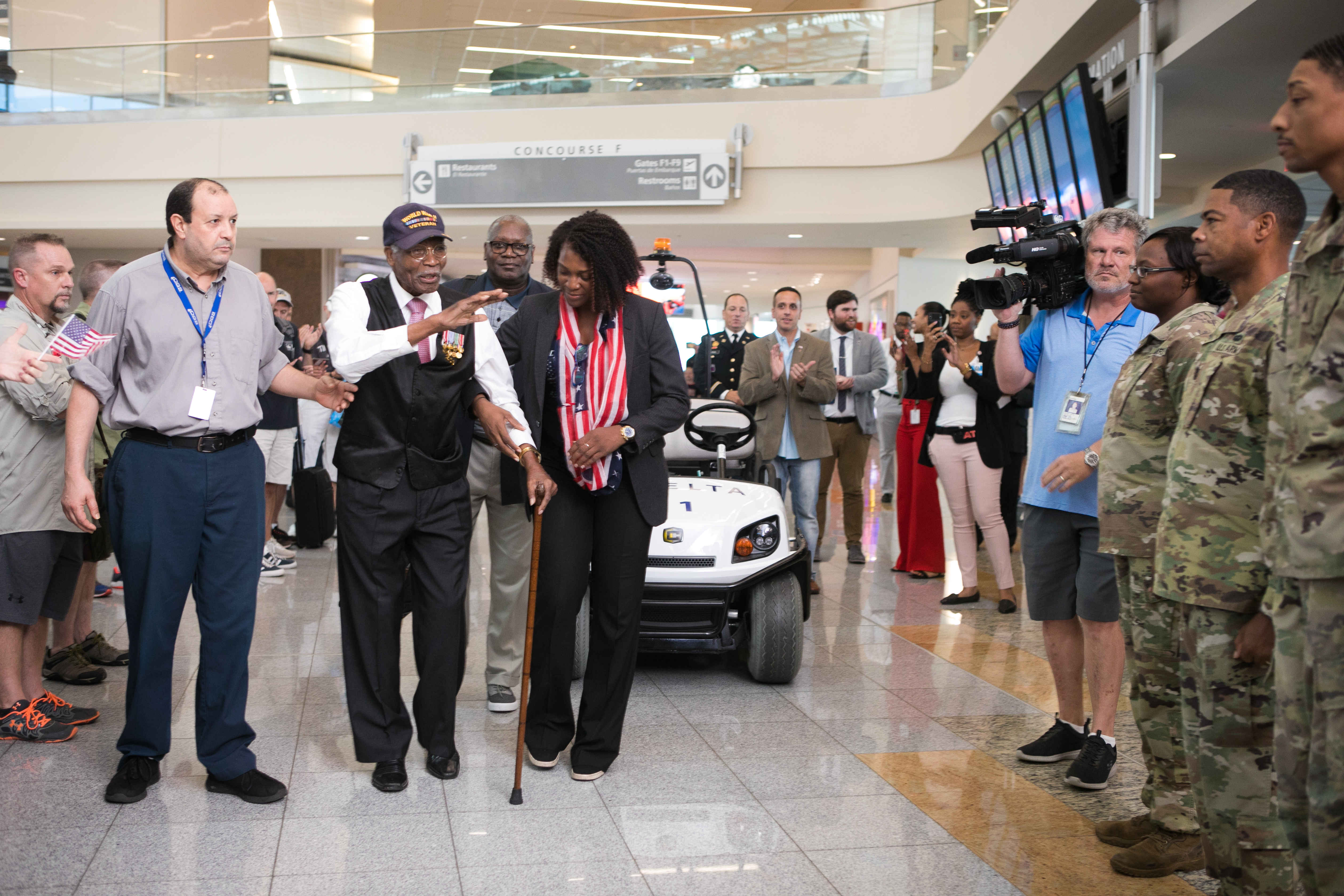
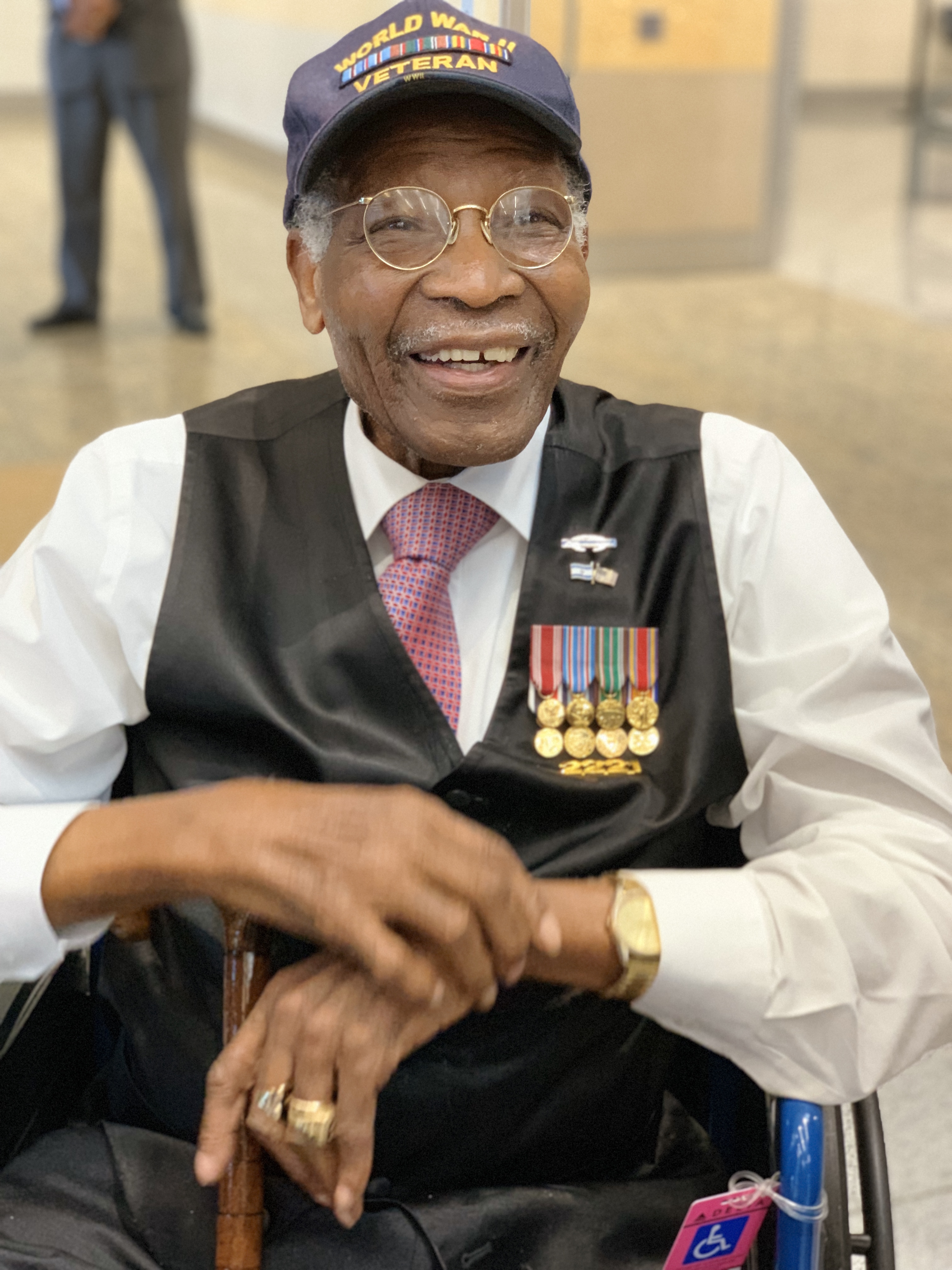
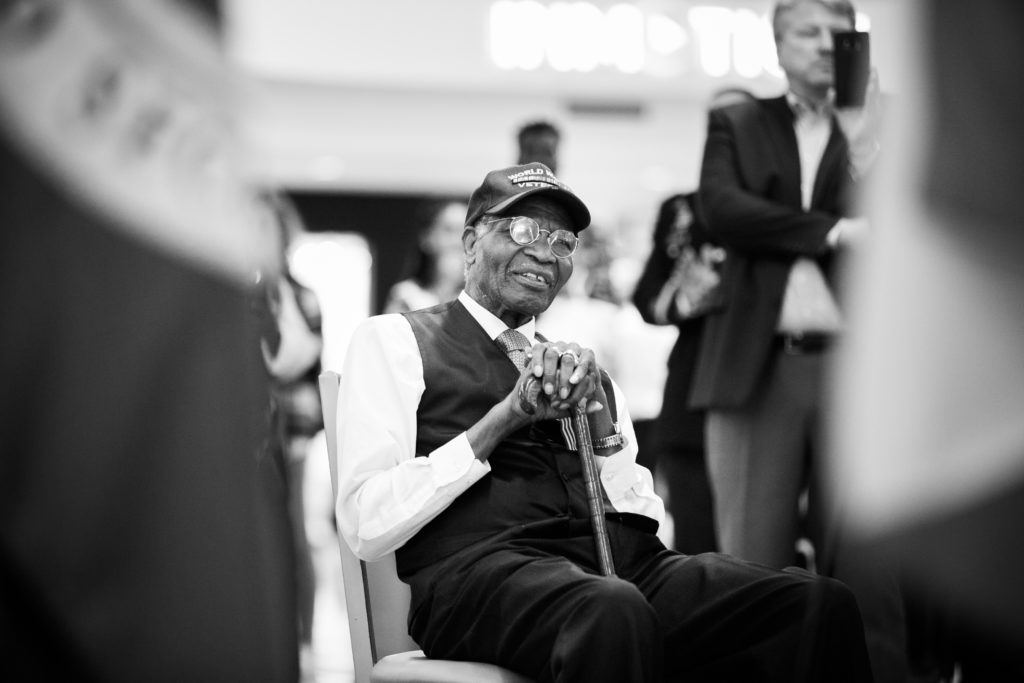
    Now 76 years later, the 97-year-old WWII hero sat in Hartsfield-Jackson Atlanta International Airport’s VIP room on Concourse F, and recalled the day he received his draft letter.

    “The only thing I remember about the day is that it must have been a sigh of relief because it did seem like everybody that I knew was gone,” Pastor Brown shared.

    “My oldest brother was in college at the time, so he was deferred, but he would write and tell me who was going and who had already left. I don’t know if I got the letter or the diploma first. But I say that I got the diploma in one hand and the letter in the other hand.”

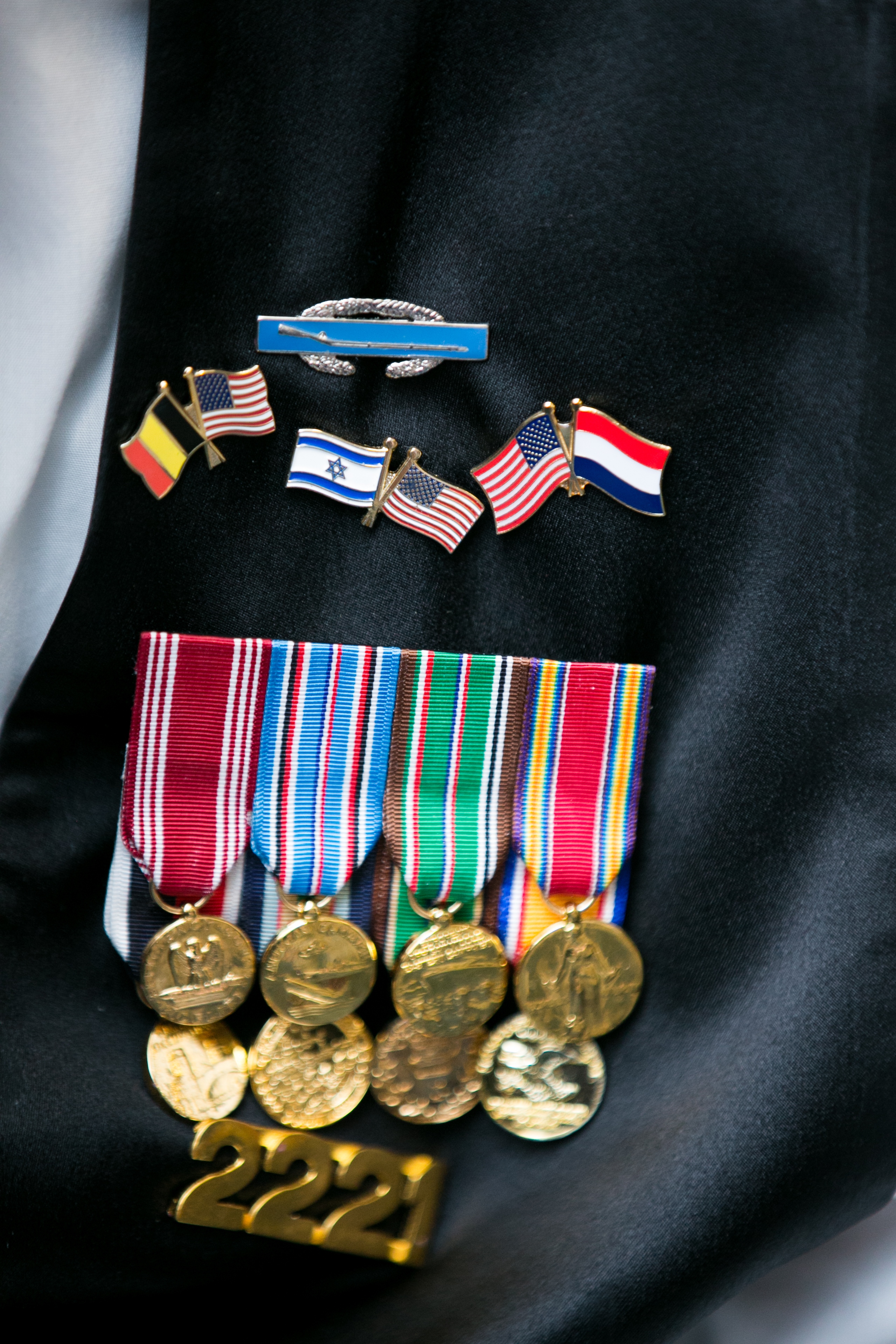
    Though Pastor Brown trained as a rifleman, the then-segregated Army relegated him, and most blacks serving, to support duties. It was during the war’s most intense fighting that Brown volunteered for combat duty and became one of the first 2,000 black soldiers to fight alongside white soldiers.

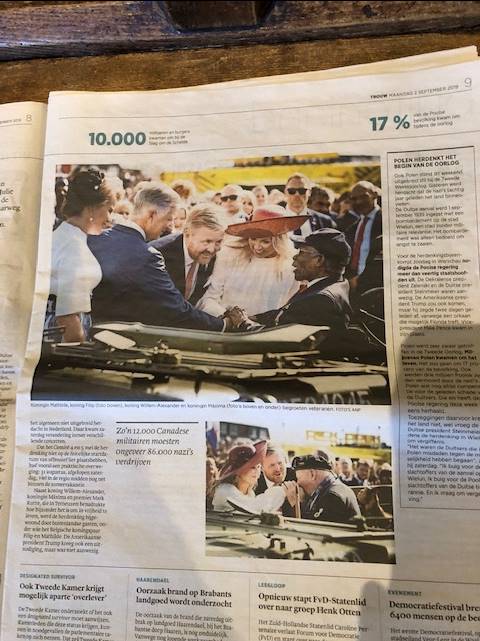
    Seventy-five years have passed since Pastor Brown’s homecoming, one without fanfare or recognition for his sacrifice and service. Until now. Just three years short of his 100th birthday and for the first time since his discharge, Brown was returning to Belgium, the country where he fought in the Battle of the Bulge, the bloodiest battle for U.S. forces in World War II.

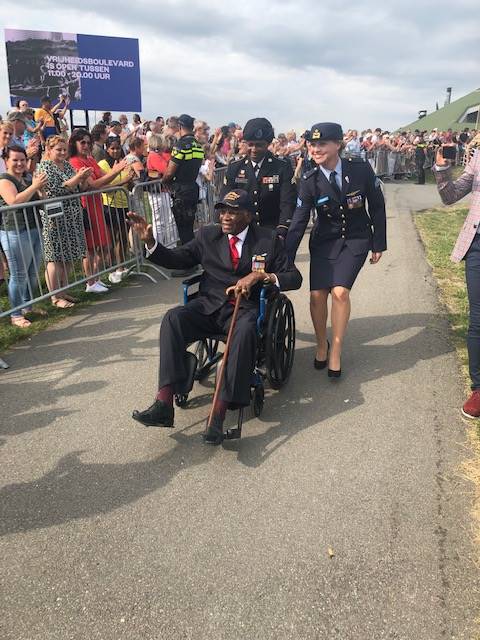
    This time, however, instead of being met by enemies, Brown was greeted and embraced by dignitaries from the Netherlands and Belgium and 20,000 citizens eager to acknowledge and honor him during the 75th anniversary commemoration of the country’s liberation from Nazi occupation.
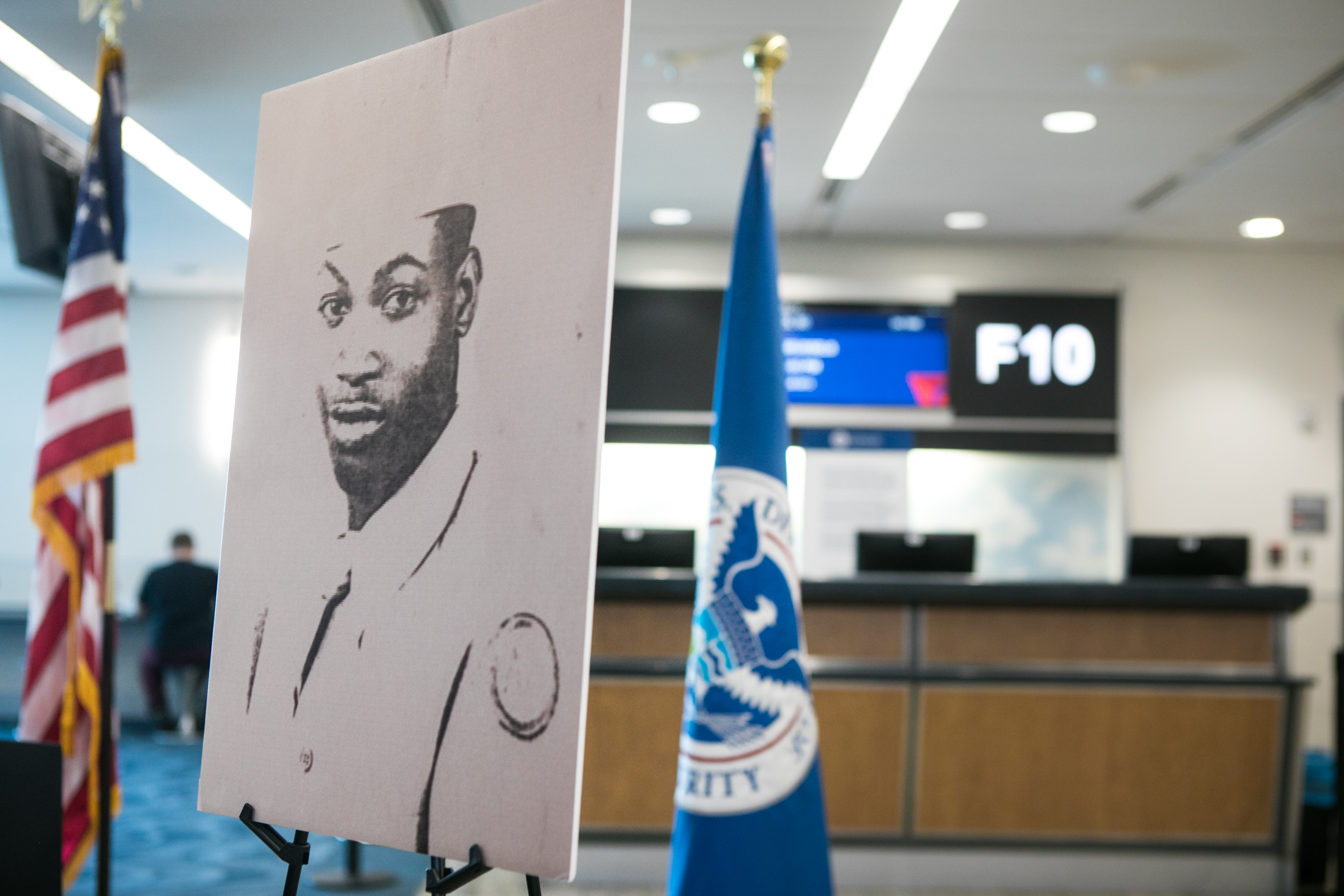
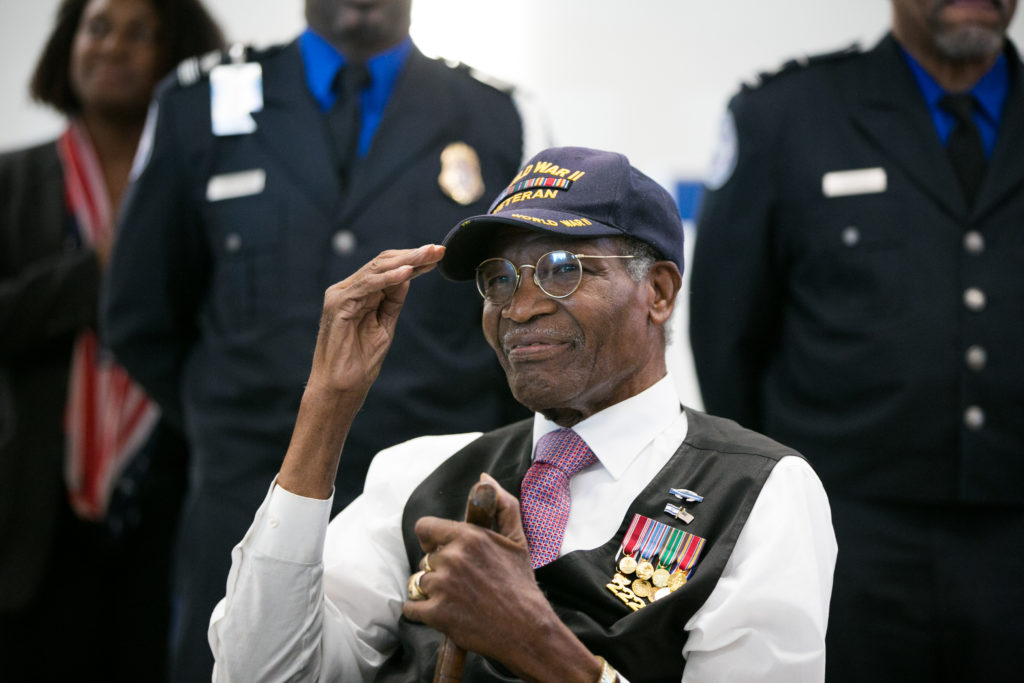
    Before his departure, Hartsfield-Jackson Atlanta International Airport, along with its partner, Delta Air Lines, and representatives from the Transportation Security Administration, worked with Honor Flight South Florida to welcome, escort and celebrate the man who helped liberate Europe.

    ATL Stories sat down with Brown to learn more about his story.

    ATL Stories: Thank you for all that you have done.  After you entered the service, what was one of the first things that you learned?

    Pastor Brown: I learned that most blacks were relegated to what is called a quartermaster, which is a section of the military that supports the other part of the military. But Eisenhower’s orders were if you want to join the infantry, you can sign up. Well, I was tired of stacking gasoline, so I signed up never thinking I would get it. But, I got elected then I got scared. Now I was attached to the 9th Division 60th Regiment Company E. 
    ATL Stories: You had to give up your rank in order to fight?

    Pastor Brown: Yeah, we were all-black units. Can you imagine? When I tell the story, most people ask me why. It’s a simple answer. They didn’t want somebody looking like me giving orders to somebody looking like them. 

    ATL Stories: How did that make you feel? 

    Pastor Brown: It didn’t bother me because I grew up in a segregated society, went into the military out of the segregated society, so it was just a way of life. But when I came back, I joined another army — I was a foot solider for Dr. Martin Luther King, Jr. 

    ATL Stories: So when you came home, you got married and had children? 

    Pastor Brown: I came home and went to college. I had to go to Georgia State Industrial College for colored people. I got married when I came home and I had four children just like my parents. Two boys and two girls. Later, I went to Princeton because it was a renowned seminary. Then I went to American Baptist School of Theology, which is our convention school. I wanted to get Princeton on my resume because it looked good, not because it taught you more. 

    ATL Stories: What has been the most difficult part of your walk, your journey?

    Pastor Brown: I’ve been interviewed by almost every entity in the world, and nobody has ever really asked me that. I’ve got to think about that. Well, I did pastor a church for 35 years [and] that church caught on fire. It was Savannah old grey brick up to the first set of windows. It was established in the early 1800s, and it was one of the most beautiful churches.  That was one of the most difficult parts of my journey.

    ATL Stories: What year was this?

    Pastor Brown: That was in 1993. And I didn’t know that the church was so widely known. We got contributions as far away as from where I’m headed for now… France. And I guess that’s one of the most difficult periods, but we came out of that experience better from the fire because we built a very magnificent and beautiful edifice.

    ATL Stories: I was listening to one of your sermons and you were talking about what’s in your book. And you said, ‘By the grace of God,’ you will get through your ‘it,’ whatever your ‘it’ is. What’s one of your ‘its?’

    Pastor Brown: My wife died in 2014. Six months later, my youngest daughter passed away. Now, I’m still trying to get through that.

    ATL Stories: What is one thing that you are most proud of today?

    Pastor Brown:  I’m proud that I have lived long enough for somebody to say thank you.

    ATL Stories: Well, I’ll say it again, on behalf of everyone at Hartsfield-Jackson Atlanta International Airport. Thank you for your service, your sacrifice, and your willingness to share some of your story with us.
  • Piece for Me, Piece for You

    Piece for Me, Piece for You

    By: Shannon Evans
    Maybe it was the weeks of nonstop travel. Maybe it was the flu bug that’s been going around.
    Either way, I’ve been sick for what feels like forever and tragically, I haven’t felt like eating. Legend has it that the idea of tapas – small plates that are typically shared – was started by King Alfonso X of Spain. He contracted a severe illness that only allowed him to take in small amounts of food with wine. Upon recovery, he declared that all inns and bars would need to serve snacks along with the libation (this type of genius behavior gives me hope that I too can have some culinary breakthrough in my current state).
    Ill or not, here are a few great places to share a bite with travel mates at Hartsfield-Jackson – wine optional.

    Ecco

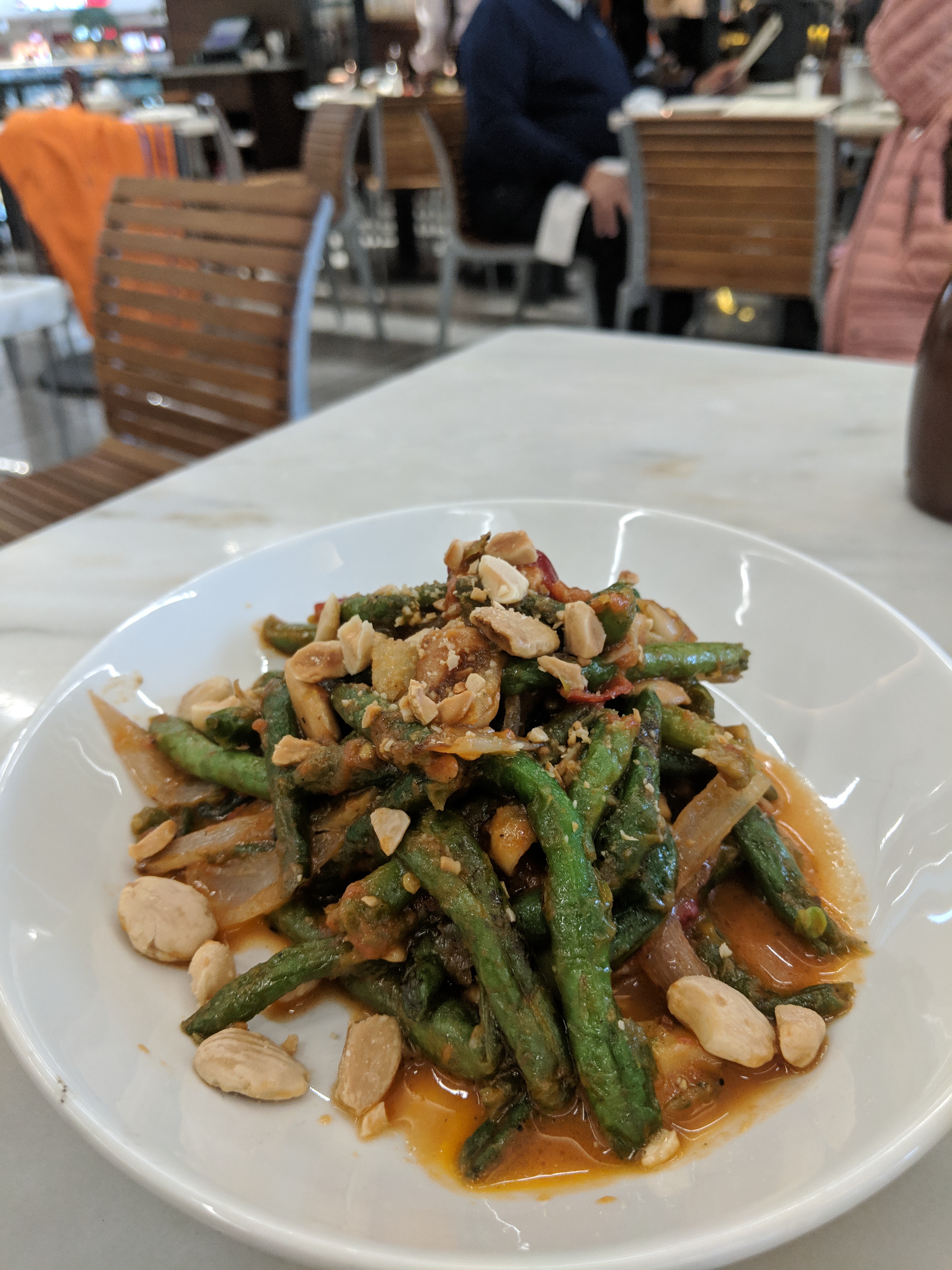
    As a restaurant specializing in European fare, it isn’t surprising that Ecco has a tapas/sharing portion on their menu. At Ecco, I had the Fried Goat Cheese with honey and black pepper. They say these balls are for sharing, but don’t do it. I promise you that you won’t want to share. However many people are in your group, get that many orders. Ecco is a seasonal restaurant, but the goat cheese is a mainstay for a reason. The Spicy Heirloom Green Beans with Calabrian chiles and Marcona almonds are also delicious. Honestly, it’s hard to go wrong with anything on Ecco’s menu.
    Location: Concourse F

    Atlanta Chophouse and Brewery

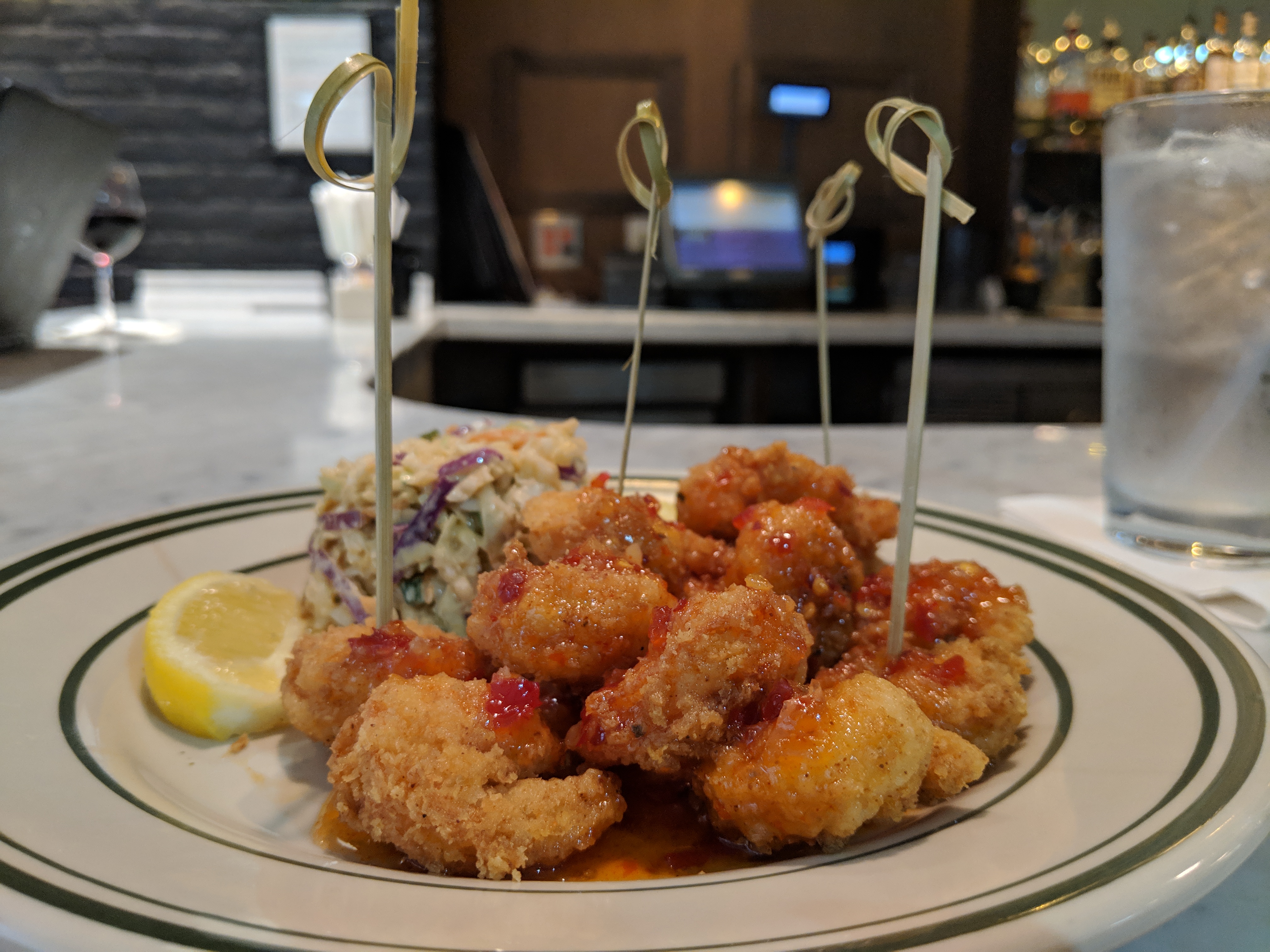
    I’m always surprised how easy it is to forget that you’re in an airport while in ChopHouse. Maybe it’s because there are so many people taking advantage of the expansive bar to prop open their laptops to get some work done. Or maybe it’s the convivial nature of interactions as people use the fact that it’s before security to hang with friends before bidding farewell. The menu is filled with many choices, but the Firecracker Shrimp with Thai chili sauce is perfect for sharing and soaking up one of their brews. As a bonus, it’s served with coleslaw which has a pleasant hint of ginger.
    Location: Atrium

    Piece of Cake

    Once upon a time, I used to own an event venue in Atlanta. One of my favorite things about this was getting to try all of the different cakes and cupcakes from Piece of Cake. The Airport outpost isn’t quite the same, but it’s still an excellent spot to stop for a sweet treat. With flavors including strawberry, white chocolate, red velvet and caramel, the cupcakes are definitely large enough to share.
    Location: A Centerpoint

  • Wine Down Wednesday

    Wine Down Wednesday

    By: Shannon Evans

    Although my next adventure is taking me to Jamaica, I still had Portugal and great wines on my mind when I showed up to Hartsfield-Jackson for my latest flight. Porto taught me that there is no bad time for a glass of vino (who am I kidding … I already knew this). However, Porto did remind me that I should enjoy it everywhere.
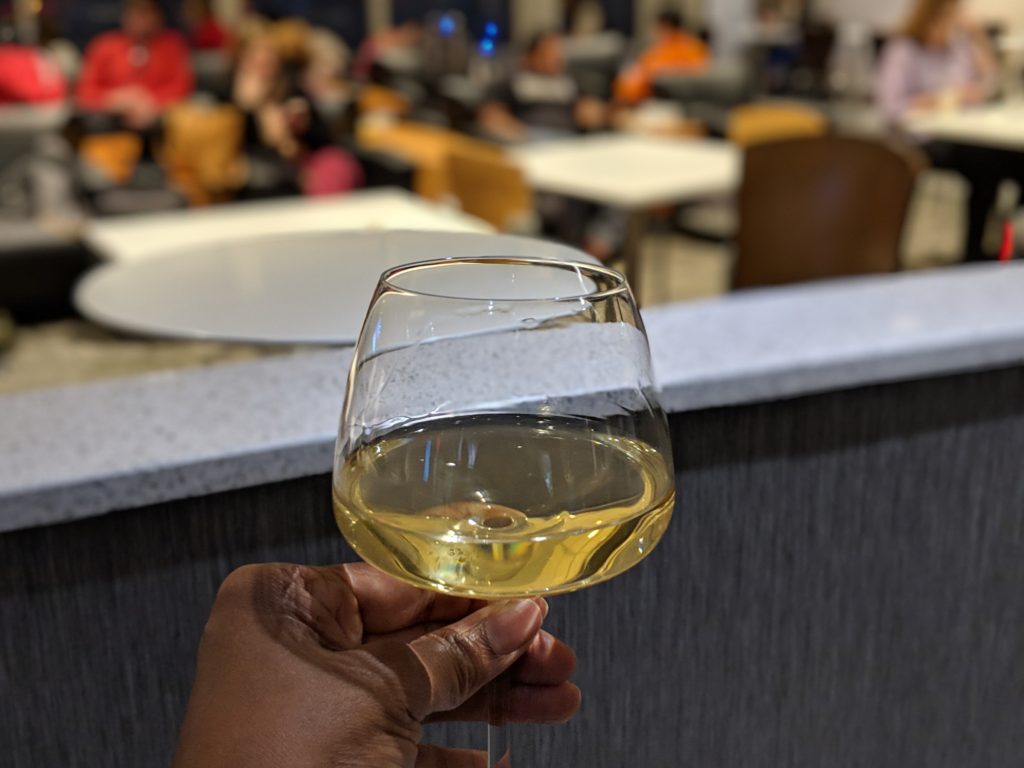
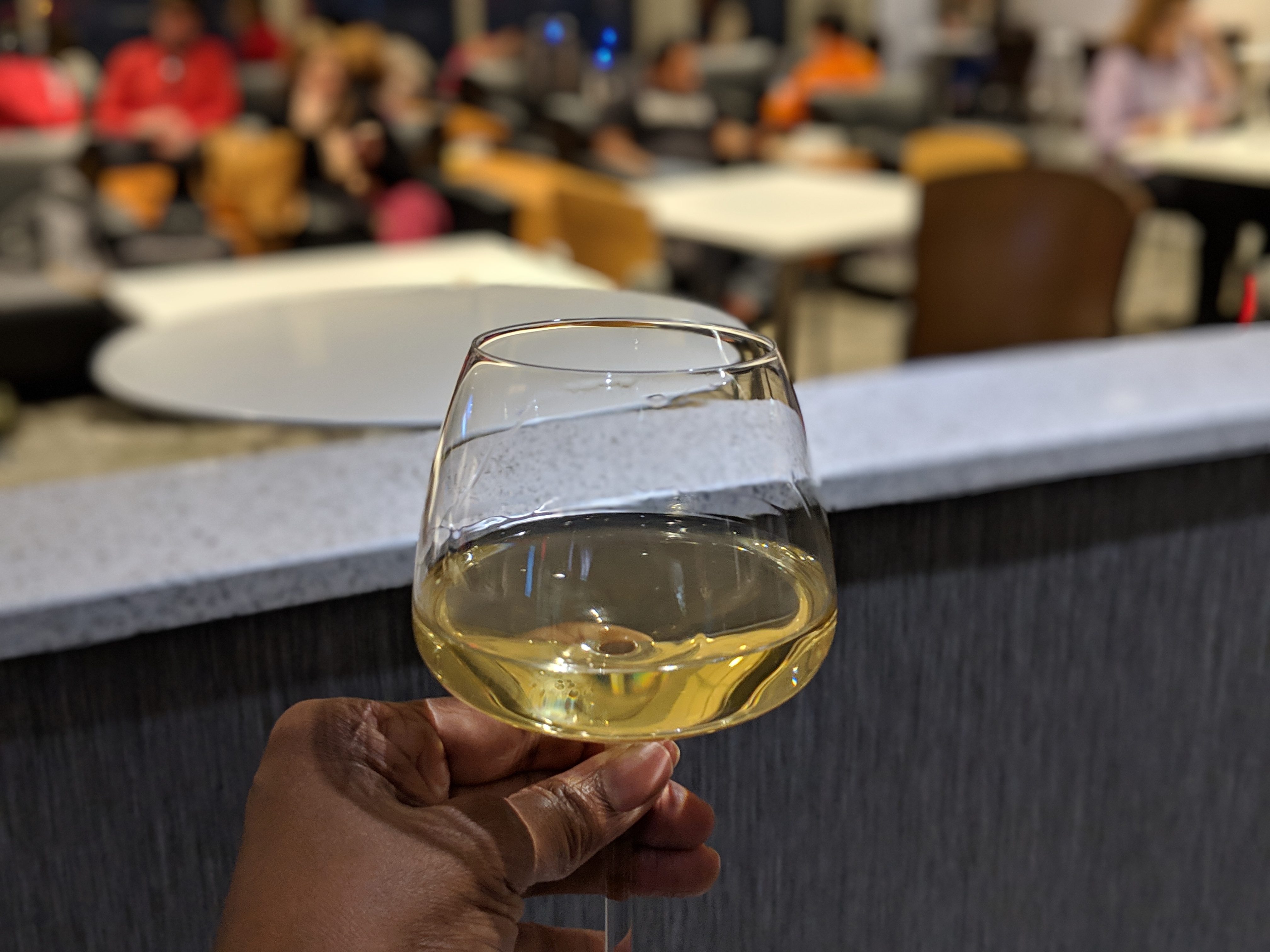
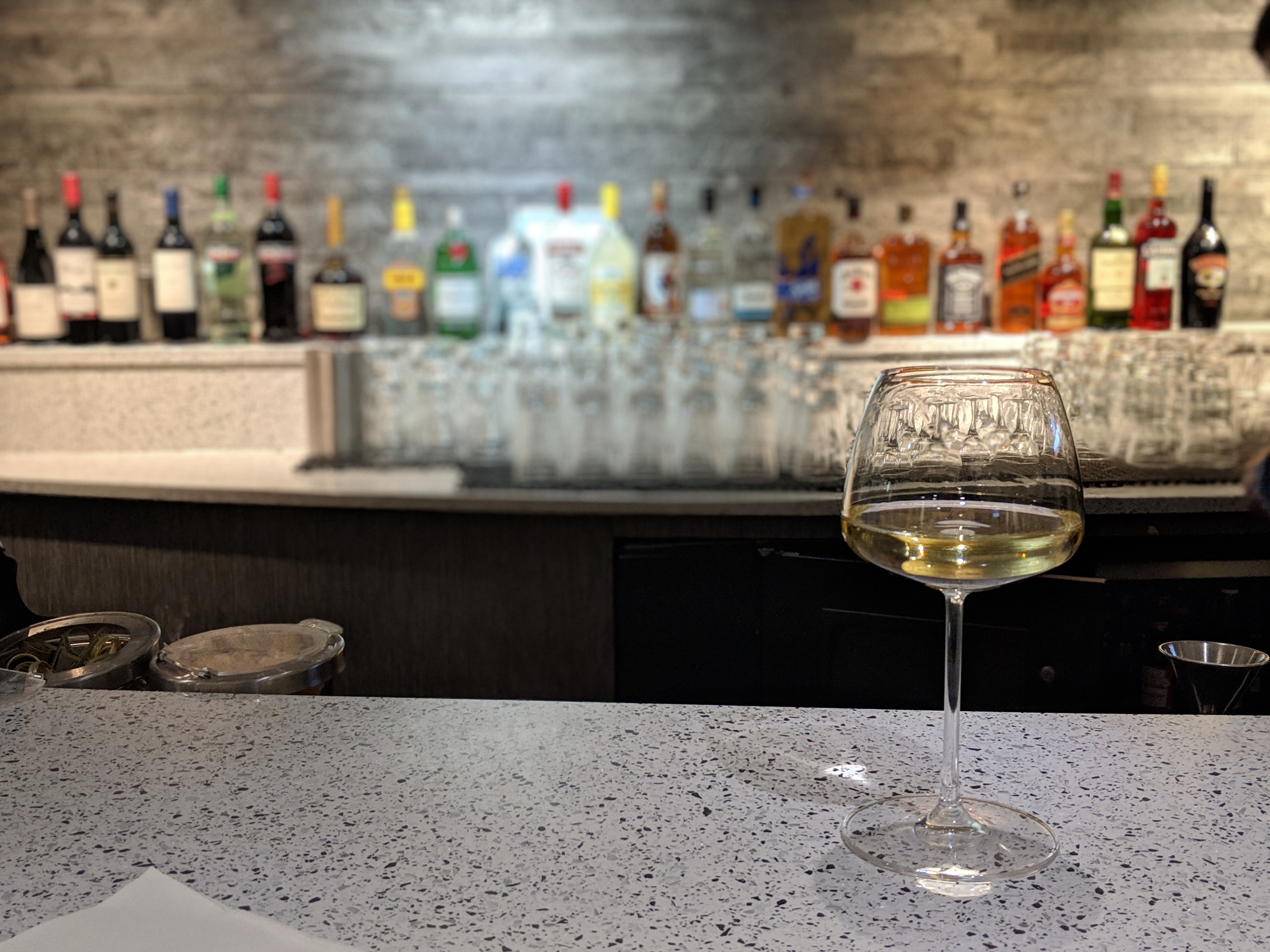
    Atlanta’s airport has no shortage of great places to have a glass of wine. Here are just a few, especially if you’re close to the International Terminal:

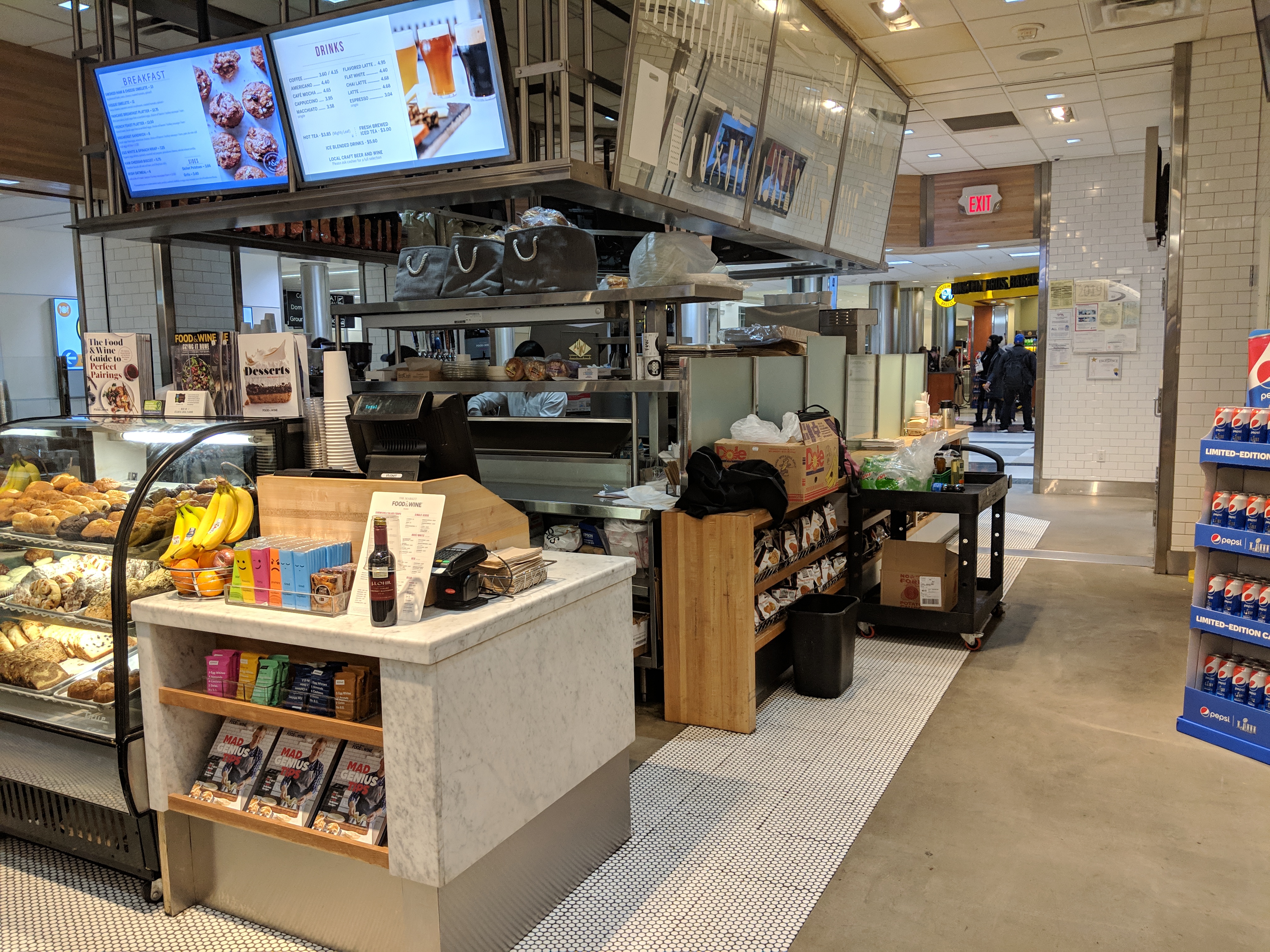
    The Market by Food & Wine: How did I not know before now that this even existed? I loved the warm feel of this concept. They have a great selection of food to pair with their wine. There also is a seating area off to the side that makes for great people watching while sipping your libations.
    Location: D Centerpoint

    The Club at ATL: This is one of my favorite airport haunts. It’s a great place to get a little work done before a flight or, of course, grab a glass of wine. The Club cleverly curated their wine offerings by pairing each selection with a nonprofit organization. For example, you can have a glass of Joel Gott Merlot and benefit children’s hospitals at the same time. How’s that for drinking with a purpose? I continued my preflight ritual by having a glass of bubbly in honor of fighting childhood hunger.
    Location: F Mezzanine

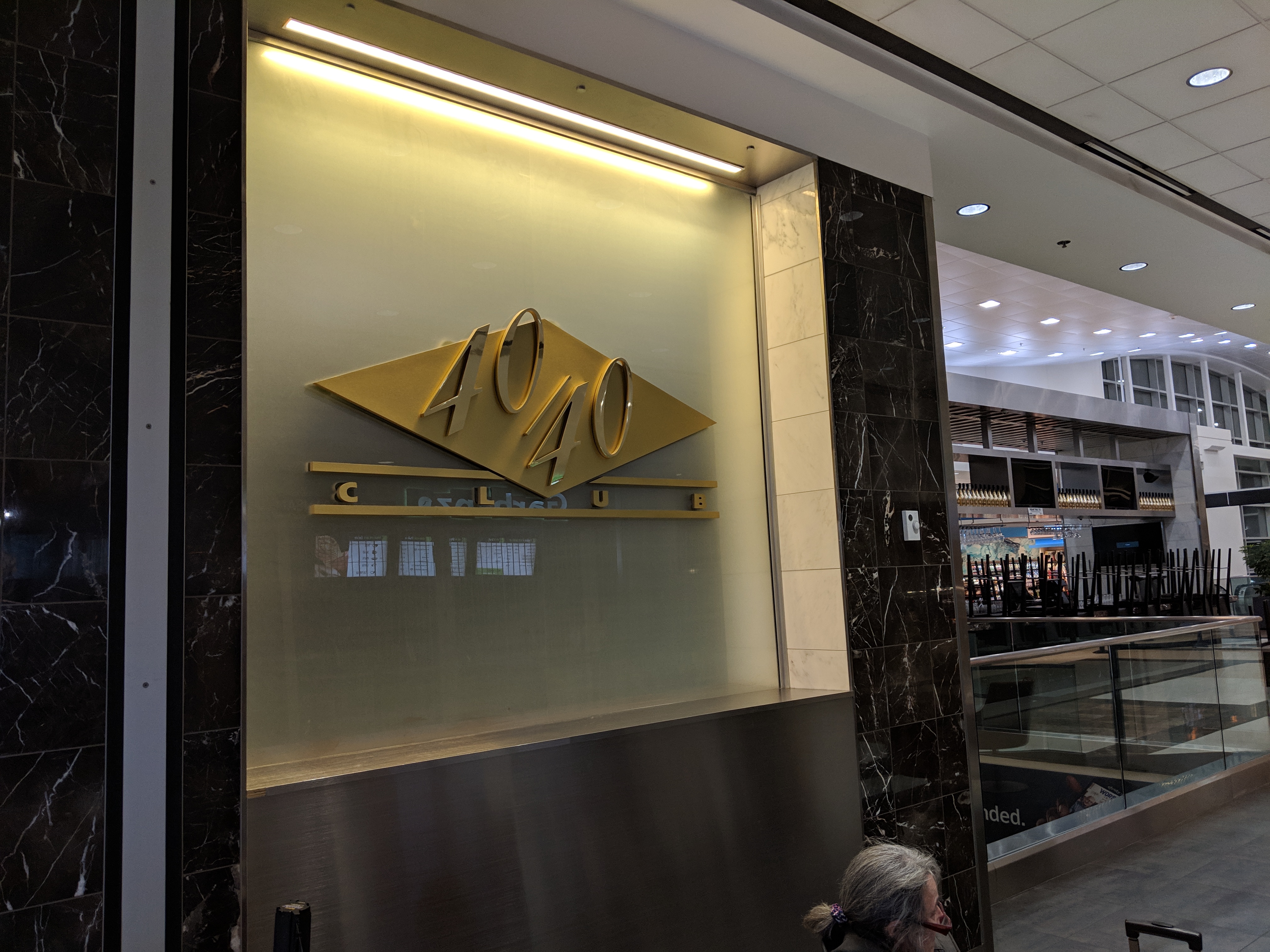
    40/40 Club: “Got matchin’ VCRs, a huge Magnavox 10-inch, green like spinach, pop wines that’s vintage. It’s a lot of big money in my sentence.”
    ~ Jay Z
    Jay Z has been rapping about wine since … well, since he’s been rapping. So it should come as no surprise that his 40/40 Club is a great place to enjoy a glass. The reds primarily originate from California, with whites from California, New Zealand and Italy. And you can splurge on a bottle of Champagne Armand de Brignac, also known as “Ace of Spades,” since Jay Z also owns the brand.
    Location: D Centerpoint

  • Food Festival (Main Ingredients): Top Airport, Top Restaurants, Top Chefs

    Food Festival (Main Ingredients): Top Airport, Top Restaurants, Top Chefs


    By Jennifer Ogunsola

    Communications Manager

    If you look at a list of the world’s best food festivals, you probably won’t find any that take place at an airport. But we all know that Hartsfield-Jackson Atlanta International Airport (ATL) likes to do things a little different. And by different, I mean making the impossible, possible.

    Eating and drinking have always been one of the best ways to experience other cultures and become familiar with new places, and that is no different at ATL. With nearly 300,000 people passing through each day, it has become increasingly important for ATL officials to get creative in presenting the hundreds of restaurants and bars located throughout its seven concourses and the atrium.

    In 2012, Concessions Marketing Manager Demetria Wideman knew that if ATL was going to continue to grow and maintain its award-winning concessions program, then she would have to think of an out-of-the box, innovative way to increase awareness and help passengers decide what and where to eat when they are in the world’s busiest airport.

    And from that, Wideman, now the Airport’s concessions business developer manager, gave birth to the idea that has become Taste of Hartsfield-Jackson, a world-class food festival that takes place in a pre-security area of the Airport, welcoming the public to participate.

    When and how did Taste of Hartsfield-Jackson start?

    Our first year was 2015, so this year is our fourth year hosting Taste.

    It started as a need to help increase awareness about the food and beverage options here at the Airport. We have many great restaurants, and people just didn’t know what gems were around ATL. So I thought, “You see food festivals going on around the city, why not have a food festival at the world’s busiest airport?”

    Had you already tried other marketing tactics to bring awareness to the concessions program?

    Yes, we looked at many options. Everything from signage in and out of the Airport to food sampling, which can be effective, but we wanted to do something that would put us on the world stage. Food festivals are not uncommon, but they are uncommon at airports. And Hartsfield-Jackson provides us with the perfect landscape to be able to do something like this. Having a central terminal and a space large enough to set up individual booths is very helpful, but having a quality program is really what makes something like this work.

    Is ATL the only airport with something like this?

    We are the only airport that continually does food festivals for its food and beverage program.

    So you thought of this in 2012, but ATL did not host its first Taste until 2015. Was it hard to get approval?

    It took three years to get everyone to nod their heads yes. I first started kicking this idea around with the concessionaires, who immediately saw the vision but they also needed some buy in. So, it took me a year of mulling over this idea and trying to figure out what this would all look like.

    Then, the following two years were just me having conversations with Airport executives trying to get their buy-in.

    We were very fortunate to have visionaries at the helm of our crucial decision-making departments and partnering agencies. So, it wasn’t too big of a stretch talking to our Airport execs, but they definitely put it on me to figure out how I was going to gain approval from all departments, agencies whose normal operations would be impacted.

    What organizations or entities needed to sign off for the festival to happen?

    The Atlanta Police Department, Atlanta Fire Rescue Department, Landside Operations, Maintenance, TSA, airlines, and AATC, which is Atlanta Airlines Terminal Corporation – the company that manages our structural and systems maintenance and our facility services. They were an integral part of this.

    Fire is probably the most integral because they are here for life/safety, and when you talk about setting up booths pre-security, they are concerned, and should be.

    It looks like there were many moving parts. But, once they said yes, how did you know where to start?

    I didn’t, so I started in my imagination. It sounds crazy, but I was literally dreaming about this festival every night. Up in the middle of the night taking notes, and just trying to formulate a plan. I also researched food festivals in different cities across the world just to see how everything was set up. Google was definitely my friend!

    What has been your biggest challenge since you started?

    Finding believers. Even now, people are doubters sometimes about how valuable Taste really is, and so that can be discouraging at times. But, I’ve realized that everyone isn’t going to have the same vision, and I’m learning to be okay with that.

    Are you happy with what you’ve created?

    Absolutely. We’ve created something that has grown our concessions program tremendously. The biggest win is watching people be in the moment and enjoy the food. When I hear guests saying, “I can’t wait to go here the next time I’m traveling through this airport,” or employees saying, “We need to make plans to go to this restaurant for lunch,” then I feel like my job is done.

    How valuable have your partners and supporters been? 

    We have been fortunate to have some amazing partners over the past four years. Everyone from renowned chefs G. Garvin and Cat Cora, who both have restaurants here at Hartsfield-Jackson, to Taste of Atlanta and Atlanta Eats, who we’ve partnered with since the beginning.

    The supporters and partners that I have on the team help me to ensure that I have buy-in from the Airport community and the community outside of the Airport. They are invaluable, and honestly, they have helped to turn this crazy idea that I had seven years ago to create a world-class food festival for the world’s busiest airport into a reality. 

    You are no longer the Airport’s concessions marketing manager, but this is still your event that you put together every year. Why did you decide to keep it and not pass it on? 

    Aside from continuing to grow what I birthed, I get to fulfill another joy from this – and that’s the charitable side.

    For the last two years we partnered with No Kid Hungry, and the previous two years with United Way. These charities get 100 percent of the proceeds. The concessions marketing fund takes care of everything so all the charities have to do is collect the money from our ticket sales. Last year, we raised enough money to provide over 100,000 healthy meals for kids.

    My ultimate goal with Taste is to make sure that while we are putting our concessions program on the world stage in an innovative way, we’re having a real, transformative community impact.


  • ATL Becomes Second Home and Inspiration to Self-Taught Artist

    ATL Becomes Second Home and Inspiration to Self-Taught Artist


    By Jennifer Ogunsola

    Communications Manager

    For many people, Hartsfield-Jackson Atlanta International Airport (ATL) is more than an airport — it’s home. With more than 60,000 employees, ATL is a place where careers begin, friendships are forged and dreams are supported, recognized and fulfilled.

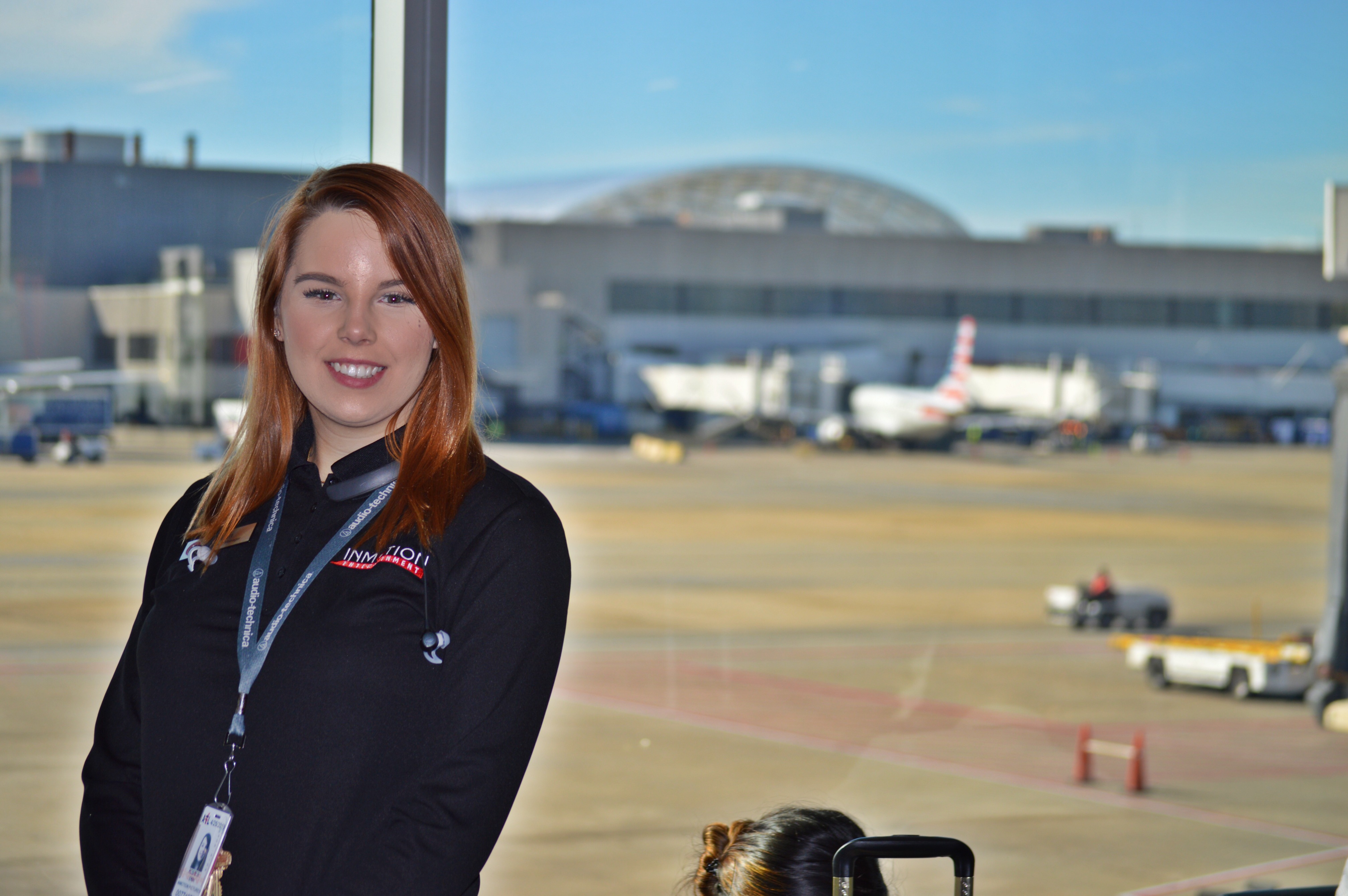
    Born and raised in Atlanta, Erin Foster’s first time in the Airport was eight years ago during a job interview with Hojeij Branded Foods for a hostess position at SweetWater Brewhouse. At 18 years old, Erin graduated from high school and was looking to make enough money that would allow her to take care of herself while pursuing an art degree at Savannah College of Art and Design (SCAD).

    Foster was hired, and little did she know that ATL would become a second home to her and support her passion for art.

    It was in the first grade that Foster began coloring and drawing, and she loved it, but so did the other kids in her class. It wasn’t until the fourth grade that she began to draw people and they were recognizable.

    “That’s when I remember my grandmother saying, ‘Okay, she can really draw,’ so she always made sure that I was in art programs in school,” Foster shared.

    As she got older, she became an extremely talented artist, which led her to SCAD. As Foster was looking to start work before school began, she was introduced to the restaurant business at the Airport.

    “I saw how much money servers could make and I thought that it would be perfect for taking care of myself and helping me while I was a student at SCAD,” she explained.

    Within the first year of working at SweetWater on Concourse A, which was her very first job, Foster discovered the Airport’s annual Employee Art Exhibit, a program led by the National Arts Program. The program encourages ATL employees and members of their immediate families to participate in a professional visual arts exhibition and offers cash prizes for top works.

    During her first year as an employee, she entered the Employee Art Exhibit and won second place. Foster has entered every year since then, and while she hasn’t reached first place just yet, she has sold every art piece entered except for one.

    The 26-year-old self-taught artist, whose focus is primarily pointillism portraits, seems to be doing pretty well, as most of her artwork is commissioned by individuals. To date, her most expensive piece has sold for $500. In this year’s annual Employee Art Exhibit, her framed pointillism portrait of an African American woman titled, “Louisiana Nights,” sold quickly.

    “I never thought that I would be here eight years later,” Foster said.

    “I came to the Airport to make a living as I worked to put myself through art school, but to my surprise the world’s busiest airport had an employee art program that has allowed me to also pursue my passion of art with fellow Airport employees who are extremely talented and love art as much as I do,” she added.

    After her first semester, she left SCAD because the tuition proved to be a little more than she could handle, and focused more on work. In that year, she began to make a name for herself in the Airport, proving to be reliable, hard-working and a quick learner.

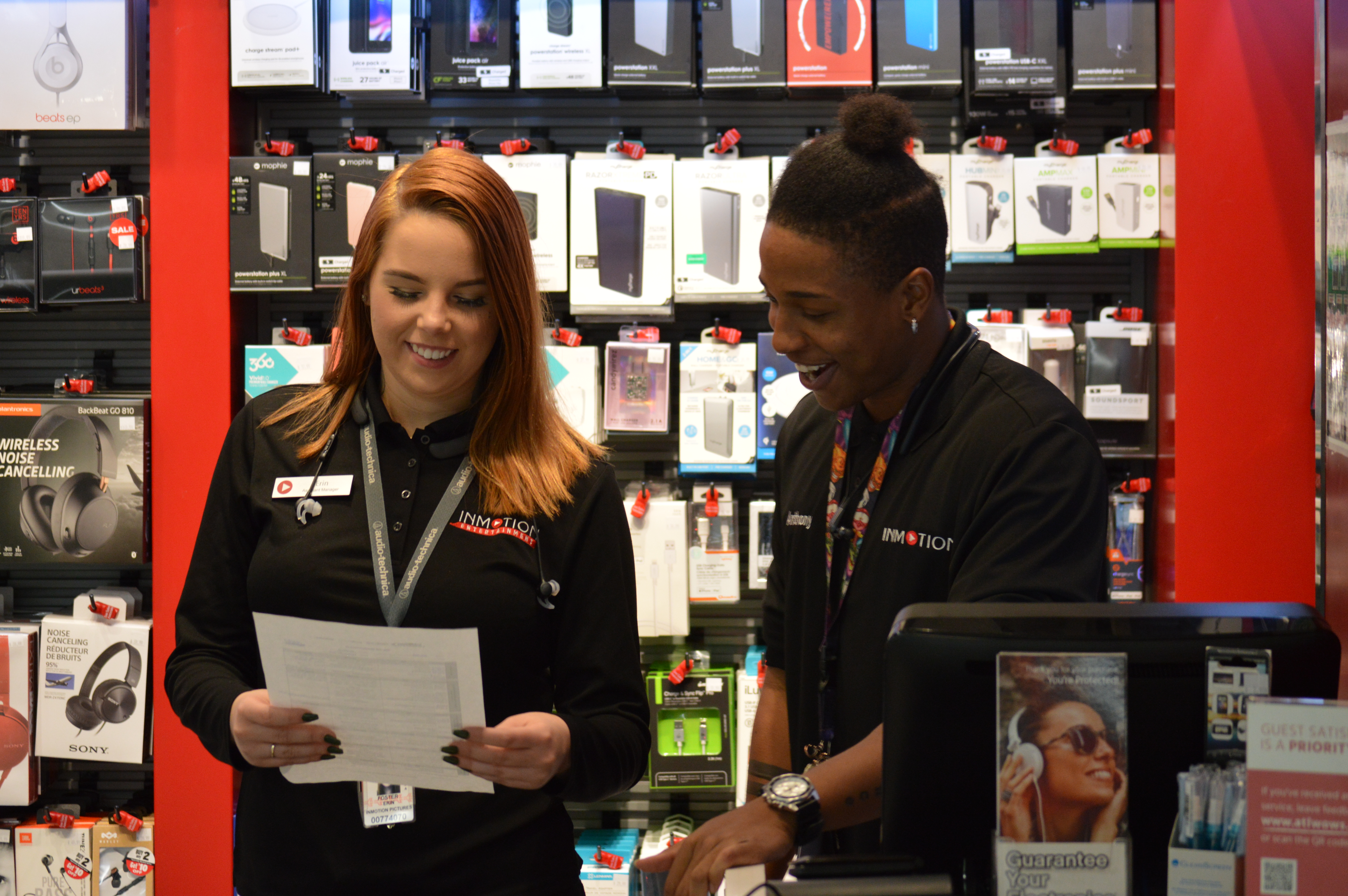
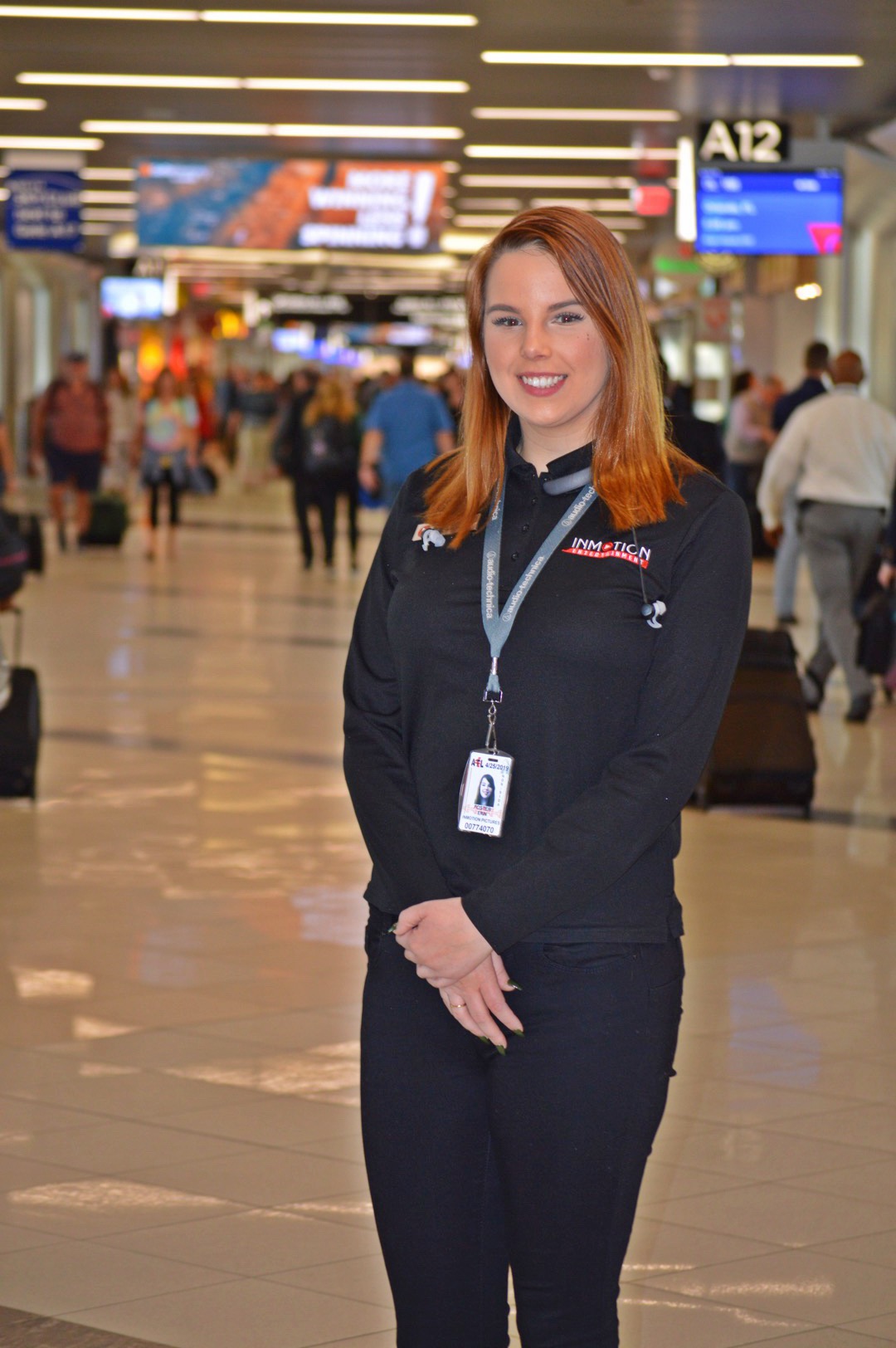
    Today, Foster works as the assistant manager of InMotion Entertainment on Concourse A as well as a part-time server at Papi’s Cuban & Caribbean Grill on Concourse T.

    “I am so proud to work at Atlanta’s airport,” Foster shared.

    “I love that I get to meet new people who walk through this Airport every single day, and each one has a unique story or a situation that they are facing, and I get to, if only for a moment, add joy to their day… you can meet and talk to someone for 15 minutes, and that interaction can completely change your mindset and feelings towards something or theirs, and I think that experience is priceless.”

    While Foster is back in school and thinking of working towards her master’s degree so that she can become college art professor, she appreciates that she can work for a company that appreciates art and contributes to her growth as a professional as well as an artist.

    “The employee art program at the Airport has definitely opened my eyes to different types of art and throughout the years I’ve seen this program evolve into a beautiful mixture of talent,” Foster shared.

    “People would be surprised that there is everyone – from award-winning sculptors to art students to retired Delta employees – who do art on the side and work here at the Airport. This airport doesn’t have to focus on art, but they do, and they have built an art community that is about coming together and supporting, sharing and celebrating everyone’s talents, and I am proud to be a part of this community.”


  • The Plane Train: Getting You There Since 1980

    The Plane Train: Getting You There Since 1980


    By Jennifer Ogunsola

    Communications Manager

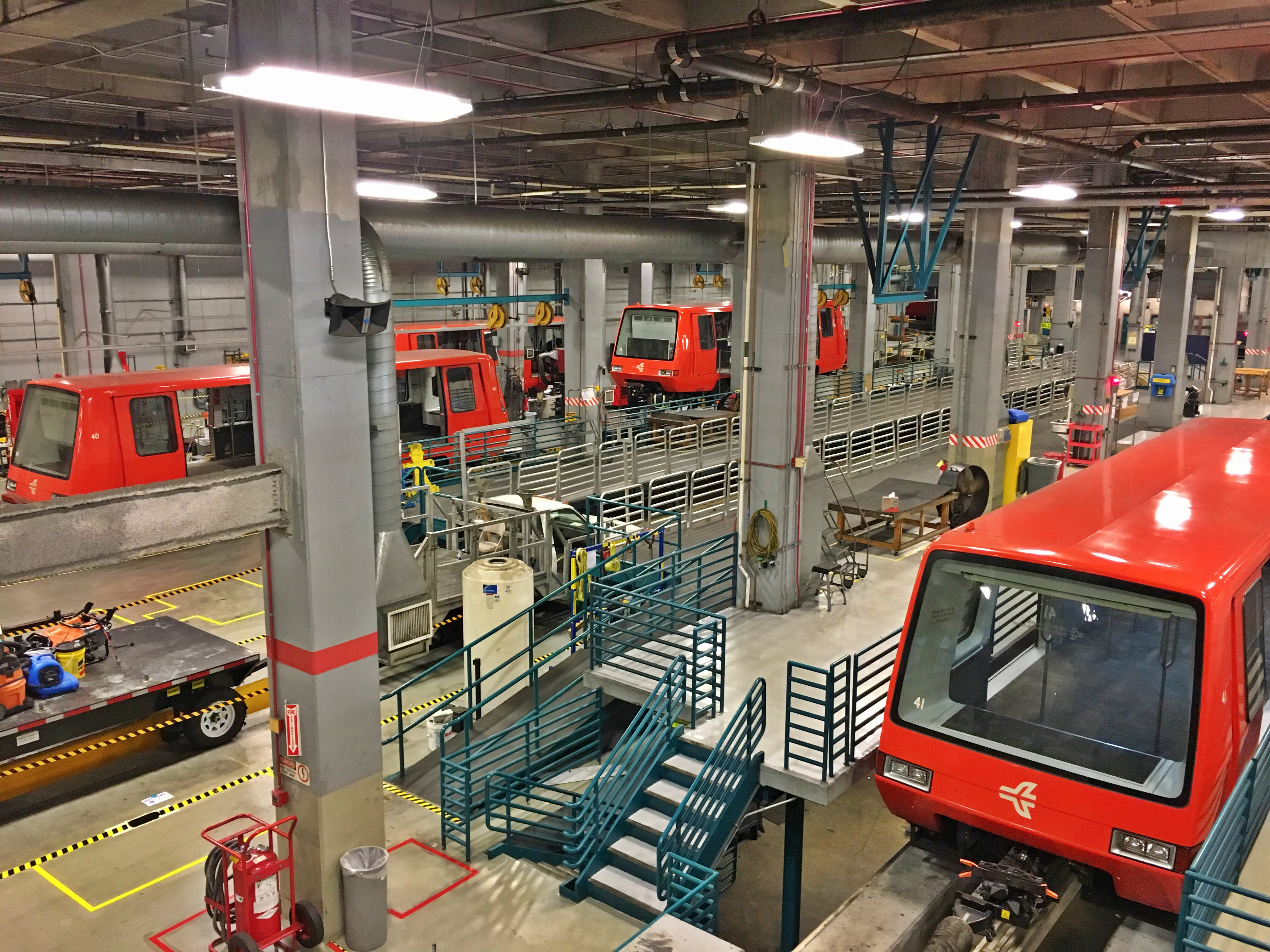
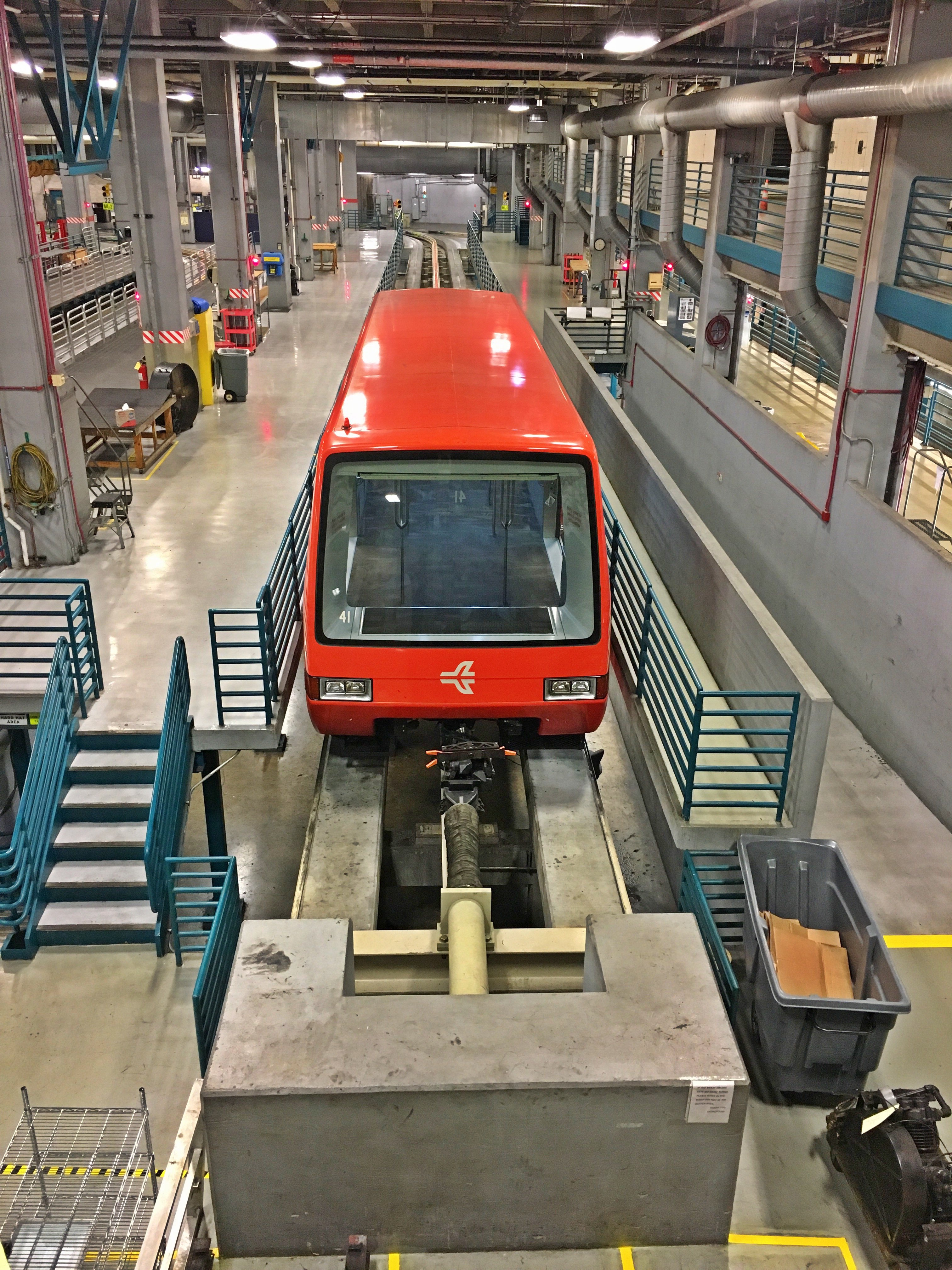
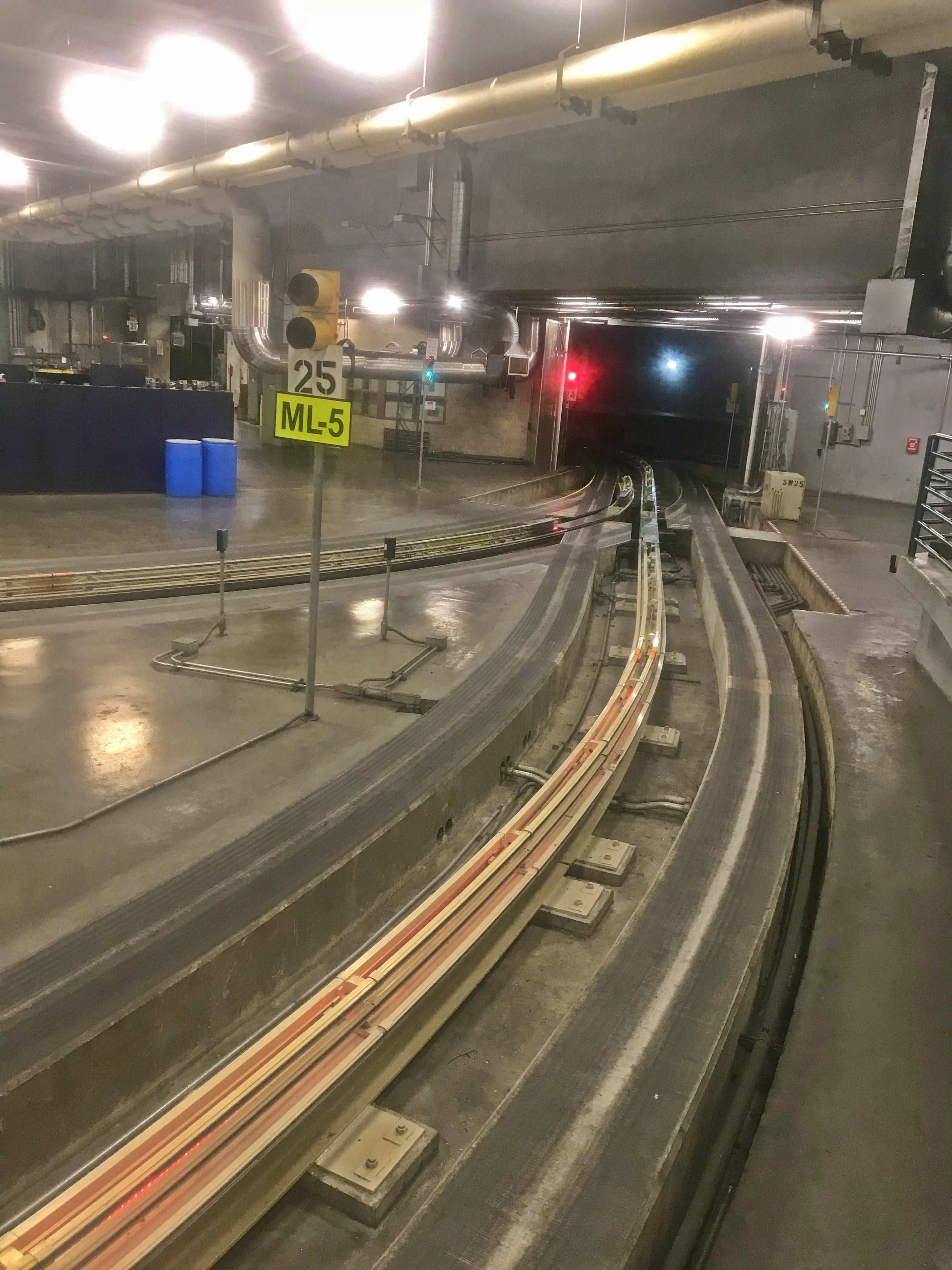
    How many airports do you know with luxury shopping, award-winning restaurants, five fire stations, and – oh, and I forgot to add – a fully automated train system that carries more than 250,000 passengers each day to one of seven concourses?  Come to Hartsfield-Jackson Atlanta International Airport (ATL), and that is what you will find.

    ATL is like no other airport, and its 63,000 employees work to ensure that it remains the world’s busiest and most efficient airport with world-class everything, including the underground automated people mover (APM) also known at ATL as the “Plane Train.”

    “Welcome aboard the Plane Train. Please hold on; this train is departing.”

    If you’ve traveled through ATL at any point, most likely you’ve heard this message as you boarded the train to get to your flight or to baggage claim to retrieve your luggage.

    The Plane Train began running in 1980 but didn’t earn its official name until August 2010.

    “The Plane Train is a 24-hour operation designed to help the airport be efficient in getting customers to and from our concourses safely and quickly,” said Hartsfield-Jackson Airport Transportation System Director Kenneth Williams.

    During ATL’s peak period— 5 a.m. to 1 a.m., 365 days a year—there are 44 cars on the rail system, which totals 11 trains.

    And don’t worry, if you happen to arrive at a train as the doors are closing, the wait time is only 108 seconds— less than two minutes— and Airport officials are diligently working to reduce the wait time by increasing the number of trains.

    “When the west extension is complete in a few years, the customer experience will be improved, and the wait time will go from 108 seconds to 90 seconds,” Williams said.

    The APM team works with Bombardier Transportation, the manufacturer who has operated and maintained the system since 1980, to ensure that it is safe, clean and reliable.

    Moving more than 250,000 people a day is not an easy feat, but ATL does a great job according to one passenger, who compares it to her daily commute in the nation’s capital.

    “Being a daily commuter in D.C. for the past 10 years, along with having a job that requires constant travel across the United States, I still have yet to see another train system that is as efficient, clean and well-designed as the Plane Train,” said Kelli Johnson.

    Customer feedback, whether positive or negative, is not only important to Airport officials, it is encouraged.

    “Customer feedback is how we began operating 24 hours a day,” Williams said.  “The train used to be inoperable every night between 1 and 5 a.m. for maintenance. However, due to the concerns of passengers, ATL adjusted its maintenance schedule, and in January 2018, we officially began operating 24 hours a day in a two-train shuttle mode,” he said.

    The only time the train system is shut down is on Wednesday mornings at 1 a.m. during the off-peak time for maintenance of the track.

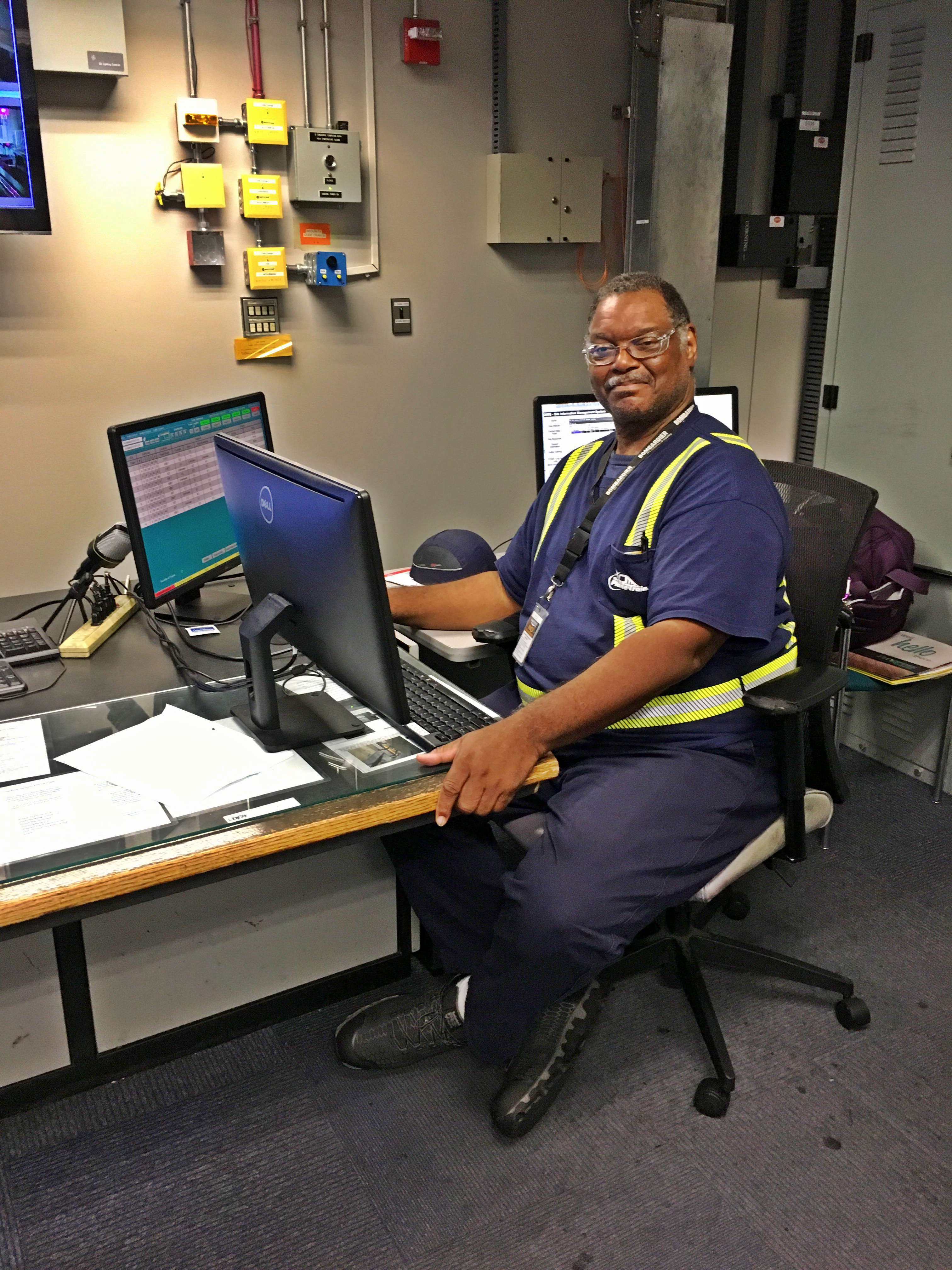
    “I’ve been here for 37 years, and started when I was 21,” said Dajuan Johnson, a contractor with Bombardier. “I make sure that the work that is performed is done in a quality manner and that there are checks and balances to ensure that we provide a good product for the traveling public.”

    To keep the system running nonstop, it takes 123 employees working three shifts.

    “I’ve been here for a long time, and it’s still extremely cool that this system is automated and runs without someone driving it,” Johnson said.

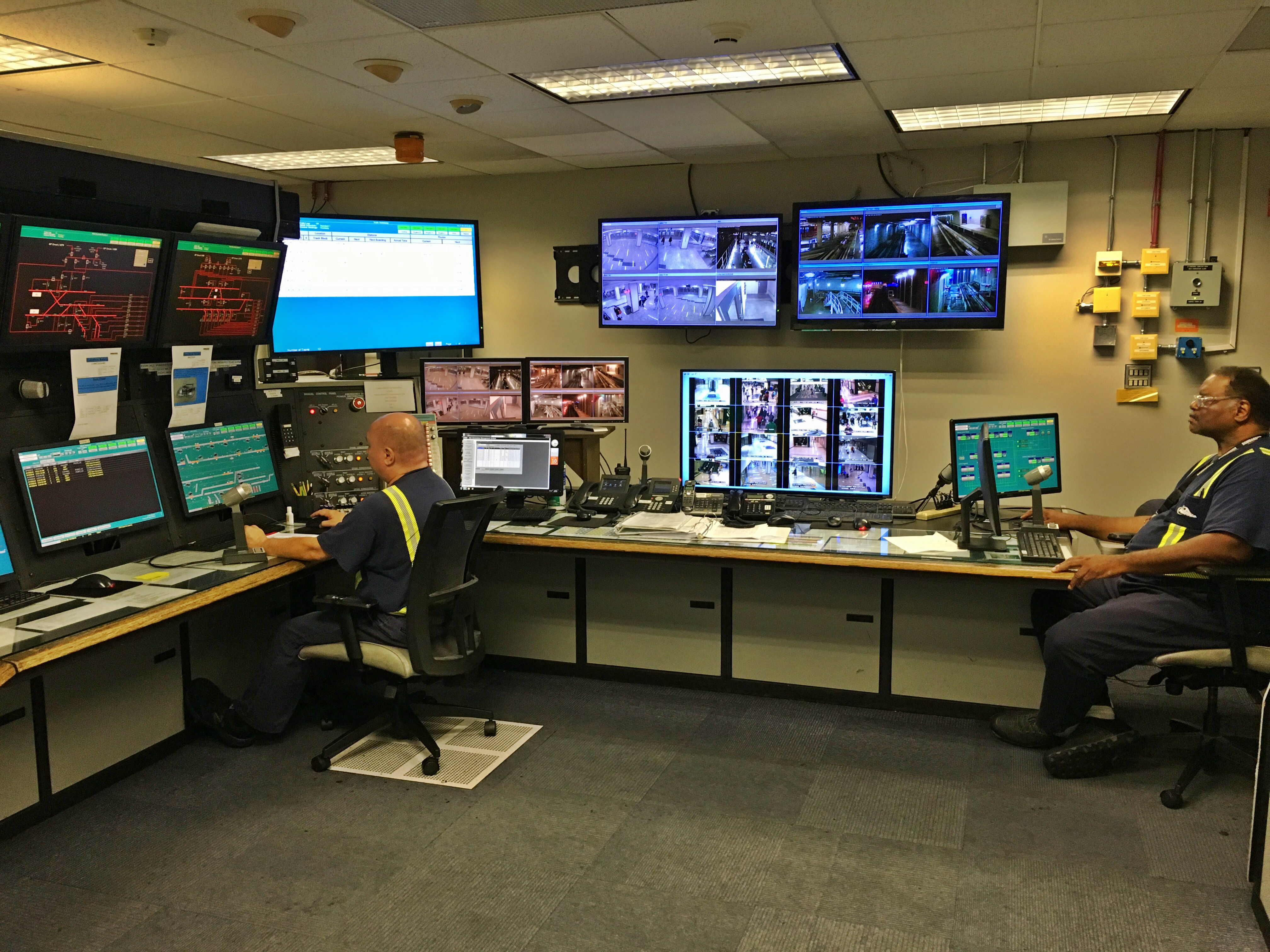
    While there is no one behind the wheel driving the train, there are two control operators in the control room at all times.

    “From the control room, we can send commands to the train such as opening and closing doors and changing the speed profile,” said Arnold Williams, a transit tech.

    When things are not right, Williams and his team receive alarms and are the first to contact one of three recovery techs who are on-site at all times.

    Williams said he still finds joy in his more than two decades working with the Plane Train.

    “I’ve been working here for 26 years and the most rewarding days for me are when I’m able to keep the system running without any problems.”


  • From the Football Field to the Airfield

    From the Football Field to the Airfield

    By Jennifer Ogunsola

    Communications Manager

    Within minutes, his dream of playing professional football came to an end when he experienced a career-ending injury.

    Nearly 30 years ago, Thomas Wilson was a senior at Florida State University and star defensive back from Tallahassee, Florida. Immediately after the injury, Wilson had to make a decision that would impact the rest of his life.

    “The injury actually did more for me than anything else because it really painted a clear picture that, as an athlete, you’re one injury away from that being taken away,” Wilson shared.

    “It forced me to concentrate more on my academics, and I knew that as long as I was of sound mind, I could always support myself. Luckily, as a young college student, I realized that my legs would give out before my mind would.”

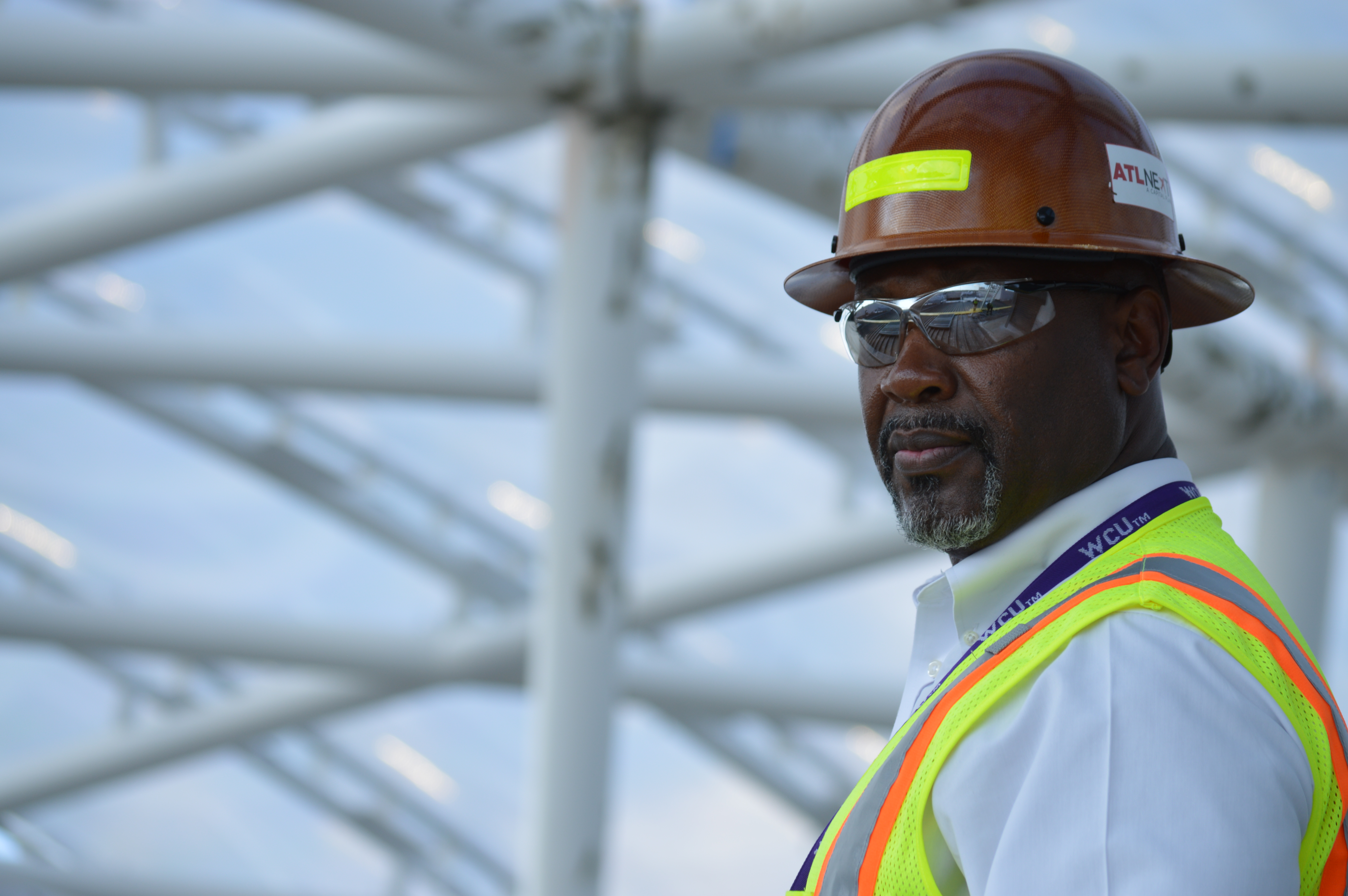
    His decision to pursue an engineering career in 1989 led him to the world’s busiest airport in 2007. And today he’s the program safety director for ATLNext, a 20-year, multibillion-dollar capital improvement program.

    The father of 22-year-old twin boys knows the importance of being intentional, working hard and giving back, traits that he credits to his selfless mom, whom he affectionately calls his hero. In this interview, Wilson gives us a little insight into who he is, his most valuable life lessons and how he landed at the world’s busiest airport to lead a globally recognized safety program.

    Tell me a little about your upbringing.

    I grew up in Tallahassee and was raised by a single mom, who is my absolute hero. Growing up, it was just me and my brother — and I’ll be honest — it was extremely tough for us.  My mom cleaned houses for a living, making about $3,000 a year. As a child, I used to hunt and fish, except it wasn’t a sport for me. It was truly survival.
    Learning how to survive is an important skill.

    Absolutely. I’m not a wasteful person and I manage resources well. I hate to see people squander things because I understand what it’s like to need and not have, to want but can only look, and to wonder and dream. And, I wouldn’t change a thing about how I grew up.

    My mom and grandmother made many sacrifices for me, so I always felt like I owed it to them to give my absolute best no matter what.

    Have they been able to see how successful you’ve become?

    They are all deceased, but they saw me as I started to emerge. In their passing, after mourning, it allowed me to grow stronger, become more determined and focused, and make sure that I share or allow someone else to benefit from my lessons and blessings.
    Was college always in the plans?

    When I graduated from high school, I had an opportunity to be the first person in my family to attend college when I received a football scholarship. I attended Florida State University where I majored in civil engineering. I played football throughout college, and I wanted to go to the NFL, but I had a major injury.
    Did that break you?

    Not at all. There are so many life lessons that I learned from sports. I learned that when it comes to success, there are no shortcuts other than hard work, and you must put in the time. You might have talent, but you have to develop it and I think those are the things where you had to reach down and kind of find out who you are.

    How did you find your path after college?

    Upon finishing school, I had an opportunity to move out west to Southern California and get involved in renewable energy. I happened to work for someone who took me under their wing, which allowed me to expand my knowledge on everything from construction to environmental transportation.

    I had the opportunity to enroll in risk and safety, and then had opportunities to travel and broaden my career by working on many projects throughout the country. After doing that for roughly 15 years, I found my way here to Atlanta.

    How did you land at Atlanta’s Airport?

    In 2007, I was introduced to the Airport’s former assistant general manager of the Planning and Development division and was given the opportunity to step in and take a look at the program to get a firm understanding of what was going on. I then put forth safeguards and policies, making sure that we had the right people to do proper vetting of contractors.

    What is your current role at Hartsfield-Jackson Atlanta International Airport?

    As the program safety director, I make sure that we’re in compliance with all of the federal, state and local safety guidelines. I work to ensure that ATL is covered from a safety perspective on all projects, and that includes making sure that with any of the project contractors that the City brings on board, we understand where some of our risk exposures lay, and make sure that we can do two things: put forth proper safeguards to ensure that everyone goes home safely and complete the project in a timely manner without incident.

    Since working for ATL, what have been the most rewarding projects for you?

    The two most rewarding projects that I’ve worked on at ATL is the Maynard H. Jackson Jr. International Terminal and the Rental Car Center.

    The International Terminal was just a massive undertaking as far as the sheer size, the number of contracts, the number of trades, and the vast diversity of people. Being totally immersed taught me so much, and I would say the same thing for the Rental Car Center. For both, working with the men and women associated with the project in order to come to that one common goal of completion was rewarding.

    You have a very interesting life story. What are you most proud of to date?

    The most rewarding job I’ve ever had was being a father to my 22-year-old twin boys. I work extremely hard to give them the very best that I have, and to watch them grow up and develop into amazing young men has been a true gift for me. I’m proud of who they are and what they’ve accomplished.

    I try to use my lessons to help, teach and empower others. You may be very fortunate where you are, but know that somewhere a door opened for you even if you don’t know who opened that door. I teach my sons and others to find a way to open doors for others.

    *ATL-AT-LARGE is a monthly series highlighting Hartsfield-Jackson Atlanta International Airport professionals who contribute to the success of the world’s busiest airport.


  • Humans Are Not for Sale

    Humans Are Not for Sale

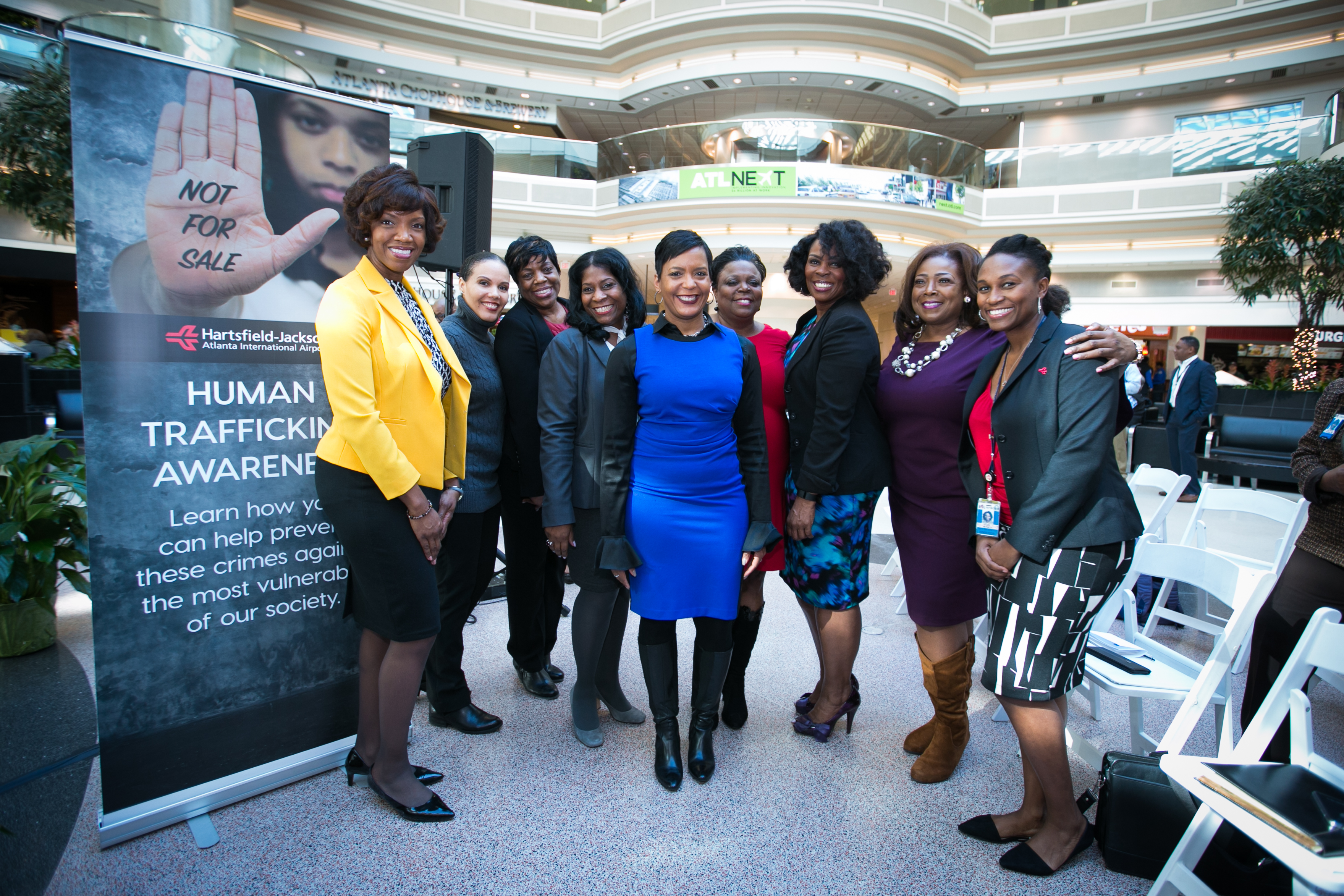
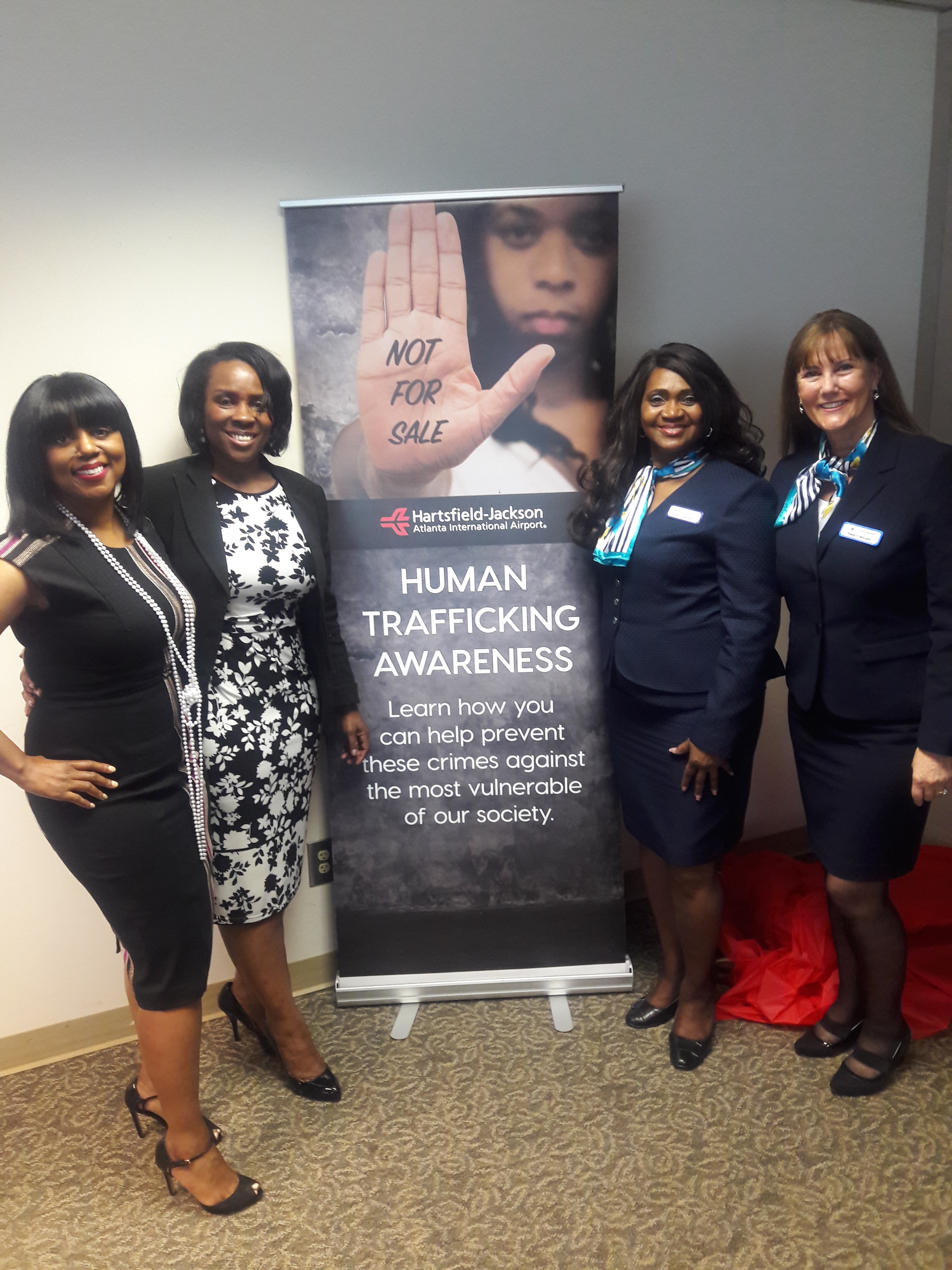
    Atlanta Mayor Keisha Lance Bottoms shares a moment with Airport employees during a January 2018 human trafficking press conference.

    By Jennifer Ogunsola

    Communications Manager

    Walking through the airport, the last thing that likely crosses one’s mind is whether the person next to them might be a survivor or victim of human trafficking. According to the International Labour Organization, there are approximately 40 million victims of human trafficking, globally. So if you travel, at some point, you may have been a witness to some form of human trafficking.

    A SURVIVOR’S STORY

    Donna Hubbard knows that all too well.  She is a flight attendant and a human trafficking survivor. For her, the slogan “See Something, Say Something” has real meaning.

    “There are passengers and airport employees who may be witnessing human trafficking, but are so focused on getting to their destinations and working that they aren’t really seeing what they’re looking at,” she said.

    Hubbard was born in Atlanta and grew up surrounded by love. But, as a result of her religious tenets, she was married in an arranged union at the age of 16 to a man twice her age. By her early 20s, she had been married and divorced twice with three children.

    In 1978, she joined Alleghany Airlines as a flight attendant. During a flight early in her career, she met a professional athlete in an encounter, and that changed the course of her life.

    “I was young, gullible, naïve, searching for love and thought I found it,” Hubbard shared. “I fell in love with him, and he experimented with a lot of drugs and many other things. I ended up in the hands of a pimp. He traded me for drugs and money, and when I tried to get away, he realized he couldn’t control me, so he traded me to a gang.”

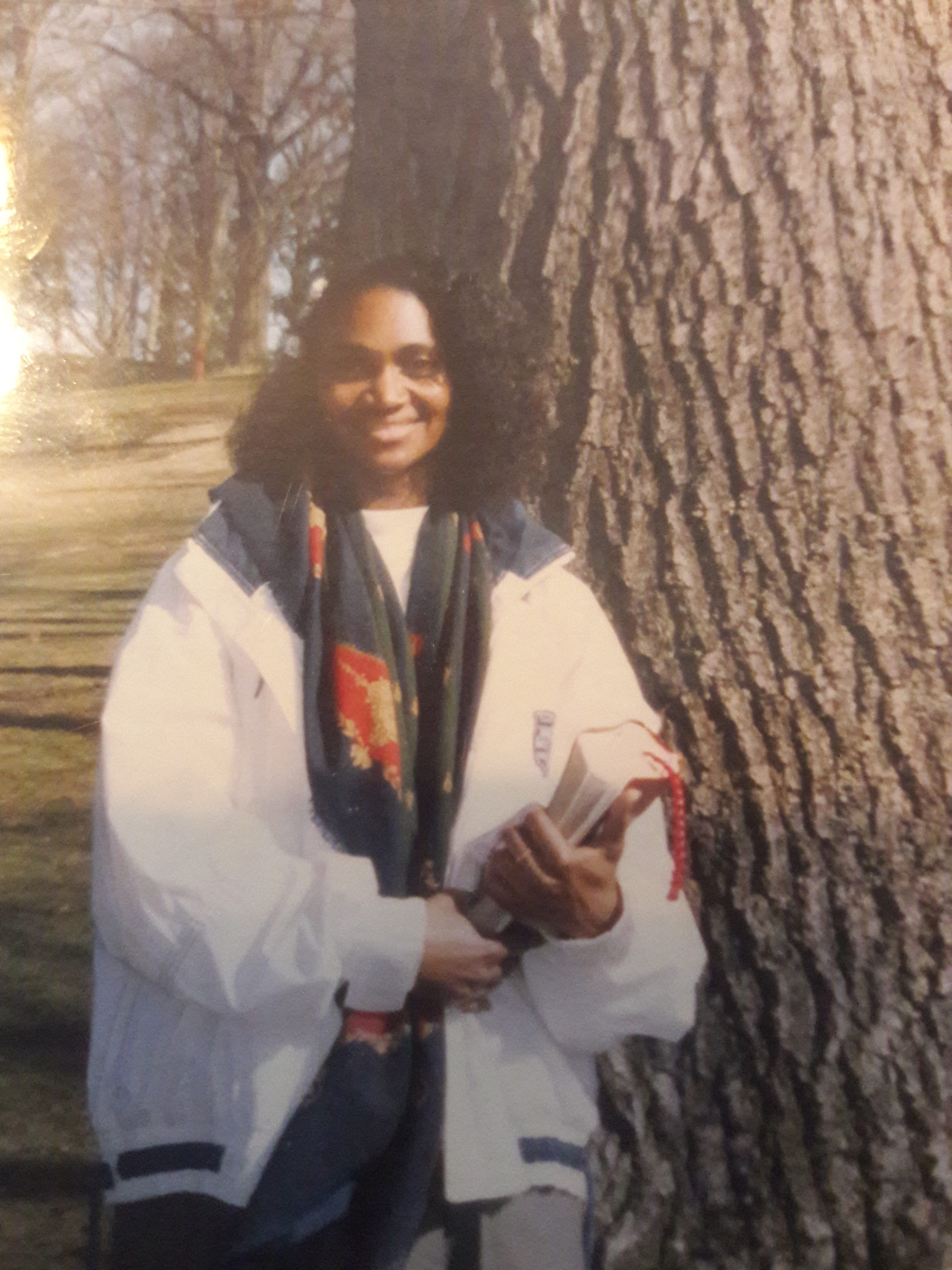
    Donna Hubbard as a young woman

    That’s when the threats began. Hubbard’s traffickers told her that if she refused to do as she was told, one of her children would be forced to instead. So, she said that she did what she had to, to stay alive.

    “I was afraid, ashamed, and didn’t know what to do or where to turn,” she said. “So, I did what I thought was best to protect my children and myself.”

    Experts say human trafficking deprives millions of people — men, women, and children — their freedom and dignity. It is an enterprise that generates roughly $150 billion annually.

    “Not all of the people entangled in human trafficking are kidnapped. For me, it was coercion,” Hubbard explains. “My way out was to end up going to prison,” Hubbard, now a 62-year-old mother of eight explained.

    “It was my only way out because they were never going to leave me alone. It was in prison that I finally got free because it gave me a chance to find myself, regain my self-respect, and time to think about my life and how I ended up in there.”

    ATLANTA TAKES A STAND

    Four months after being sworn in as the 60th mayor for the City of Atlanta, Keisha Lance Bottoms turned her attention to combating the problem. She appointed Oulèye Ndoye Warnock as the senior human trafficking fellow for the City. One of her top priorities includes a strong focus on vulnerable populations.

    “Trafficking is a global problem, and vulnerable populations are often overlooked because trafficking occurs in the dark, so bringing this issue to light and supporting survivors by ensuring that the City has the resources they need to exit and end a cycle of re-entry is extremely important,” Warnock explained.

    The City of Atlanta is not in this fight alone. Hubbard is also making a difference. She founded Women at the Well Transition Center, which focuses, in part, on victims of sex crimes. To date, the organization has helped over 6,000 incarcerated and formerly incarcerated girls and women regain their lives, their families and their dignity.

    In 2015, she returned to flying again. This time, as a flight attendant with American Airlines. And this time, perfectly positioned to help human trafficking victims and stop their traffickers.


    “I was beaten and left for dead not once, not twice, but three times, and I’m still alive,” Hubbard said. “Today I get to live, and I get to make a difference in other people’s lives in every part of the world because I didn’t give up.”

    Working in the aviation industry has allowed her to fulfill her life’s mission of combating the global threat while educating and inspiring people from Kenya to Iceland, and even here at ATL. This past spring, Hubbard worked as a consultant with the Office of the United Nations (UN) High Commissioner for Human Rights and the International Civil Aviation Organization to establish Circular 352, which is a comprehensive guideline that airlines use to set up their protocols and training programs for cabin crew members to be able to identify and report human trafficking.

    With nearly 104 million passengers annually, security officials say there has not been a single case of human trafficking at ATL to date.

    “We partner with TSA, the airlines and other stakeholders to bring awareness to the masses,” said Hartsfield-Jackson Director of Security Jan Lennon. “Combating human trafficking is critically important to ATL. From training our employees to educating everyone who walks through our doors, our mission is to make it very clear that humans are not for sale.”

    From left:Fulton County Community Court Liaison, Airport Director of Security Jan Lennon, human trafficking survivor Donna Hubbard, and Airline Ambassadors International president and founder Nancy Rivard.


  • Cool Canopies at Hotlanta’s Airport

    Cool Canopies at Hotlanta’s Airport


    By Jennifer Ogunsola

    Communications Manager

    Atlanta’s skyline is about to change, but you’ll have to travel a little south of downtown to see it.

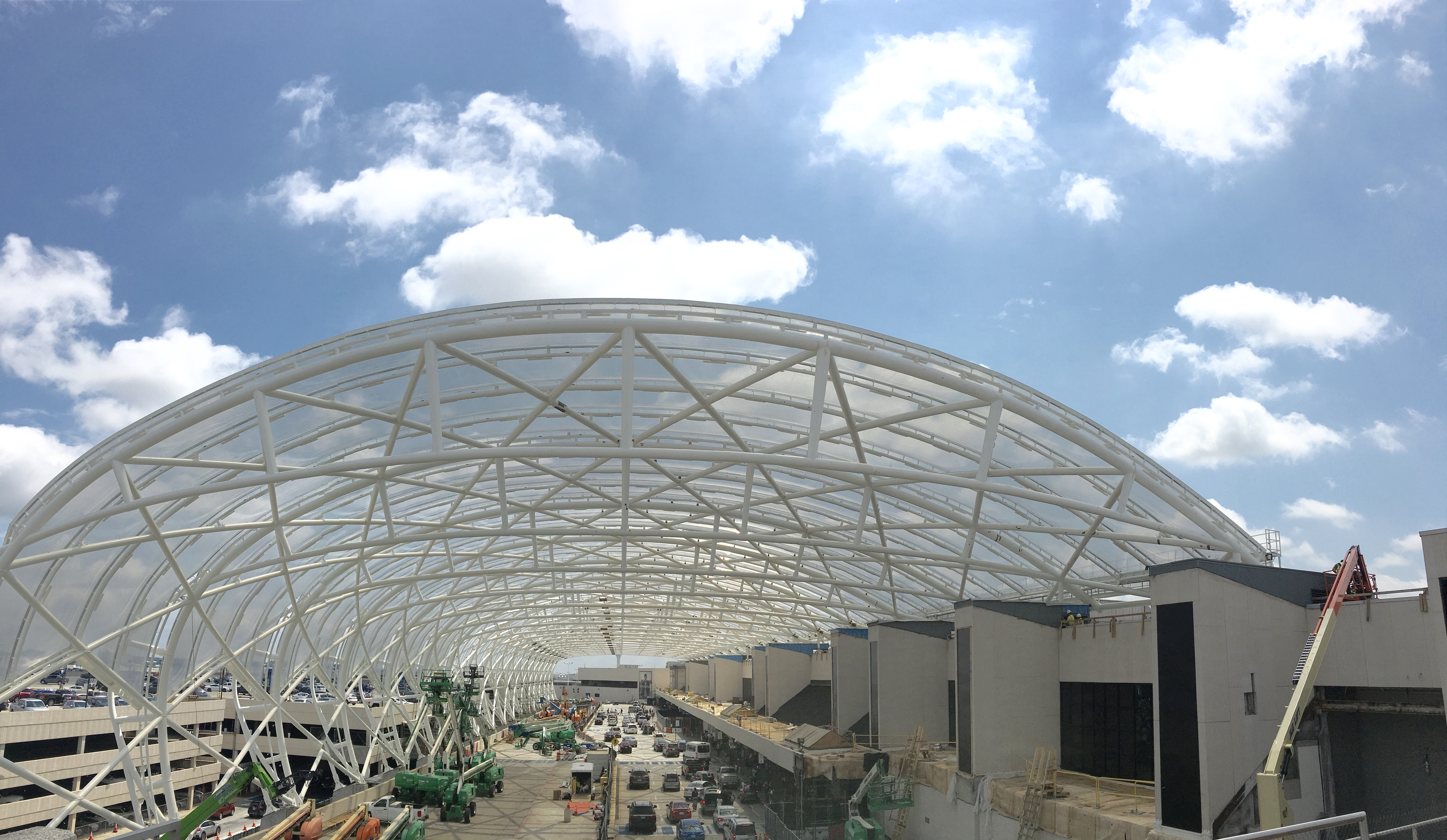
    Hartsfield-Jackson Atlanta International Airport (ATL) is constructing two massive canopies that will soon become an architectural icon for the city of Atlanta. Those additions are just part of the 20-year, multibillion-dollar capital improvement program called ATLNext.

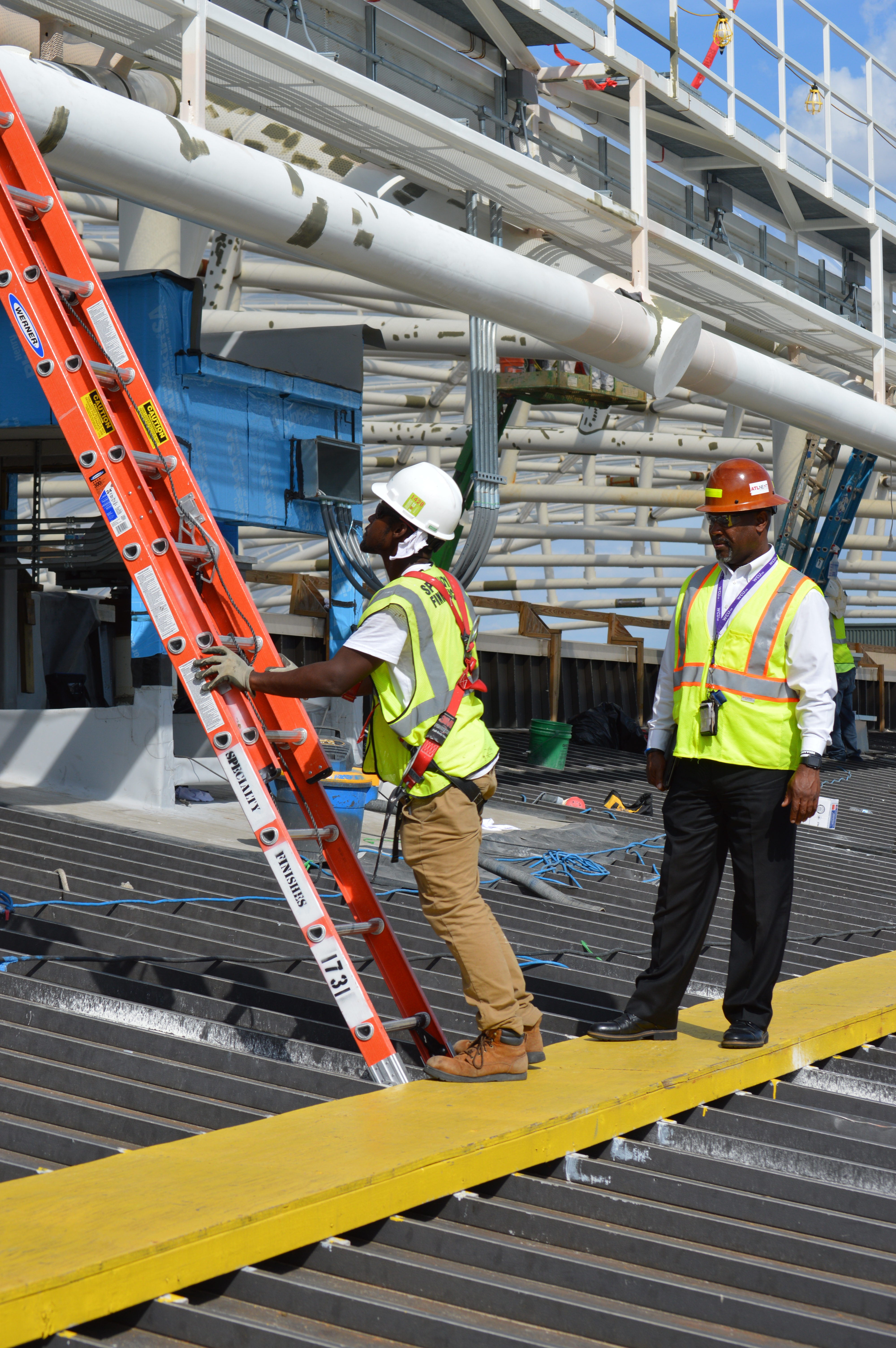
    If you’ve been to Atlanta’s airport within the last year, most likely you’ve seen construction crews erecting large, uniquely-shaped steel structures over the North side of the Domestic Terminal, and if you travel through ATL often, you probably have some questions.

    What are they building? When will they finish? And many city-dwellers are asking, “are my tax dollars funding this project?”

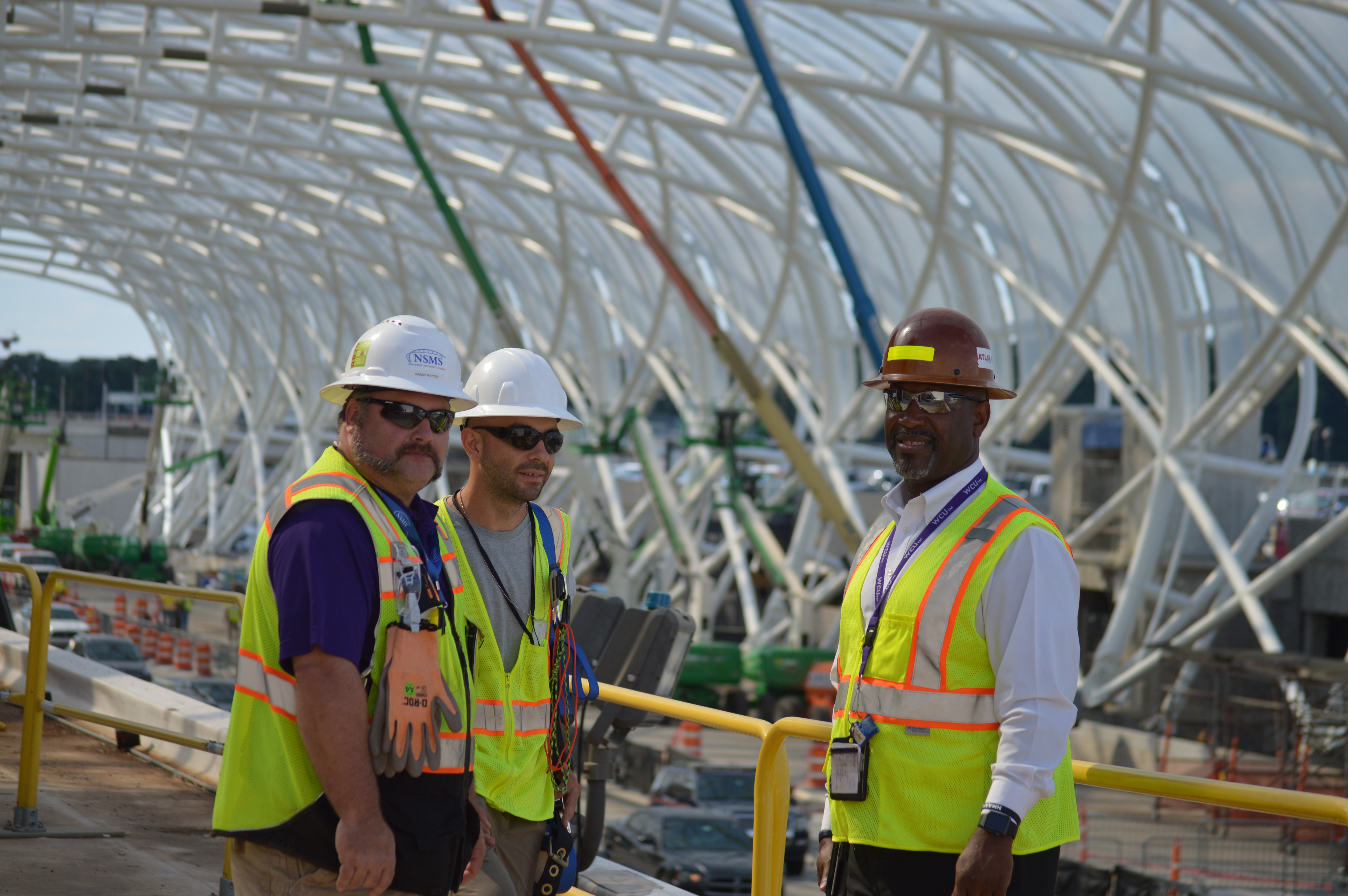
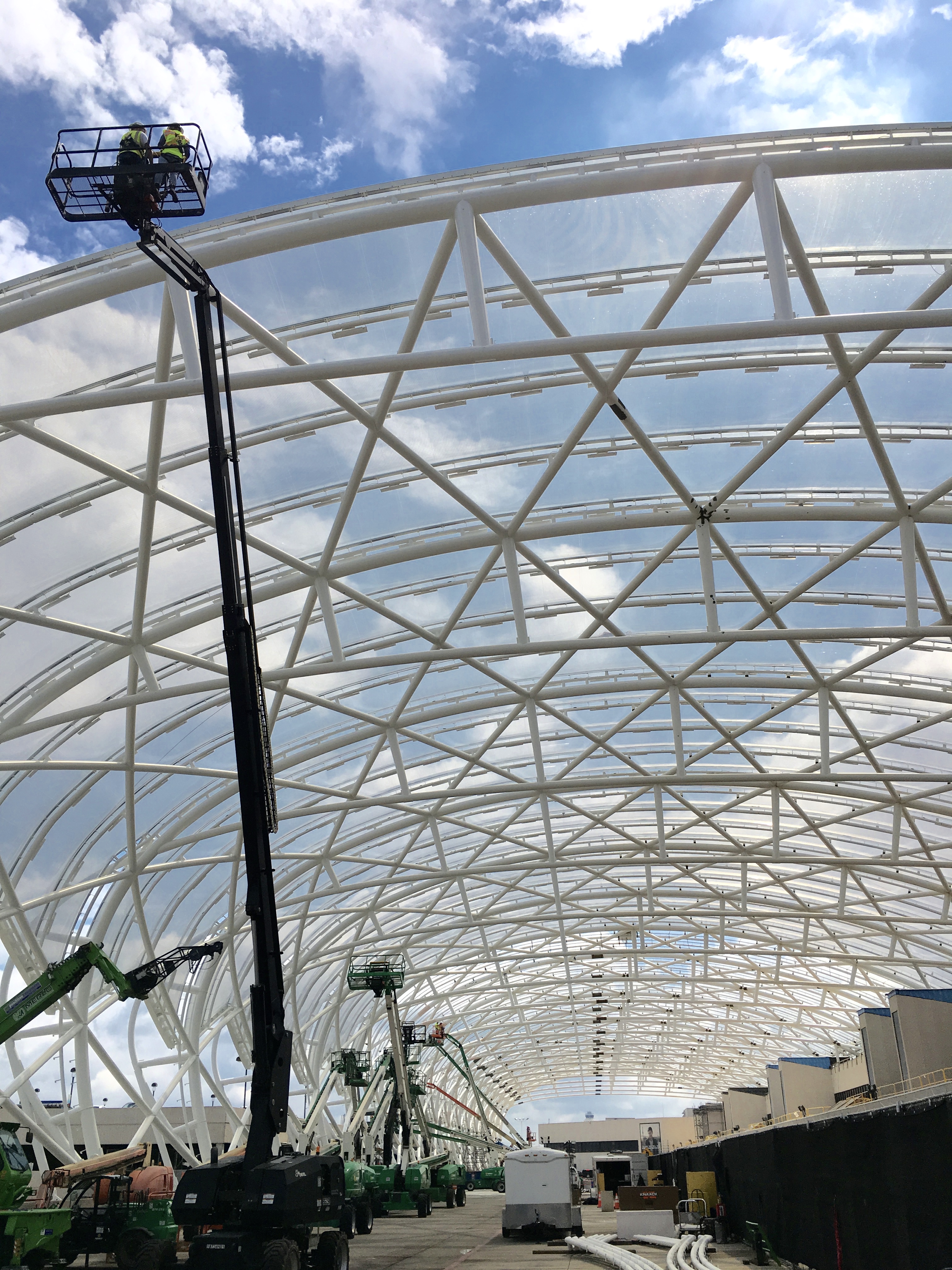
    The canopies are nearly 900-foot-long structures — that’s the length of nearly three football fields. But when finished, they are “going to make the passenger experience much more pleasurable, and give the Domestic Terminal a completely new look,” said Tom Nissalke, ATL’s interim assistant general manager of Planning and Development.

    With all the debris, dump trucks and passenger detours, we thought we’d ask travelers what they think about the canopies going up.

    Dee Hawkins is from Chicago but travels through ATL sometimes. She said, “I wasn’t sure what exactly was happening, but I knew that whatever it was, it seems as if this airport is only getting better because it looks phenomenal already. And it’s looking like there will be more open space, which I love.”

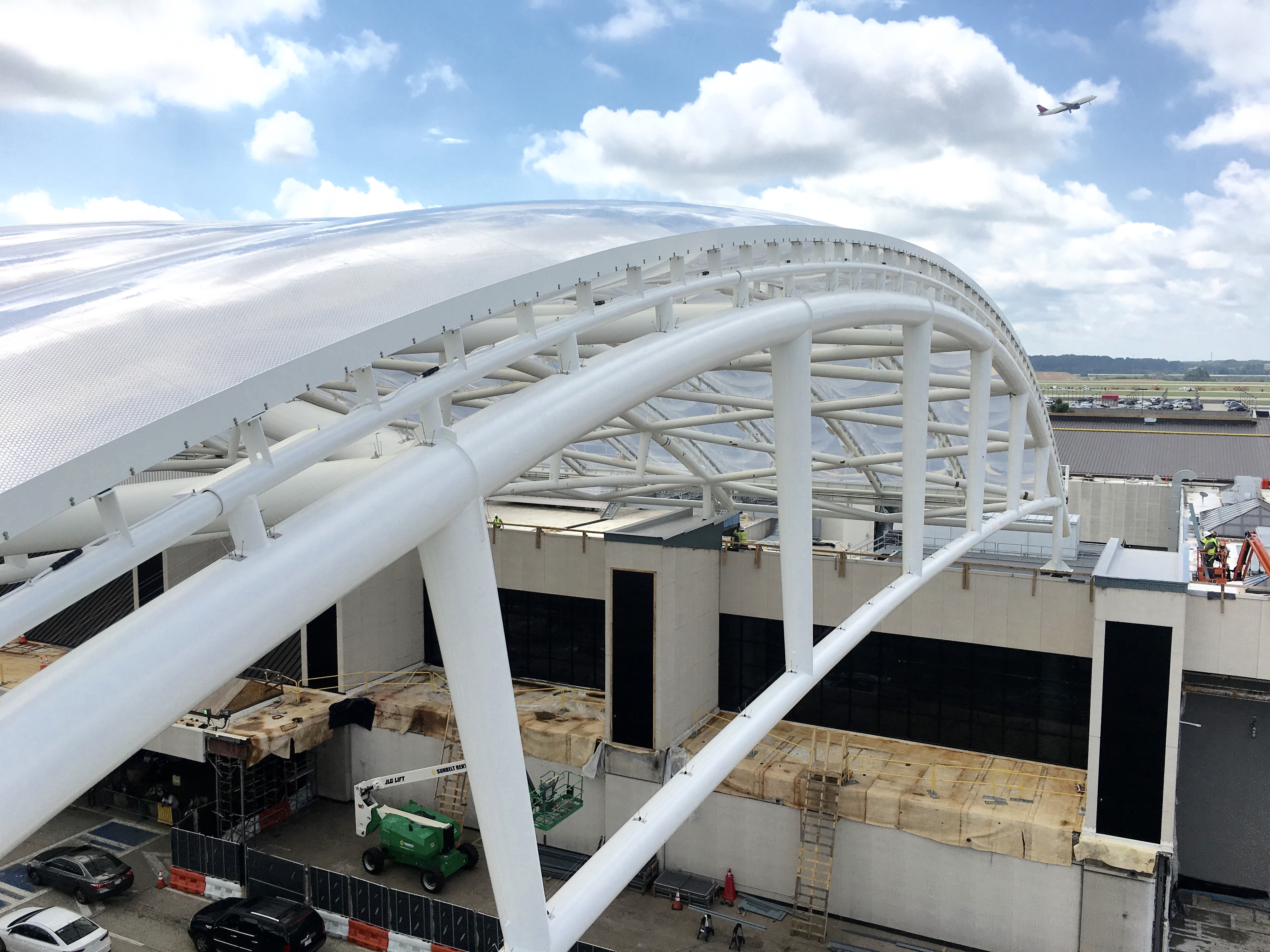
    More open space is indeed part of the plan, but there is so much more ATL passengers will appreciate about the 3,050-tons of steel slated to extend across the roadways and curbsides of both sides of the Domestic Terminal.

    In addition to the massive arches and waterproof, translucent coverings, at night, there is the option of bringing them to life with light. A total of 1,938 lights on each canopy – with seven to eight color variations – give the canopies a stylistic addition that will create a dramatic transformation of ATL.

    While completion of the North canopy is scheduled for October 2018, by 2020 the world will witness the canopies ascend over both North and South sides of ATL’s Domestic Terminal.

    “The canopy’s primary use is to shield passengers from the weather, so whether you’re getting picked up on the curbside or you’re going between the Domestic Terminal and the parking structures, you’ll stay protected from rain and other inclement weather,” said Nissalke.

    In addition to being an architectural icon, the canopy structures will increase overall efficiency, which is a concern for everyone, especially passengers.

    “As a passenger, I want to make sure that there is some kind of pedestrian walkway between the parking garages and the Terminal because that’s what slows down the traffic flow and causes so much congestion,” said traveler Melvin Donato.

    Airport officials and engineers agree. Pedestrian bridges are part of the final architectural plan, which will enhance passenger safety and improve traffic flow.

    Nearly 104 million passengers walk through ATL annually, and since the doors of the Domestic Terminal opened in September 1980, there haven’t been any substantial exterior modifications. Hence, the purpose of ATLNext. 

    The project is more than just the canopies. It’s the enhanced vestibules and the enhanced facades,” said Nissalke. “The face of the Domestic Terminal on both curb fronts will also just get a totally new look as well.”

    As for those city-dwellers wondering about their tax dollars?

    “Taxpayer dollars are not being used,” said Nissalke. “Airport revenue is paying for the canopies. The Department of Aviation is an enterprise fund, so we’re not part of the City’s general fund.”

    ATLNext is a 20-year project currently underway at Hartsfield-Jackson that consists of a series of improvements designed to boost capacity, renew and replace existing facilities, and enhance aesthetic appeal. It includes modernizing the Domestic Terminal, replacing parking facilities, expanding cargo operations, and paving the way for a hotel and mixed-use development.

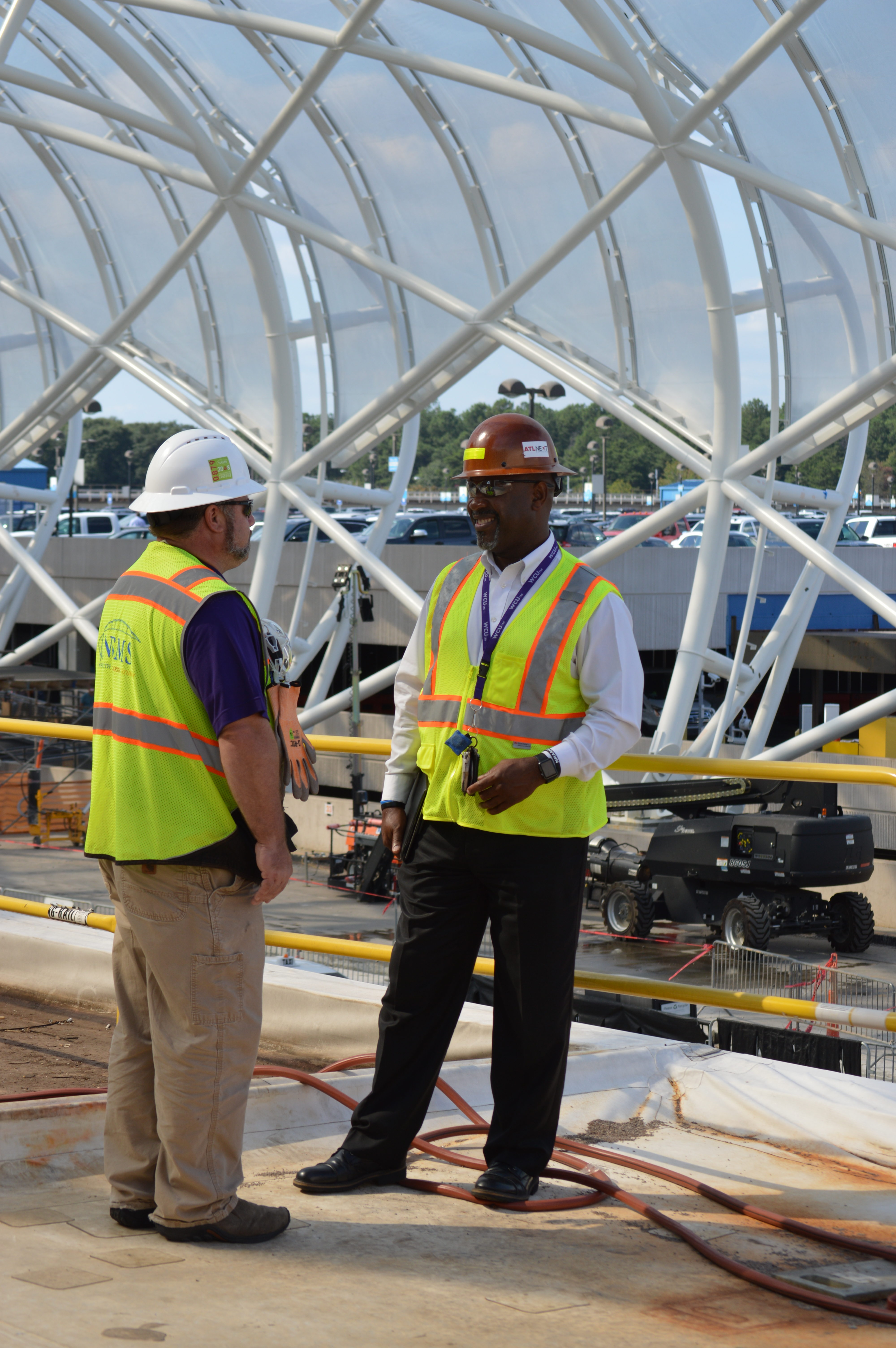
    “People in our industry are used to building construction projects, and when we got to ATL, we realized that we were building a logistics project that included construction,” said Justis Brogan, a senior project manager for NSMS, the joint venture of New South Construction, McCarthy Building Co. and Synergy Development Partners.

    Brogan, who has spent the past 14 years in construction management, and is currently leading the canopy build-out for ATL, says that this is the largest and most complex project that he’s worked on to date.

    “We thought that it was crazy and very difficult to build a structure of that size and complexity in between an active terminal and an active parking deck and over an eight-lane highway,” Brogan said.

    “But now that we have done that for the North [side], we are excited about the prospects it brings to the passenger experience and staying dry on a rainy day in Hotlanta.”


    Nineteen steel super trusses on the north canopy were constructed from October 2017 to May 2018. Check it out!